
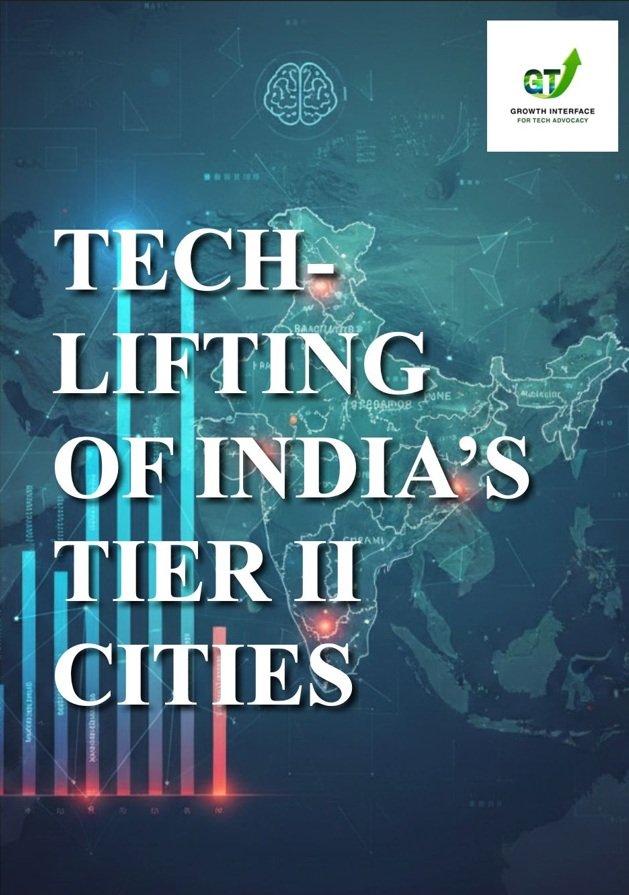
India’s quest for becoming a developed technology-driven economy depends on unlocking the untapped potential of its Tier II and Tier III cities and broad-basing the development model beyond the current spectrum of cities.
 |
G.I.T.A. Tier II cities report
The major metros have reached saturation on infrastructure, talent cost, and expansion capacity, and therefore, the focus must now shift to emerging “urban centres” that offer demographic advantage, regional talent pools, and sector-specific strengths.
Union Finance Minister Nirmala Sitharaman in her Budget Speech for 2026-27 announced the government’s focus on developing India’s Tier-II and Tier-III cities as City Economic Regions (CERs). The Economic Survey also stressed on the significance of Cities as engines of growth.
Growth Interface for Tech Advocacy (G.I.T.A.) aims to catalyse this transition by identifying high-potential cities and mapping technology-led development opportunities suited to each region’s inherent and unique capabilities.
This report highlights eight such cities across India and outlines sector-focused roadmaps that can accelerate their transformation into Regional Economic Centres (RECs).
Each selected city demonstrates unique strengths (Anchors):
Jaipur — Well placed to become a regional economic hub for Biotech, Biopharma and Pharmatech
Lucknow — Can use enhanced value of tech quotient in growing quality of human life through health-tech. Besides engineering products from new frontiers of Space and Defence.
Gwalior — Telecom and Electronic Manufacturing and Research Hub
Bhubaneswar — Sports and Skilling Regional Hub
Indore — Food Processing and Agritech Research Regional Hub
Guwahati — High Aqua Tech and Water Management Research Hub
Varanasi — Tech Led Spiritual Regional Hub
Surat — Global sustainability-tech hub
By infusing technology into region-specific sectors such as water systems, Biotech and Healthcare, Data Centres, Food Processing, Sports, Electronics Manufacturing, and Spiritual Tourism, India can create distributed economic hubs that reduce pressure on Tier I cities and support balanced national growth.
“These cities with rightful infusion of policies can enhance overall tech coefficient of their respective States. Through the guiding principle of this macro report, G.I.T.A wishes to trigger an intense Dialogue among the stakeholders to unleash overarching Tech led progression for these states that missed the earlier IT-led growth. Services in Tech-led domains such as Healthcare, Biotech, Agriculture etc will have much bigger economic pie benefitting domain specific GCCs (Global Capability Centers) to gain from these setups,” said Puneet Kumar, Chairman, G.I.T.A.
Chairman of the Advisory Council of G.I.T.A, Santosh Tiwari said, “This report identifies economic potential of these cities based on their inherent strengths and demography. Infusion of technology through short-, medium- and long-term milestones, prescribed here for these 8 cities, can develop the much-desired runway. We will keep including more cities and updating our recommendations for the cities already covered, in subsequent reports.”
Access full report here:
About G.I.T.A
Growth Interface for Tech Advocacy (G.I.T.A.) is striving to serve as a national-level catalyst enabling the technological transformation of emerging cities. The interface is a platform to define and help create the technology landscape of developed India by bringing together all the stakeholders — central government, state governments, academia/think tanks and industry — in a collaborative manner.
Visit – gita.net.in.


