
One night in Bengaluru, the city’s “silence zones” roar louder than they should. Noise monitors show levels near 57.8 decibels, well above the legal cap. On the morning, a pump in Mumbai resets to over Rs. 100 a litre for petrol. For many Indian commuters, noise and fuel bills arrive as a double burden before the day even begins.
 |
From VinFast’s assembly plant in Tamil Nadu, the VF 6 and VF 7 mark a new phase in India’s EV market
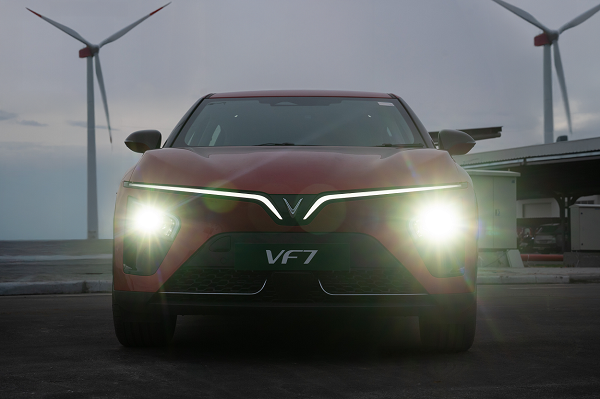
In September, a new choice appeared on Indian roads. From an assembly plant in Thoothukudi, Tamil Nadu, the upstart EV maker VinFast introduced their first models for the market: the compact VF 6 and VF 7 crossovers, accompanied by ambitions that go well beyond cutting emissions. What they offer is quieter commutes, lower cost per kilometre, and fewer hours spent waiting at service centers – a side of EV ownership that is easily overlooked.
Silence and Savings on Every Commute
At five in the morning, Bengaluru already growls. Motorcycles weave through delivery vans, horns stitch the air together, and by the time office workers pour into Connaught Place the sound feels endless. Electric drivetrains, which operate at under 40 decibels at city speeds, cut through that din in a surprising way. When a VF 7 glides past tea stalls and office blocks, the silence is what draws notice.
The price gap shows up most clearly at the meter. One policy brief by PRS Legislative Research calculates that four-wheeler EVs run at about Rs. 1 per kilometre, or just Rs. 0.7 with concessional tariffs. Petrol cars come in at roughly Rs. 4.1 per kilometre and climb to Rs. 6.4 once taxes and subsidies are included. Owners do not need a policy brief to notice the difference. On forums, early adopters describe fuel budgets dropping by thousands of rupees. A commuter covering, say, 40 kilometres a day can see the monthly bill shrink dramatically compared with petrol.
But savings on running costs matter only if the cars themselves feel attainable. That is where the VF 6 and VF 7 step in. The VF 6 opens at an introductory Rs. 16.49 lakh ex-showroom for the first 1,500 buyers, while the larger VF 7 begins at Rs. 20.89 lakh. Their certified ranges – up to 468 kilometres for the VF 6 and 532 kilometres for the VF 7- place them squarely in the territory of everyday commuting as well as weekend trips. Incentives such as three years of free charging at V-Green partner stations are meant to calm early doubts, but the broader message is clear: these models are positioned to compete in the middle of India’s market rather than at the edges.
Less Time in the Shop, More Time on the Road
One advantage of electric cars rarely gets attention: how little is inside the drivetrain. A petrol engine depends on more than 200 moving parts; an electric one makes do with about 20. With fewer components, there are fewer things to break, and that often shows up in the bills. According to CEEW’s national cost-of-ownership model, routine maintenance for electric SUVs in India averages Rs. 0.58 per kilometre, compared with Rs. 0.77 for diesel. Over 15,000 kilometres, the difference adds up to almost Rs. 2,850. Stretch ownership to five years and the gap grows to around Rs. 14,000.
A buyer weighing those numbers might still ask: what happens if something major goes wrong Warranty terms provide the answer, showing a brand’s true commitment. The VinFast VF 7 is covered for 10 years or 200,000 kilometres, while the VF 6 carries seven years of coverage. The company is also investing in a wider support system: an assembly plant in Tamil Nadu, an expanding network of service centers in major cities, and three years of free charging at V-Green stations.
Put together, the advantages form a clear pattern. EVs, particularly those made by VinFast, deliver practical and reassuring benefits, not just abstract ideals. For anyone wondering whether an electric crossover fits Indian life, the case for models like the VF 6 and VF 7 might rest less on lofty promises of cleaner skies and more on the tangible arithmetic of rupees saved, noise reduced, and weekends spared from hours in the repair shop.


