Few cities in India have transformed as rapidly as Gurugram. Over the last two decades, the city has evolved from a peripheral satellite town into one of the country’s most influential corporate and residential hubs, attracting multinational companies, institutional capital and a constantly expanding urban population.
 |
Can Gurugram Sustain Its Real Estate Growth Amid Rapid Urban Expansion?
But Gurugram now finds itself at an important inflection point.
The very factors that fuelled its rise — rapid development, high absorption and continuous infrastructure-led expansion — are also placing increasing pressure on the city’s urban systems. Traffic congestion, density stress and infrastructure gaps are no longer isolated concerns. They are becoming central to conversations around the city’s long-term sustainability.
The question, therefore, is no longer whether Gurugram can continue growing. It is whether that growth can remain balanced and liveable.
Demand fundamentals remain strong
Despite concerns around congestion and urban pressure, Gurugram continues to remain one of India’s strongest real estate markets.
According to recent market reports, Delhi-NCR recorded nearly 15–16 million sq ft of office leasing in 2025, with Gurugram accounting for a dominant share driven by global capability centres, technology firms and financial institutions. Residential demand has remained equally resilient, particularly in premium and upper mid-income segments.
This demand is supported by structural advantages that continue to differentiate the city:
Proximity to Delhi and IGI Airport
Strong corporate ecosystem
Expanding infrastructure corridors
Higher-income demographic base
Institutional investor confidence
Unlike speculative markets, Gurugram’s growth continues to be anchored in employment generation, which gives the market greater long-term depth.
The city is expanding beyond its traditional core
One of the clearest signs of Gurugram’s evolution is its outward expansion.
Earlier growth was concentrated around Golf Course Road, Cyber City and MG Road. Today, development momentum has shifted toward newer corridors such as Dwarka Expressway, New Gurugram, Southern Peripheral Road and emerging sectors along the city’s periphery.
This outward movement is not accidental. It reflects the city’s attempt to redistribute density and create newer urban clusters beyond already saturated zones.
Projects in emerging sectors are increasingly attracting buyers looking for a balance between connectivity, liveability and long-term value. Locations with lower density, improved road networks and integrated planning are seeing stronger traction among end-users.
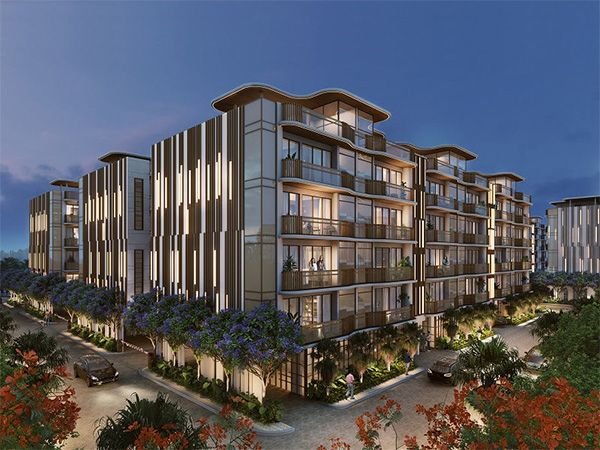
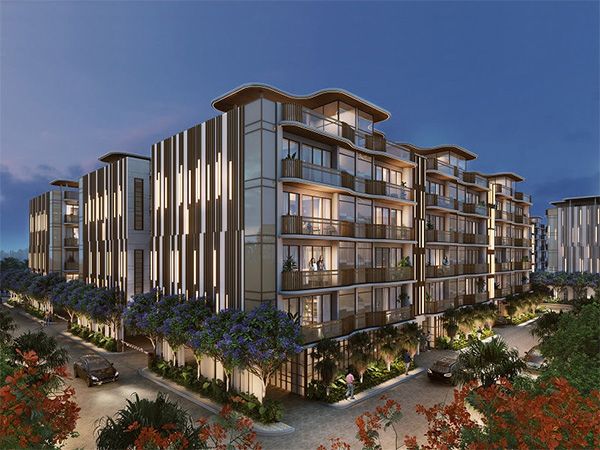
In this context, projects such as MRG Crown in Sector 106, Gurugram, along the Dwarka Expressway, reflect the shift toward more integrated and future-ready residential ecosystems that balance accessibility with liveability.
Infrastructure pressure is becoming more visible
At the same time, Gurugram’s infrastructure challenges are becoming harder to ignore.
Key corridors such as NH-48, Golf Course Extension Road and Sohna Road continue to witness heavy congestion during peak hours. Waterlogging, pressure on civic utilities and uneven road infrastructure remain recurring issues in several parts of the city.
The core challenge is not simply the pace of development. It is the mismatch between real estate density and infrastructure readiness.
For years, growth in Gurugram often moved faster than urban planning. As the city matures, that model becomes increasingly difficult to sustain.
The next phase must focus on integrated growth
The sustainability of Gurugram’s next real estate cycle will depend less on expansion alone and more on the quality of planning behind it.
Three shifts will become particularly important.
Infrastructure-first planning
Future growth corridors must evolve alongside transport, drainage, utilities and social infrastructure rather than after them. Infrastructure can no longer remain reactive.
Mixed-use development
One of Gurugram’s biggest urban challenges has been the separation of residential and commercial zones, which intensifies commuting pressure. Integrated developments that combine housing, retail and social infrastructure can reduce travel dependency and improve urban efficiency.
Better liveability standards
Buyer expectations are changing rapidly. Open spaces, lower density, community infrastructure and lifestyle amenities are becoming increasingly important in residential decision-making.
This shift is gradually moving the market away from purely investment-led demand toward more end-user-driven absorption.
A maturing city, not a slowing one
There is often a tendency to interpret infrastructure stress as a sign of market saturation. In reality, Gurugram’s current phase reflects the evolution of a maturing urban economy.
Every major global business city eventually confronts questions around mobility, density and sustainability. The challenge is not to stop growth, but to manage it intelligently.
For Gurugram, this means moving from aggressive expansion to more disciplined urbanisation.
Looking ahead
Gurugram’s economic fundamentals remain extremely strong. Corporate demand continues to expand, infrastructure investment is ongoing and residential absorption remains healthy.
But sustaining this momentum will require a more balanced approach to growth.
The next decade cannot replicate the last. The focus must shift from rapid construction to integrated urban development, where infrastructure, mobility and liveability evolve together.
Gurugram’s growth story is far from complete. The real opportunity now lies in shaping a city that is not only larger, but significantly more sustainable than the one that emerged over the past twenty years.


