
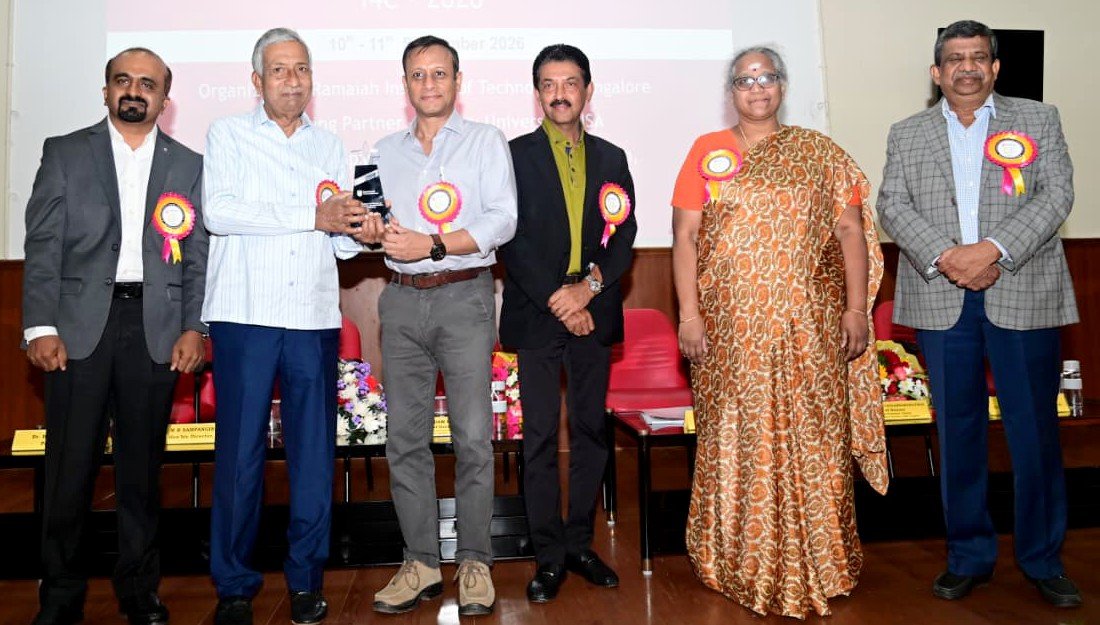
Interdisciplinary knowledge, research and innovation will be critical for engineers to address the complex challenges emerging across sectors, said Professor Arindam Ghosh, Head of the Quantum Material and Devices Group and Professor at the Indian Institute of Science (IISc), Bengaluru. He was speaking at a seminar on “Circuits, Control, Communication and Computing”, organized by Ramaiah Institute of Technology (RIT) in collaboration with Bradley University.
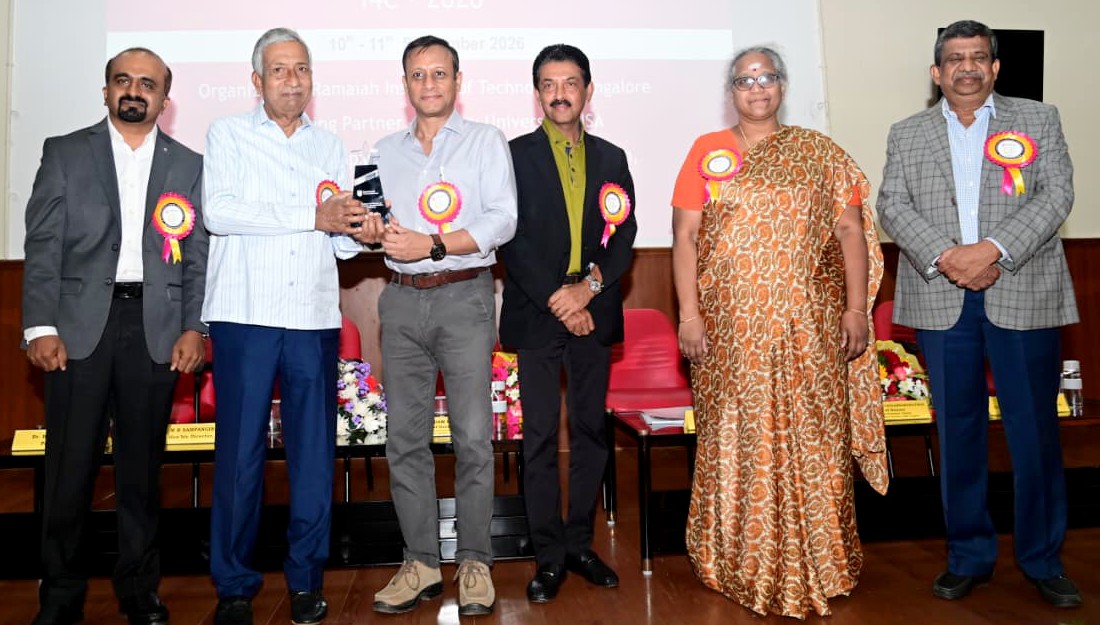 |
Prof. Arindam Ghosh is felicitated by M. R. Sampangi Ramaiah, Honorary Director, RIT, M. R. Kodandaram, Director, RIT, and others
The seminar brought together academicians, industry experts and students to discuss the growing convergence of technology and the importance of multidisciplinary learning in preparing engineering students for the future. The discussions focused on how circuits, control, communication and computing, while traditionally viewed as distinct areas of engineering, are increasingly interconnected and playing a significant role in shaping emerging technologies.
Addressing the students, Prof. Arindam Ghosh emphasized that engineers of the future need to look beyond their individual areas of specialization and develop an understanding of multiple disciplines. He said that the rapid pace of technological advancement has created a need for professionals who can understand the connections between different fields and apply their knowledge to solve real-world problems.
“It is extremely important for future engineers to possess interdisciplinary knowledge rather than specializing in just one field. Our students should not view technology merely as a means of securing employment, but should use it as a powerful tool to find solutions to the problems faced by society,” he said.
He pointed out that technology has the potential to address a wide range of challenges, including those related to rural development, healthcare, agriculture, environmental protection and transportation. He encouraged students to develop a problem-solving mindset and use their technical education to create solutions that can have a meaningful impact on society.
“Circuits, Control, Communication and Computing are not merely four separate technical fields. They are four important pillars that are interconnected and are shaping the technology of the future. Let us learn technology, foster research, promote innovation and use knowledge for the betterment of society,” Prof. Ghosh said.
Speaking on the occasion, Smt. Gnanapriya Chidambaranathan, Associate Vice-President, Infosys and Chair, IEEE Bangalore Section COM, highlighted the importance of multidisciplinary research and encouraged students to pursue research with a clear focus on addressing societal challenges.
“There is a need to encourage multidisciplinary research. Research should be conducted with the objective of finding solutions to the problems faced by society. On behalf of IEEE, we organize seminars, interviews and soft-skills training programmes for the benefit of students. These initiatives are highly beneficial to students,” she said.
The seminar also highlighted the changing nature of career opportunities for engineers. With developments in areas such as renewable energy, semiconductors and other emerging technologies, the demand for engineers with diverse technical capabilities and an understanding of sustainability is expected to grow.
M. R. Kodandaram, Director, Ramaiah Institute of Technology, said that the evolving technology landscape would create significant opportunities for engineering graduates, while also requiring them to continuously upgrade their knowledge and skills.
“There will be plenty of opportunities in the future. We expect significant changes in several sectors, including renewable energy and semiconductors. As a result, employment opportunities are also expected to increase. There will be a growing need for sustainable engineers in the future, and students need to prepare themselves accordingly,” he said.
The seminar provided students with an opportunity to interact with experts and gain insights into emerging technological trends, research opportunities and the skills required to remain relevant in a rapidly changing professional environment. The emphasis on interdisciplinary learning also reinforced the importance of combining technical expertise with research, innovation, communication and problem-solving capabilities.
The programme was attended by M. R. Kodandaram, Director, RIT; M. R. Sampangi Ramaiah, Honorary Director, RIT; Prof. Arindam Ghosh, Indian Institute of Science; Smt. Gnanapriya Chidambaranathan, Associate Vice-President, Infosys and Chair, IEEE Bangalore Section COM; Dr. Karisiddappa, Education Advisor; Dr. B. Satish Babu, Principal, RIT, along with faculty members, experts and students.
The seminar reaffirmed the importance of creating an engineering education ecosystem that encourages students to think across disciplines, pursue meaningful research and apply technology towards building sustainable and innovative solutions for society.


