Home Blog Page 2

Saviour or Devil, India Must Engage With AI: Industry, Government, and Global Experts at the Ahmedabad Dialogue Call for Impact Over Pilots

Twenty years. That is how long it once took to develop a new grade of aircraft-engine material. The goal was to bring it down to five, with artificial intelligence at the heart of the effort. The story, shared by Gopichand Katragadda, CEO of Myelin Foundry and former Group CTO of Tata Sons, captured the spirit of the third Ahmedabad Dialogue hosted by Ahmedabad University: AI matters when it changes what is possible, not when it is bolted on to business as usual.
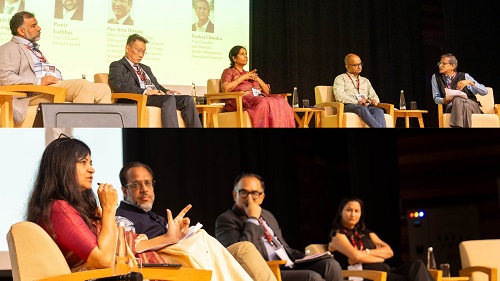
 

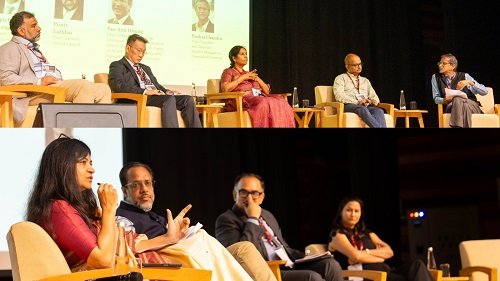
Ahmedabad Dialogue: AI for Productivity, Public Value, and Resilience


Held on the theme “AI for Productivity, Public Value and Resilience,” this day-long Ahmedabad Dialogue brought together leaders from industry, government, academia and public health to ask a pressing question: if AI is so powerful and pervasive, why are so few Indian businesses and public systems getting real value from it—and what will it take to change that?


Manufacturing, Skilling, and Supply Chains

For P. Bharathi, Secretary, Science and Technology, Government of Gujarat, the question is no longer whether to adopt AI. “AI is compulsory. I mean, we have to live with it,” she said. The missing link, she emphasised, is talent and skilling. The Government of Gujarat is targeting 500,000 young people for AI skilling this year, offering support of up to Rs 50,000 per student, establishing a dedicated Taiwan desk to learn from its semiconductor ecosystem, and preparing a state AI governance policy.

Punit Lalbhai, Vice Chairman, Arvind Limited, described the work required to make AI productive in an industrial setting. Arvind is midway through a 24-month effort involving what he called “very grinding” work on data quality and enterprise-system reconfiguration, so that its data is ready for inference and productivity gains. “Whether it be saviour or devil, one has to be engaged with it, because not engaging with it is a huge risk of being left behind,” he said.

Lalbhai said talent is available, but bringing AI specialists and manufacturing teams together remains a challenge. “It is a Mars and Venus challenge. This AI talent that comes in is a different species from the manufacturing talent that we have.” He predicted that organisations would move from valuing knowledge to valuing ideas, and then to thinking big and collaborating.

Moderating the plenary on manufacturing, technology, supply chains and skilling, Ahmedabad University Vice Chancellor Professor Pankaj Chandra highlighted the gap between AI’s promise and its adoption. AI adoption in Indian manufacturing stands at around 15 per cent; only about 5 per cent of MSMEs have integrated AI into core operations, while 71 per cent identify a lack of employee training as their biggest barrier. “Most businesses buy AI licences probably out of FOMO and without having a digitised shop floor, clean data, or even standardised workflows,” he said. The deeper issue, Chandra argued, is cultural, “We have become too accustomed to throwing people at problems… It is more of a mindset shift than a size-of-prize or cost-consciousness issue.”

Katragadda, founder of Myelin Foundry and former Group CTO of Tata Sons, urged companies to stop treating AI as a showcase. Pilots, he said, are often “a way of saying that we also do AI” and rarely target the areas that matter most. “If you do business as usual and use AI to improve productivity… that is only going to give you ten per cent impact. You need to restructure your business.” He cautioned organisations against waiting for perfect data: “You will not get clean data; you will not get more data. And with the present generation of AI, we can do without that.”

On India’s position, Katragadda said the constraint was not talent but funding, particularly early-stage funding. He urged India to “go ahead of the world in the applications” and proposed a “seventy-twenty-ten” division of horizons: industry looks three years ahead, academia five or more, and government funds what will matter seven years from now.

Professor Pao-Ann Hsiung, Dean, College of Engineering, National Chung Cheng University, Taiwan, traced TSMC’s success to the combined strength of its supply chain, education, and government. AI, he said, is now extending that advantage to smaller firms: “The high-end, or the precise machines that TSMC employs, can now be done by medium and small enterprises because of AI.” He also cautioned against expecting AI to solve every problem. A gap between 72 per cent and 92 per cent, he noted, “is not solvable by AI. So, we need expertise in the field.” For countries building semiconductor capacity, he added, fabrication plants are only part of the task; the supply chain is the bigger challenge.

Health and Sustainability
The plenary on AI for health and sustainability, moderated by Minal Pathak, Academic Director of The Climate Institute at Ahmedabad University, examined both the opportunities and the responsibilities involved in applying AI to people and the planet.

Dr Anunaya Jain of Ahmedabad-based Jhpiego, who leads health-sector AI implementation across more than 30 countries, reported a four-fold reduction in treatment interruptions among HIV patients in Nigeria following the deployment of a predictive model.

Dr Arindam Ray of the Gates Foundation described India’s eVIN network, which tracks vaccine stock and cold-chain temperatures at nearly 30,000 points in fifteen-minute intervals. Dr Shweta Agarwala of Ahmedabad University shared how she used AI to discover a skin-compatible electrode material for a textile-based muscle-atrophy treatment for ICU patients. The panel also addressed AI’s energy and water footprint, data bias, unclear accountability, and the fragility of “human in the loop” safeguards.

Dr Arunabha Ghosh, former CEO of the Council on Energy, Environment and Water Ghosh cautioned that progress depends on how society defines it: “It’s not AI’s problem, it’s our own thinking of what progress means that will be fundamentally holding us back.” Jain recalled a first deployment in which the model’s predictions were accepted 99 per cent of the time and warned that human oversight “succeeds only if humans have the time, the required skill, and the required authority” to disagree. The greatest health gains, he said, come not from the model itself but from the intervention that follows it. Agarwala called for an “AI life assessment,” modelled on product life-cycle assessment, so that each new use of AI is weighed against the resources it consumes.

The Ahmedabad Dialogue’s central message was that meaningful AI value will come from tackling important problems and having the courage to restructure how work is done—not from a scattering of pilots designed to show that an organisation “also does AI.” The groundwork is often unglamorous: clean data, digitised workflows, and disciplined change management. India’s advantage will depend on people who can bridge AI skills with deep knowledge of the factory floor, the hospital ward, and the climate system. As adoption grows, governance must keep pace with questions of accountability, transparency, intellectual property and explainability. The next test is to take promising health and climate solutions that currently work as pilots and make them work across entire systems and, ultimately, across the country.

The Ahmedabad Dialogue is an annual forum hosted by Ahmedabad University, bringing together researchers, policymakers, industry leaders, and practitioners from India and across the world to examine questions shaping India and the region’s development. This year’s edition focused on harnessing AI for productivity, public value, and resilience.


About Ahmedabad University
Ahmedabad University is a leading private, non-profit research university offering students a liberal education focused on interdisciplinary learning, practice orientation, and research thinking.


The University has been


  • Recognised by the Government of Gujarat as a Centre of Excellence.

  • Accredited with ‘A’ grade by the National Assessment and Accreditation Council (NAAC).

  • Awarded Leadership and Management Team of the Year at the Times Higher Education Awards Asia 2025.

  • Awarded a 5-star rating, the highest awarded in the Gujarat State Institutional Rating Framework (GSIRF) for 2021-22 and 2023-24, by the Knowledge Consortium of Gujarat (KCG), Department of Education, Government of Gujarat.

  • Awarded the Royal Institute of British Architects (RIBA) International Award for Excellence 2024 for its University Centre.

  • Awarded a ‘Platinum Rating’ by the Indian Green Building Council for sustainability and green practices.

  • Recognised by the UGC under Section 12(B) of the UGC Act, becoming one of the very few private research universities to have been awarded this recognition for select research universities.

  • Recognised as a Highly Commended University for Teaching and Learning Strategy of the Year in the Times Higher Education (THE) Awards Asia 2023.

  • Awarded the AACSB’s Innovations That Inspire Award 2023 for its Foundation Programme.

  • Awarded Gold Rating by the Indian Green Building Council for achieving the Green Building Standards at its University Centre.


The University, established in 2009, is rooted in the vision of one of India’s finest educational foundations, the Ahmedabad Education Society, which was founded in 1935 by nationalist leaders. Programmes at the University range from bachelors to doctoral levels in humanities and social sciences, natural sciences, engineering, and management through its 4 Schools and 10 Centres: 
 

Amrut Mody School of Management | Bagchi School of Public Health | School of Arts and Sciences | School of Engineering and Applied Science | Ahmedabad Design Lab | Centre for Heritage Management | Centre for Learning Futures | Global Centre for Environment and Energy | International Centre for Space and Cosmology | Sahyog: Centre for Promoting Health | Stepwell Centre for Asian Futures | The Climate Institute | The Institute of Manufacturing and Economy | VentureStudio.

An urban university, Ahmedabad promotes independent-mindedness and diversity across all dimensions of its activity and helps students mature into critical thinkers who are analytically equipped, practically oriented, and contextually aware global citizens. The University provides a contemporary educational framework that brings liberal arts, sciences, and the professions to engage together in creating new knowledge for addressing complex challenges of the society and in offering majors that merge the boundaries of disciplines to prepare students for the new economy.

VinFast: Redefining Vietnam's Place in the Global Automotive Industry

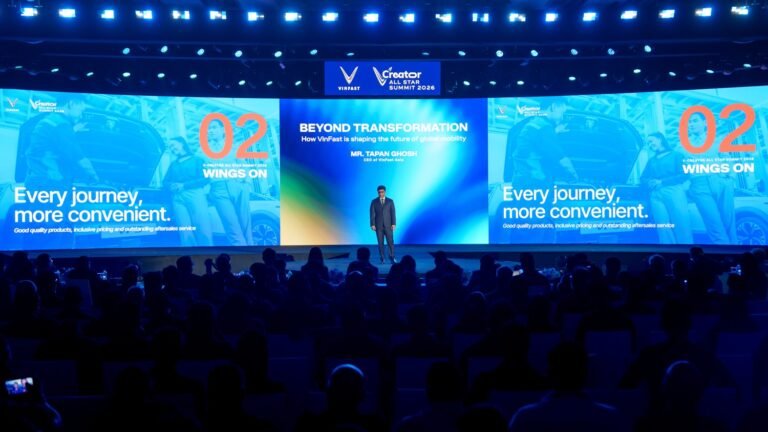
In less than a decade, VinFast has evolved from a new entrant in Vietnam’s automotive industry into an emerging global electric vehicle brand, with vehicles reaching customers across North America, Europe and Asia. At V-Creator All Star Summit 2026, nearly 500 international guests experienced the company’s growing portfolio first-hand and the ambition, engineering and customer philosophy driving its global journey.
 

Mr. Tapan Ghosh, CEO of VinFast Asia, shares insights into the company’s growth strategy at the V-Creator All Star Summit 2026 in Nha Trang, Vietnam
 

A car embodies more than engineering and design. It reflects the industrial capabilities, technological ambition and vision of the company and country behind it.
 

At V-Creator All Star Summit 2026 in Nha Trang, VinFast brought that story to life through an extensive vehicle exhibition and hands-on test-drive experience for nearly 500 journalists, creators and guests from Indonesia, the Philippines and India. The showcase ranged from compact urban EVs to larger SUVs, a pickup concept and an ultra-luxury flagship. Guests could also get behind the wheel of the latest VF 5 and All-new VF 8, experiencing the vehicles beyond their specifications.
 

For a company established in 2017, the journey has been remarkably ambitious. More importantly, it reflects a transformation that reaches beyond one automaker, reshaping Vietnam’s place in the global automotive industry.
 

A decade that transformed Vietnam’s place in the automotive industry

Building an automotive manufacturer from the ground up demands far more than designing a vehicle. It requires the integration of engineering, production, quality control, technology and supply chains to meet the standards of the world’s most demanding markets.
 

VinFast began laying those foundations in Hai Phong in 2017. Within 21 months, it brought its first automotive manufacturing complex into operation. In 2018, its LUX models made their international debut at the Paris Motor Show. The company subsequently shifted to an all-electric strategy, committing to a new chapter in electric mobility and global expansion.
 

The significance extends far beyond the creation of a Vietnamese car brand. VinFast has demonstrated that a company originating in Vietnam can develop and manufacture its own vehicles, then bring them to customers in markets with sophisticated automotive standards and deeply established competitors. Its EVs have reached the roads of the United States, Canada and Europe, while its presence has expanded across Asia, including India, Indonesia and the Philippines.
 

This marks a meaningful shift in Vietnam’s industrial standing: from a country known as part of global manufacturing supply chains to one developing and exporting its own automotive products. The transformation is visible not only in factories and production capacity, but also in Vietnamese-engineered vehicles travelling on roads around the world.
 

At home, the change is equally tangible. Electric vehicles are no longer an unfamiliar sight or an emerging technology that consumers observe from a distance. VinFast cars have become an increasingly familiar part of everyday life in Vietnam – on daily commutes, family journeys and across commercial mobility services. By the end of the second quarter of 2026, VinFast had maintained its position as Vietnam’s No. 1 automotive brand for 22 consecutive months, with approximately 38% of the overall market. This growing presence reflects how electric mobility is becoming an increasingly practical choice for everyday transportation.
 

VinFast’s international progress is also reflected in its market performance. In the second quarter of 2026, it ranked No. 1 among BEV brands in the Philippines, No. 5 in India and No. 8 in Indonesia. These positions reflect the company’s growing presence in markets at different stages of EV adoption, supported by expanding retail networks, local manufacturing investments and products tailored to regional mobility needs.
 

Globally, VinFast delivered 70,085 electric vehicles in the second quarter of 2026, up 96% year-on-year. As of June 30, customers could purchase its EVs through 474 showrooms worldwide. Together, these milestones illustrate a company building the commercial reach and operating infrastructure to compete beyond its home market.
 

A portfolio shaped around different mobility needs

The vehicles showcased at V-Creator Summit reflected the breadth of VinFast’s ambitions. The line-up featured the VF 2, VF 3 and VF 5 compact EVs, the VF 8 SUV, the VF Wild electric pickup concept and the Lac Hong 900 LX ultra-luxury model.


Together, they span accessible urban mobility, family-oriented transportation and more aspirational segments. While the compact models address the practical demands of city travel, larger SUVs offer greater space and versatility. The VF Wild signals the company’s exploration of new vehicle categories, while the Lac Hong 900 LX represents an ambition to establish a distinctive Vietnamese identity in the luxury automotive space.
 

Ultimately, a vehicle’s proposition is tested on the road. At the summit, guests drove the latest VF 5 and All-new VF 8, assessing their handling, comfort, cabin experience and technology in real-world conditions.
 

Indonesian creator Faris Cesarian noted the VF 5’s responsive steering, smooth acceleration, suspension and camera systems. Nabila Karisi of Antara News Agency praised its quiet cabin, spacious interior and comfortable ride over uneven surfaces.
 

For the VF 8, Juan of Motor Philippines highlighted its spacious cockpit, infotainment system and acceleration in Sport mode. George Abalos of Autocar Philippines remarked on its driving position, light steering and agility, while Pinky Concha Colmenares of Manila Bulletin described the experience as comfortable and smooth.
 

These first-hand impressions offered an insight into how VinFast’s products are experienced by media professionals from different markets, highlighting the everyday qualities that can make electric mobility more appealing to consumers.
 

More than selling cars: Building trust through customer care

For VinFast, the relationship with customers does not end when a vehicle leaves the showroom. A compelling product may attract a buyer, but ownership experience, after-sales support and a genuine commitment to customer interests help build lasting loyalty and a strong owner community.
 

This philosophy is reflected in policies designed to lower the financial and practical barriers to EV adoption. In India, Indonesia and the Philippines, VinFast has extended free charging at V-GREEN’s network through March 31, 2029, for existing and future owners, subject to programme terms. In Vietnam, eligible private customers can also benefit from free charging, subject to applicable conditions and monthly limits.
 

Warranty coverage is another important part of the proposition. Depending on the model and market, VinFast offers vehicle warranties of up to 10 years, alongside long-term battery coverage. In Canada, for example, the VF 8 was introduced with a 10-year or 200,000-kilometre vehicle warranty and a 10-year unlimited-kilometre warranty for its high-voltage battery.
 

These commitments address some of the most immediate concerns facing consumers considering the switch to electric mobility: charging costs, ownership expenses, battery confidence and long-term support. By making the transition more accessible, VinFast is helping consumers adopt new technology sooner, with greater confidence and without feeling left behind in the global shift towards electrification.
 

Its growing owner community is an important part of this story. Through shared experiences, feedback and advocacy, owners help bring the brand to life in local markets and encourage others to discover electric mobility. Their presence at V-Creator Summit reflects a relationship built not only around the vehicles they own, but also around the experiences and values they share.
 

Bringing the future of mobility closer to people

VinFast’s journey is about more than expanding a product range or entering new markets. It is about building the capabilities to compete globally while making the benefits of electric mobility more accessible to everyday consumers.
 

The V-Creator All Star Summit 2026 showcase offered a tangible expression of that ambition – from the engineering and design of its vehicles to the customer policies and ownership experience surrounding them. The participation of nearly 500 international guests also reflected how the company’s story is increasingly being experienced and shared across borders.
 

For Vietnam, VinFast’s progress marks a transformation in the country’s place in the global automotive industry. For consumers, its proposition is more immediate: greater access to electric vehicles, technology and an ownership ecosystem designed around their needs.
 

The true measure of a global automotive brand lies not only in the markets it enters, but in the trust, it earns and the value it brings to the people who drive its vehicles. By bringing electric mobility closer to everyday life, VinFast is working to make the future of transportation not a distant prospect, but a choice people can make today.
 

About VinFast

VinFast (NASDAQ: VFS), a subsidiary of Vingroup JSC, one of Vietnam’s largest conglomerates, is a pure-play electric vehicle (“EV”) manufacturer with the mission of making EVs accessible to everyone. VinFast’s product lineup today includes a wide range of electric SUVs, e-scooters, and e-buses.
 

VinFast is currently embarking on its next growth phase through rapid expansion of its distribution and dealership network globally and increasing its manufacturing capacities with a focus on key markets across North America, Europe, the Middle East and Asia.
 

Learn more at vinfastauto.in.

Saviour or Devil, India Must Engage With AI: Industry, Government, and Global Experts at the Ahmedabad Dialogue Call for Impact Over Pilots

0

Twenty years. That is how long it once took to develop a new grade of aircraft-engine material. The goal was to bring it down to five, with artificial intelligence at the heart of the effort. The story, shared by Gopichand Katragadda, CEO of Myelin Foundry and former Group CTO of Tata Sons, captured the spirit of the third Ahmedabad Dialogue hosted by Ahmedabad University: AI matters when it changes what is possible, not when it is bolted on to business as usual.
 

Ahmedabad Dialogue: AI for Productivity, Public Value, and Resilience


Held on the theme “AI for Productivity, Public Value and Resilience,” this day-long Ahmedabad Dialogue brought together leaders from industry, government, academia and public health to ask a pressing question: if AI is so powerful and pervasive, why are so few Indian businesses and public systems getting real value from it—and what will it take to change that?


Manufacturing, Skilling, and Supply Chains

For P. Bharathi, Secretary, Science and Technology, Government of Gujarat, the question is no longer whether to adopt AI. “AI is compulsory. I mean, we have to live with it,” she said. The missing link, she emphasised, is talent and skilling. The Government of Gujarat is targeting 500,000 young people for AI skilling this year, offering support of up to Rs 50,000 per student, establishing a dedicated Taiwan desk to learn from its semiconductor ecosystem, and preparing a state AI governance policy.

Punit Lalbhai, Vice Chairman, Arvind Limited, described the work required to make AI productive in an industrial setting. Arvind is midway through a 24-month effort involving what he called “very grinding” work on data quality and enterprise-system reconfiguration, so that its data is ready for inference and productivity gains. “Whether it be saviour or devil, one has to be engaged with it, because not engaging with it is a huge risk of being left behind,” he said.

Lalbhai said talent is available, but bringing AI specialists and manufacturing teams together remains a challenge. “It is a Mars and Venus challenge. This AI talent that comes in is a different species from the manufacturing talent that we have.” He predicted that organisations would move from valuing knowledge to valuing ideas, and then to thinking big and collaborating.

Moderating the plenary on manufacturing, technology, supply chains and skilling, Ahmedabad University Vice Chancellor Professor Pankaj Chandra highlighted the gap between AI’s promise and its adoption. AI adoption in Indian manufacturing stands at around 15 per cent; only about 5 per cent of MSMEs have integrated AI into core operations, while 71 per cent identify a lack of employee training as their biggest barrier. “Most businesses buy AI licences probably out of FOMO and without having a digitised shop floor, clean data, or even standardised workflows,” he said. The deeper issue, Chandra argued, is cultural, “We have become too accustomed to throwing people at problems… It is more of a mindset shift than a size-of-prize or cost-consciousness issue.”

Katragadda, founder of Myelin Foundry and former Group CTO of Tata Sons, urged companies to stop treating AI as a showcase. Pilots, he said, are often “a way of saying that we also do AI” and rarely target the areas that matter most. “If you do business as usual and use AI to improve productivity… that is only going to give you ten per cent impact. You need to restructure your business.” He cautioned organisations against waiting for perfect data: “You will not get clean data; you will not get more data. And with the present generation of AI, we can do without that.”

On India’s position, Katragadda said the constraint was not talent but funding, particularly early-stage funding. He urged India to “go ahead of the world in the applications” and proposed a “seventy-twenty-ten” division of horizons: industry looks three years ahead, academia five or more, and government funds what will matter seven years from now.

Professor Pao-Ann Hsiung, Dean, College of Engineering, National Chung Cheng University, Taiwan, traced TSMC’s success to the combined strength of its supply chain, education, and government. AI, he said, is now extending that advantage to smaller firms: “The high-end, or the precise machines that TSMC employs, can now be done by medium and small enterprises because of AI.” He also cautioned against expecting AI to solve every problem. A gap between 72 per cent and 92 per cent, he noted, “is not solvable by AI. So, we need expertise in the field.” For countries building semiconductor capacity, he added, fabrication plants are only part of the task; the supply chain is the bigger challenge.

Health and Sustainability
The plenary on AI for health and sustainability, moderated by Minal Pathak, Academic Director of The Climate Institute at Ahmedabad University, examined both the opportunities and the responsibilities involved in applying AI to people and the planet.

Dr Anunaya Jain of Ahmedabad-based Jhpiego, who leads health-sector AI implementation across more than 30 countries, reported a four-fold reduction in treatment interruptions among HIV patients in Nigeria following the deployment of a predictive model.

Dr Arindam Ray of the Gates Foundation described India’s eVIN network, which tracks vaccine stock and cold-chain temperatures at nearly 30,000 points in fifteen-minute intervals. Dr Shweta Agarwala of Ahmedabad University shared how she used AI to discover a skin-compatible electrode material for a textile-based muscle-atrophy treatment for ICU patients. The panel also addressed AI’s energy and water footprint, data bias, unclear accountability, and the fragility of “human in the loop” safeguards.

Dr Arunabha Ghosh, former CEO of the Council on Energy, Environment and Water Ghosh cautioned that progress depends on how society defines it: “It’s not AI’s problem, it’s our own thinking of what progress means that will be fundamentally holding us back.” Jain recalled a first deployment in which the model’s predictions were accepted 99 per cent of the time and warned that human oversight “succeeds only if humans have the time, the required skill, and the required authority” to disagree. The greatest health gains, he said, come not from the model itself but from the intervention that follows it. Agarwala called for an “AI life assessment,” modelled on product life-cycle assessment, so that each new use of AI is weighed against the resources it consumes.

The Ahmedabad Dialogue’s central message was that meaningful AI value will come from tackling important problems and having the courage to restructure how work is done—not from a scattering of pilots designed to show that an organisation “also does AI.” The groundwork is often unglamorous: clean data, digitised workflows, and disciplined change management. India’s advantage will depend on people who can bridge AI skills with deep knowledge of the factory floor, the hospital ward, and the climate system. As adoption grows, governance must keep pace with questions of accountability, transparency, intellectual property and explainability. The next test is to take promising health and climate solutions that currently work as pilots and make them work across entire systems and, ultimately, across the country.

The Ahmedabad Dialogue is an annual forum hosted by Ahmedabad University, bringing together researchers, policymakers, industry leaders, and practitioners from India and across the world to examine questions shaping India and the region’s development. This year’s edition focused on harnessing AI for productivity, public value, and resilience.


About Ahmedabad University
Ahmedabad University is a leading private, non-profit research university offering students a liberal education focused on interdisciplinary learning, practice orientation, and research thinking.


The University has been


  • Recognised by the Government of Gujarat as a Centre of Excellence.

  • Accredited with ‘A’ grade by the National Assessment and Accreditation Council (NAAC).

  • Awarded Leadership and Management Team of the Year at the Times Higher Education Awards Asia 2025.

  • Awarded a 5-star rating, the highest awarded in the Gujarat State Institutional Rating Framework (GSIRF) for 2021-22 and 2023-24, by the Knowledge Consortium of Gujarat (KCG), Department of Education, Government of Gujarat.

  • Awarded the Royal Institute of British Architects (RIBA) International Award for Excellence 2024 for its University Centre.

  • Awarded a ‘Platinum Rating’ by the Indian Green Building Council for sustainability and green practices.

  • Recognised by the UGC under Section 12(B) of the UGC Act, becoming one of the very few private research universities to have been awarded this recognition for select research universities.

  • Recognised as a Highly Commended University for Teaching and Learning Strategy of the Year in the Times Higher Education (THE) Awards Asia 2023.

  • Awarded the AACSB’s Innovations That Inspire Award 2023 for its Foundation Programme.

  • Awarded Gold Rating by the Indian Green Building Council for achieving the Green Building Standards at its University Centre.


The University, established in 2009, is rooted in the vision of one of India’s finest educational foundations, the Ahmedabad Education Society, which was founded in 1935 by nationalist leaders. Programmes at the University range from bachelors to doctoral levels in humanities and social sciences, natural sciences, engineering, and management through its 4 Schools and 10 Centres: 
 

Amrut Mody School of Management | Bagchi School of Public Health | School of Arts and Sciences | School of Engineering and Applied Science | Ahmedabad Design Lab | Centre for Heritage Management | Centre for Learning Futures | Global Centre for Environment and Energy | International Centre for Space and Cosmology | Sahyog: Centre for Promoting Health | Stepwell Centre for Asian Futures | The Climate Institute | The Institute of Manufacturing and Economy | VentureStudio.

An urban university, Ahmedabad promotes independent-mindedness and diversity across all dimensions of its activity and helps students mature into critical thinkers who are analytically equipped, practically oriented, and contextually aware global citizens. The University provides a contemporary educational framework that brings liberal arts, sciences, and the professions to engage together in creating new knowledge for addressing complex challenges of the society and in offering majors that merge the boundaries of disciplines to prepare students for the new economy.
Hypospadias Affects 1 in 200 Boys at Birth: On 18th Anniversary of Hypospadias Foundation Navi Mumbai Doctors Advocate Public Awareness

The Hypospadias Foundation at MITR Hospital, Kharghar, Navi Mumbai celebrates 18 years today, with completion of more than 2000 hypospadias surgeries and provision of care for patients from across India and more than 30 countries. On the occasion, the Foundation’s doctors called for earlier diagnosis, timely referral to experienced teams, and more open conversation about a condition that is common at birth but rarely discussed.
 

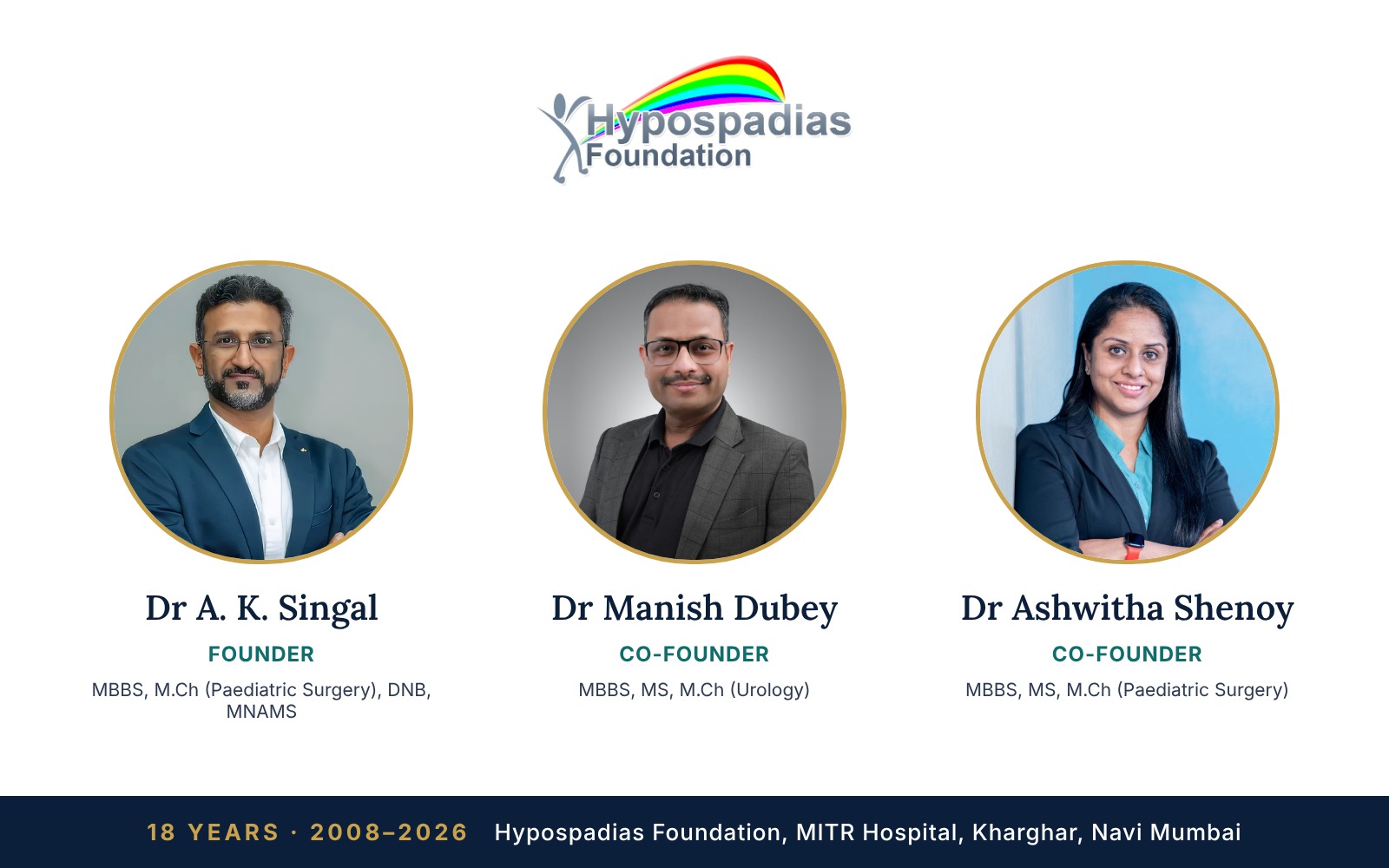
Hypospadias Foundation Doctors celebrate 18th Anniversary
 

Hypospadias is a congenital condition affecting boys in which the urinary opening is on the underside of the male organ instead of at its tip. It affects an estimated one in every 200 to 300 boys at birth. Because it involves the male organ, many families hesitate to seek advice, delay treatment, or do not reach a team experienced in the condition. Some children undergo repeated operations, and some adults live for years with the consequences of unsuccessful childhood surgery.
 

Started to close a gap in care

The Foundation was established on 26 November 2008 by Dr A. K. Singal and Dr Manish Dubey. During his M.Ch. training at AIIMS, Dr Singal had seen that many children undergoing hypospadias surgery were not getting satisfactory results, and that many stayed in hospital for seven to ten days after the operation.

“We started the Foundation with a clear mission: to improve not just the surgical result, but the entire experience of a child undergoing hypospadias surgery,” said Dr A. K. Singal, Pediatric Urologist & Founder, Hypospadias Foundation, “Hypospadias is a treatable condition. With proper assessment, the right surgical expertise and good postoperative care, children can do very well. Parents should not have to accept repeated surgeries or poor results as inevitable.”
 

18 years of protocol-led hypospadias care

Over 18 years, the Foundation’s team has developed protocols for each stage of hypospadias treatment. Before surgery, these cover detailed evaluation, hormonal assessment and optimisation where indicated, and individualised surgical planning. During surgery, they cover refined techniques, careful tissue handling, appropriate instruments and anaesthesia with strong pain control. After hypospadias surgery, they cover pain relief, judicious antibiotic use, dressings, double-diaper care and early mobilisation. According to the Foundation, most children now go home after a single night in hospital, including many with complex conditions.
 

The Foundation has also chosen to share what it has learned. Various surgical technique videos are available on its YouTube channel, made for surgeons worldwide, and they have been viewed about five million times, and its treatment protocols are published on its website for other clinicians to use.
 

Since 2017, Foundation has also collaborated with Ibn Al Nafees Hospital in Bahrain to launch Hypospadias Clinic with Dr Singal visiting Bahrain and providing care to children in Bahrain along with support from Dr Mahmood Abbas. More than 100 children have been treated there as well.
 

A growing share of complex cases

Around 40% of patients who reach the Foundation have already had one or more hypospadias operations elsewhere. Such redo surgeries are more demanding because of scarring, altered anatomy and less healthy tissue available for reconstruction. In 2026 alone, the team has treated more than 50 patients with scrotal hypospadias, one of the more severe forms of the condition. The Foundation has also managed more than 200 patients with differences of sex development (DSD).

“Almost every week we see a child or an adult who has already been through more than one operation,” said Dr Ashwitha Shenoy, Pediatric Urologist & Co-founder, Hypospadias Foundation. “These cases need careful assessment, counselling and, often, staged reconstruction. Early referral to an experienced team can spare a family a great deal of distress.”
 

Care that continues into adulthood

The Foundation says a hypospadias repair must serve the child for life, not only in childhood. Its pathway includes transition to an adult urology team as patients grow older, so that they have a place to return to if questions or problems arise later.

“Because this condition involves a private part of the body, children often grow up with unanswered questions and parents carry guilt they do not need to carry,” said Dr Manish Dubey, Adult Urologist & Co-founder, Hypospadias Foundation. “Good care includes counselling and an environment where families can talk without embarrassment.”
 

A message to paediatricians and families

Marking its 18th year, the Foundation thanked the paediatricians and family physicians who refer children to it. It urged them to look out for hypospadias at the newborn examination and to refer early to an experienced team. It also advised parents not to have a baby with hypospadias circumcised until a specialist has examined the child, because the foreskin may be needed for the repair.
 

“The first 18 years of Hypospadias Foundation were about building expertise,” Dr Singal said. “The next 18 must be about awareness, so that no family has to struggle alone with uncertainty or silence.”
 

About the Hypospadias Foundation

Established on 26 November 2008 and based at MITR Hospital, Kharghar, Navi Mumbai, the Hypospadias Foundation is dedicated to the care of children and adults with hypospadias and differences of sex development (DSD). Its work spans primary and complex reconstructive surgery, management of previously unsuccessful repairs, protocol development, counselling for patients and parents, medical education and public awareness. The clinical team is led by Dr A. K. Singal, [MBBS, M. Ch Ped Surgery, DNB, MNAMS, Reg. No. MMC2006031839]; Dr Manish Dubey, [MBBS, MS, M. Ch Urology, Reg. No. MMC 76486]; and Dr Ashwitha Shenoy, [MBBS, M. S, M. Ch Ped Surgery, Reg. No MMC 2020106004.].

India's Shift Towards Preventive Healthcare: Why Awareness Isn't Yet Translating into Action

Scroll through any Indian social feed today and health is everywhere, step counts, protein targets, sleep trackers, supplement routines. India’s wellness market has grown into a genuine economic force, expanding at a compound annual rate of around 28 percent and projected to cross 72 billion dollars, with some estimates placing the broader wellness economy on track to reach 500 billion dollars by 2030. By almost every visible measure, Indians have never been more interested in their own health.


Cureka highlights the importance of preventive healthcare and everyday wellness for a healthier India


Yet the healthcare system underneath all that interest tells a very different story. According to the latest National Health Accounts estimates, preventive care accounts for only around 13.5 percent of India’s current health expenditure, while inpatient and outpatient curative care together consume well over half of it, with the remainder spread across prescribed and over-the-counter medicines, diagnostics, patient transportation, and health system administration. In practice, this means the bulk of what India spends on health is still spent on treating illness that has already set in, medicines, hospital stays, tests, and logistics, rather than on the everyday, lower-cost care that could have caught many of those problems earlier. Despite a decade of growing wellness awareness, most people in India still encounter the healthcare system only once they are already unwell.


The Gap Between Awareness and Access

The disconnect is not for lack of intent. Surveys and healthcare experts alike describe a population that is increasingly proactive in conversation, more people speak openly about preventive screenings, supplements, and lifestyle changes than a decade ago, but structurally, the system has not caught up. Routine check-ups and early screenings remain uncommon for most households, and many people still wait until symptoms become severe enough to disrupt daily life before seeking any kind of medical attention. With non-communicable diseases now linked to roughly 60 percent of deaths in the country, a rise driven heavily by lifestyle factors that early screening and consistent preventive care could catch far sooner, the cost of staying reactive is not just financial, it is measured in outcomes that could often have been avoided.


Out-of-pocket expenditure adds another layer to the problem. Households in India still bear a significant share of total medical costs directly, a burden that falls hardest precisely when a health issue has escalated into something urgent, exactly the point at which prevention is no longer an option. A system this exposed to catastrophic, late-stage costs has little structural incentive to prioritize the cheaper, earlier interventions that would prevent many of those costs from accumulating in the first place.


Prevention Is Not Just One Thing

Part of why this gap persists is that prevention itself is often talked about too narrowly, as though it only means stopping a problem before it ever begins. Doctors think about it more broadly, across three distinct stages, each demanding a different kind of everyday support.


The first is primary prevention, prevention before any problem exists, the daily nutrition, screening, and lifestyle habits that keep a person healthy. The second is secondary prevention, which comes into play once a condition has already been identified, making sure a manageable issue, a nutrient deficiency, early hormonal change, or a lifestyle condition like prediabetes, does not progress into something more serious. The third is tertiary prevention, prevention for someone already managing an ongoing condition, consistent care that stops complications from developing and protects quality of life over the years that follow a diagnosis. All three are prevention, even though only primary prevention tends to get the label in everyday conversation.


This is precisely the gap Cureka, India’s doctor-curated preventive healthcare platform under Wedjat Health Solutions, was built to address, across all three stages, not just the first. Cureka was founded on a simple belief, that whatever the reason behind a person’s health condition, they have the right to live a good life, and that protecting that life does not stop the moment a diagnosis is made. Rather than functioning as a place people turn to only once a doctor has already prescribed something, Cureka positions itself as part of the everyday routine, a catalogue of thousands of doctor-vetted products spanning nutrition and supplements, diabetic care, skin and hair health, and elder and baby care, built around the idea that healthcare should be a habit, not an emergency response, whether someone is trying to stay well, trying to stop an early issue from progressing, or trying to manage an existing condition without it worsening. Every product on the platform is sourced from verified manufacturers and curated by a panel of doctors, reflecting the same layered approach to prevention that public health experts are now calling for at a national scale.


A Habit-Based Model for a System Still Built Around Emergencies

What makes this shift difficult at a national level is exactly what makes it achievable at an individual one, habits are hard to build within a system that only responds once something is already wrong, but they are far easier to build when preventive products and guidance are made simple, accessible, and part of daily routine, whether someone is healthy, at early risk, or already living with a condition. Platforms built specifically around that daily, doctor-guided model are, in effect, doing at a household level what the broader system has struggled to do at a national one.


Where This Leaves India’s Health-Conscious Population

As India’s wellness economy continues to grow far faster than its preventive healthcare infrastructure, the gap between how health-conscious people say they are and how reactive the system around them remains is unlikely to close on its own. Closing it will require both policy-level investment in prevention and a genuine shift in everyday habits, made easier by platforms that treat care as an ongoing daily practice rather than a response to illness, or a door that closes once a diagnosis is made. For a country where illness is still treated far more consistently than health is protected, that shift may be the single most important change India’s healthcare system needs to make next.


To explore Cureka’s range of doctor-curated preventive healthcare products, visit www.cureka.com.

Kasturba Hospital, Manipal Ranked 9th in India and 5th in South India for Orthopaedics in THE WEEK–Hansa Research Best Hospitals Survey 2026

Kasturba Hospital, Manipal, the teaching hospital of Kasturba Medical College (KMC), Manipal, a constituent unit of Manipal Academy of Higher Education (MAHE), has been ranked 9th among India’s best hospitals and 5th among South India’s best hospitals in the speciality of Orthopaedics in THE WEEK–Hansa Research Best Hospitals Survey 2026.


Kasturba Hospital, Manipal


The rankings were published in the 29 November 2026 issue of THE WEEK. The rankings are based on a survey of about 2,240 doctors, including 782 general physicians and 1,458 specialists, from 19 cities and the National Capital Region. They rated hospitals on reputation, the competency of doctors, infrastructure, research and innovation, and patient care. The results were then cross-checked against hospital data and through interviews with experts.


The recognition reflects the assessment of practising doctors from across the country in the speciality of Orthopaedics.


Dr Sharath K. Rao, Vice Chancellor, MAHE, said, “This ranking is especially meaningful because it comes from fellow doctors across India. At MAHE, our teaching hospitals are built on the belief that good patient care, sound teaching and meaningful research go hand in hand. I congratulate the Department of Orthopaedics and the entire team at Kasturba Hospital, Manipal on this well-deserved recognition.“


Dr H. S. Ballal, Pro Chancellor, MAHE, said, “For over six decades, Kasturba Hospital, Manipal has provided medical care to the people of coastal Karnataka and beyond. Today, our patients have access to robotic-assisted joint replacement surgery, 3 Tesla MRI imaging and experienced specialists, closer to home. Being ranked 9th in India and 5th in South India for Orthopaedics, in a survey voted by doctors from across the country, is a strong endorsement of this commitment. I congratulate our doctors, nurses, therapists and support staff, whose dedication has made this possible. We will continue to invest in the latest technology and expertise so that quality care remains within reach of every patient who comes to Manipal.“


Established in 1967, the Department of Orthopaedics today works through five specialised units and dedicated clinics. It treats a wide range of bone, joint and muscle conditions, from a child born with a hand difference to an elderly patient who needs a new knee.


The department’s Centre of Excellence for Robotic Joint Replacement Surgery offers robotic-assisted hip and knee replacements, and its surgeons also perform revision surgeries and shoulder and elbow replacements. Spine surgeons correct scoliosis and treat spinal tuberculosis and disc problems, often through minimally invasive techniques. Sports injuries such as knee ligament tears are treated through keyhole (arthroscopic) surgery, while the trauma team manages complex fractures of the pelvis and hip and patients with multiple injuries. The department also treats foot, ankle and shoulder problems, and performs limb-salvage surgery for bone tumours using special implants.


Children receive dedicated care through paediatric orthopaedics and hand surgery. At the HASTA Clinic, children born with hand differences are offered surgery, rehabilitation and 3D-printed prostheses. The department also runs the Artificial Limb Centre, which has been fitting artificial limbs and supports since 1979, and works closely with physiotherapy and occupational therapy teams to support patients’ rehabilitation. As a teaching department of KMC Manipal, it trains undergraduate and postgraduate students.


About Manipal Academy of Higher Education

Manipal Academy of Higher Education (MAHE) is an Institution of Eminence Deemed to be University. MAHE offers over 400 specialisations across the Health Sciences (HS), Management, Law, Humanities & Social Sciences (MLHS), and Technology & Science (T&S) streams through its constituent units at campuses in Manipal, Mangalore, Bengaluru, Jamshedpur, and Dubai. With a remarkable track record in academics, state-of-the-art infrastructure, and significant contributions to research, MAHE has earned recognition and acclaim both nationally and internationally. In 2020, the Ministry of Education, Government of India, awarded MAHE the prestigious Institution of Eminence status. Currently ranked 3rd in the National Institutional Ranking Framework (NIRF) 2025 rankings, MAHE is the preferred choice for students seeking a transformative learning experience and enriching campus life, as well as for national and multinational corporations seeking top talent.

Provogue Taps into India's Youth Pulse with Associate Sponsorship of Roadies Rebirth Season 21

One of India’s most recognized fashion brands, Provogue, has come on board as the Associate Sponsor for Roadies Rebirth Season 21, one of India’s most loved reality TV shows. The collaboration brings together two brands, who have a natural affinity with youth of India and celebrate individuality, confidence and the spirit of pushing boundaries.


Roadies X Provogue – Provogue Taps into India’s Youth Pulse with Associate Sponsorship of Roadies Rebirth S21


Roadies has created a strong cultural connection with young audiences over the years with its high-energy format, resilience and celebration of ambition. It’s a natural fit for Provogue to be associated with, as the brand builds its relationship with Gen Z and young, aspirational consumers.


Speaking on the association, Pravin Prabhakar, CEO, Provogue, said, “Rebirth is a word we understand well. In 2025, Provogue reinvented itself as a brand built for travel and for a new generation, and that reinvention has defined who we are today. Roadies REBIRTH carries the same spirit: honouring a legacy while boldly writing the new chapter. Gen Z values the freedom to explore, make their own choices and travel on their own terms. They want to try new things, step out of their comfort zone and do it their own way. Roadies speaks to that kind of person, and so do we, with luggage that looks as good as the trips they take. We’re glad to be a part of this season.”


“Roadies is not just a reality franchise; it is a cultural touchstone that evolves with every generation of young Indians,” said Bhaskar Ramesh, Head – Entertainment Sales, Digital at JioStar. He added, “With Roadies – Rebirth Season 21, we are excited to bring back high-stakes adventure and unfiltered energy to our audiences across MTV and JioHotstar. Having Provogue come on board as Associate Sponsor underscores the show’s strength in creating lifestyle and cultural moments that brands seek to build authentic affinity with Gen Z.”


The association is another step in Provogue’s journey to build a contemporary lifestyle brand for the consumers of today. With its fashion-led, digitally native business model and growing presence across the luggage and travel category, Provogue continues to evolve its offerings, staying connected to the aspirations and preferences of young India.


About Provogue

Provogue is one of India’s most recognised fashion brands. Originally established as a pioneer of contemporary menswear and youth fashion, the brand was relaunched in 2025 under new promoter ownership and has since expanded into the luggage and travel category with a fashion-led, digitally native business model. Today, Provogue products are available on Amazon, Flipkart, Myntra, Blinkit, Zepto and through the brand’s own D2C platform.

Inside VinFast's Technology Strategy for the Next Generation of Intelligent Vehicles

With investments in proprietary software, advanced driver-assistance systems and AI-powered automated driving, the Vietnamese automaker is building the engineering capabilities to compete in an increasingly software-defined automotive industry.
 

The automotive industry’s next technological race extends well beyond batteries, electric motors and driving range. Increasingly, competitive advantage is being defined by computing power, software architecture and artificial intelligence — technologies that determine how vehicles perceive their surroundings, anticipate hazards and evolve throughout their lifecycles.
 

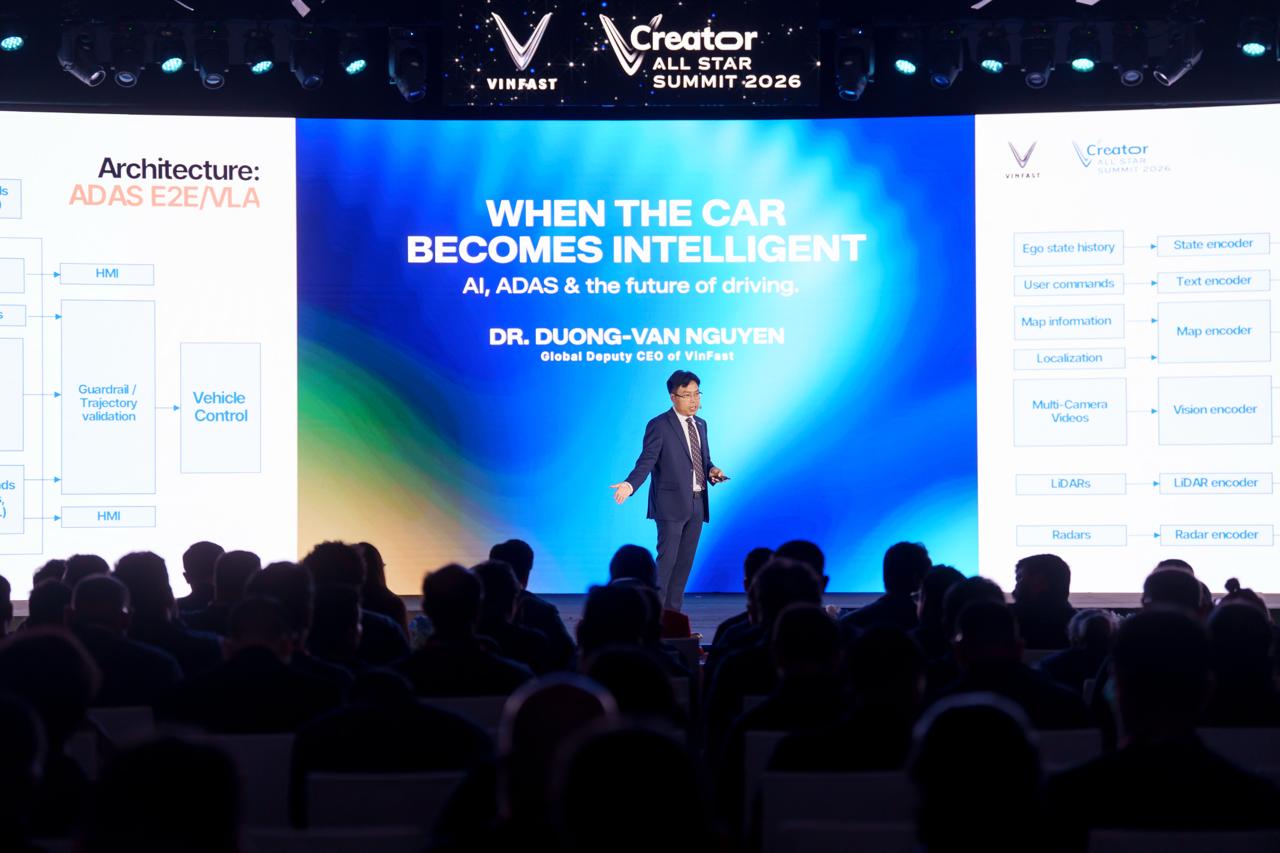
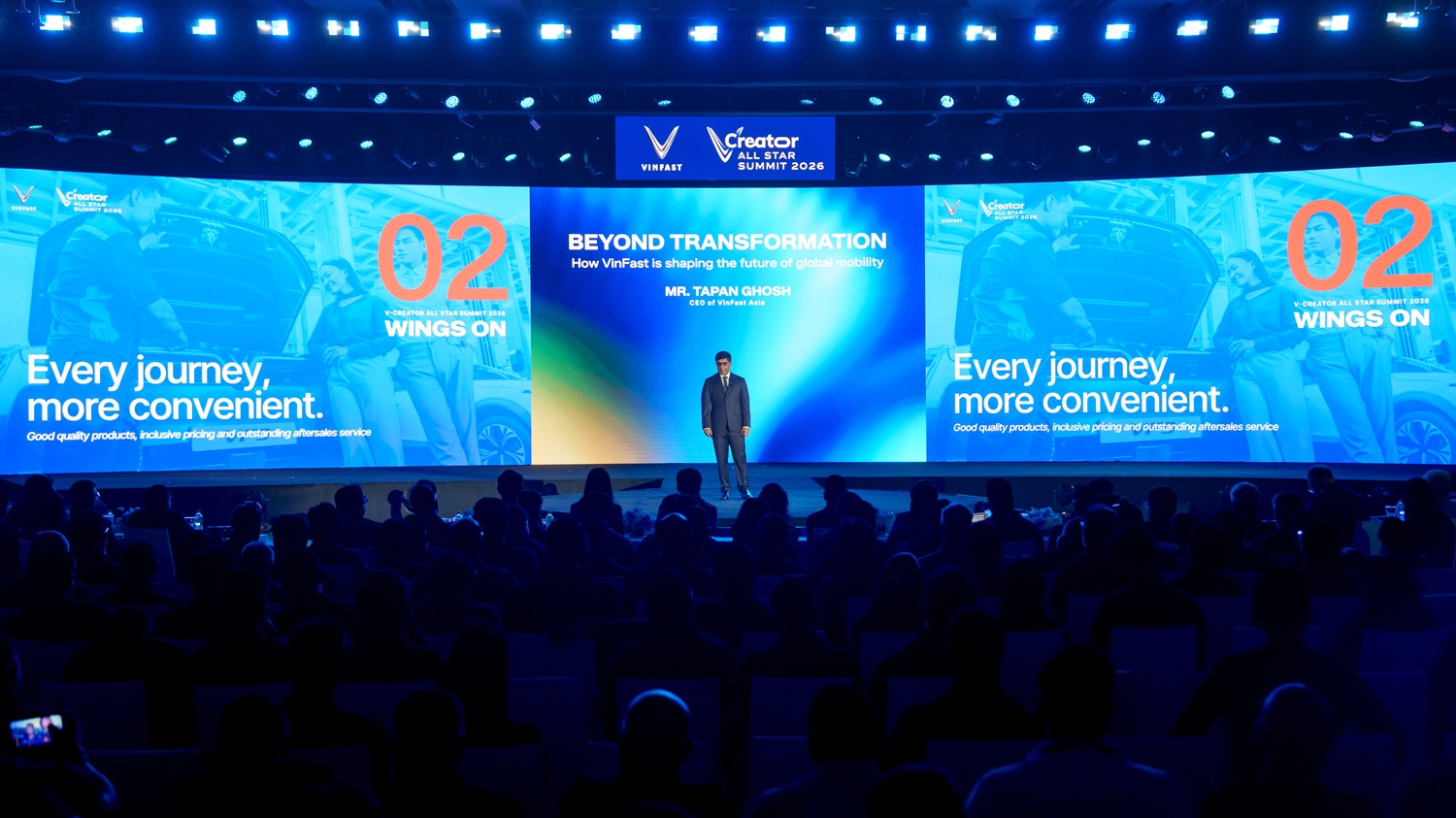
VinFast Deputy CEO Prof. Dr. Duong Van Nguyen shares the company’s strategy with international media at the V-Creator All Star Summit 2026 in Nha Trang, Vietnam
 

As established automakers and technology companies invest heavily in software-defined vehicles (SDVs) and automated driving, Vietnam’s VinFast is accelerating its own technological transformation.
 

At the V-Creator All Star Summit 2026, held in Nha Trang, Vietnam, from November 15 to 19, VinFast offered international media a closer look at its engineering strategy, combining in-house technology development, global partnerships and the resources of parent company Vingroup.
 

While electrification established VinFast’s presence on the global automotive stage, vehicle intelligence is increasingly shaping its next chapter.
 

From electric vehicles to software-defined vehicles

The transition toward software-defined vehicles represents a fundamental shift in automotive engineering. Rather than relying on numerous distributed electronic control units, automakers are moving toward centralized computing architectures that enable greater software integration, more efficient development and scalable vehicle functionality.
 

For VinFast, this transition is already taking shape in production vehicles. Launched in Vietnam in May 2026, the all-new VF 8 marks a significant milestone in the company’s engineering evolution. Beyond improvements to its chassis, suspension and driving dynamics, the electric SUV introduces a next-generation electrical/electronic (E/E) architecture developed in-house.
 

At its core is a Central Vehicle Computer (CVC), designed to coordinate vehicle functions and support more integrated software development.
 

The new VF 8 also marks the first commercial deployment of VinFast’s internally developed advanced driver-assistance systems (ADAS), encompassing highway driving assistance, adaptive cruise control, lane-keeping assistance, automatic emergency braking, blind-spot warnings and surround-view monitoring.
 

The significance extends beyond individual features. Developing the underlying architecture and software gives VinFast greater control over system integration, engineering costs and the evolution of future vehicle platforms.
 

According to its 2025 annual report, VinFast had nearly 2,500 in-house research and development professionals at year-end, including more than 600 software engineers.
 

For an automaker founded less than a decade ago, that engineering investment underscores the growing importance of proprietary technology in its long-term competitive strategy.
 

Two technology paths, one long-term ambition

At the summit, Prof. Dr. Duong-Van Nguyen, VinFast’s Deputy CEO overseeing ADAS and autonomous driving, outlined a dual-track development strategy: advancing Level 2 and enhanced Level 2 driver-assistance systems for passenger vehicles, while developing Level 4 automated driving technology for future mobility applications.
 

For near-term ADAS development, VinFast is pursuing a hybrid architecture that combines AI-powered perception, sensor fusion and conventional rule-based algorithms for motion planning and vehicle control.
 

This approach seeks to balance computational efficiency, predictable system behavior, safety validation and affordability — considerations that are particularly important when deploying advanced technologies across mass-market vehicle segments.
 

Nguyen also presented advanced automated parking and vehicle-summoning capabilities, illustrating how software could address everyday challenges such as maneuvering in confined parking spaces.
 

These technologies form part of a broader effort to advance driver assistance. Level 2 systems, however, still require continuous driver supervision and do not constitute autonomous driving.
 

For higher levels of automation, VinFast is exploring more sophisticated AI architectures, including end-to-end learning and Vision-Language-Action (VLA) models.
 

An emerging area of automotive AI research, VLA technology connects visual perception with contextual reasoning and action generation. The objective is to enable vehicles to interpret complex traffic scenarios, anticipate potential hazards and make increasingly context-aware driving decisions.
 

Although these technologies remain under development and validation, their inclusion in VinFast’s roadmap reflects the company’s efforts to keep pace with advances in intelligent vehicle engineering worldwide.
 

Southeast Asia as a proving ground for automotive AI

One of the more distinctive aspects of VinFast’s technology strategy is the environment in which its systems are being developed.
 

Vietnam’s urban roads present formidable challenges for automated driving systems. Dense motorcycle traffic, complex interactions among road users and constantly changing traffic conditions create a demanding environment for perception, prediction and motion planning.
 

For automotive AI engineers, these conditions represent both a technical challenge and a potentially valuable source of real-world driving data.
 

VinFast is seeking to leverage this opportunity through the broader Vingroup ecosystem, particularly Green SM, its affiliated electric mobility services operator.
 

Access to commercial fleet operations could provide diverse driving datasets, supporting the training, testing and continuous refinement of AI-powered driving systems.
 

VinFast’s development framework encompasses data collection, scenario identification, AI training, simulation, benchmarking and vehicle-level validation. Complex driving scenarios can be reconstructed in virtual environments to evaluate system performance and refine subsequent software iterations.
 

The approach reflects the automotive industry’s growing emphasis on data-driven engineering, in which software development and real-world validation become increasingly interconnected.
 

Successfully addressing Southeast Asia’s complex traffic environments could help VinFast build engineering expertise with applications well beyond its home market.
 

Global expertise, proprietary engineering

“Partner to move fast. Build in-house capabilities to go far.”. Presented by Nguyen at V-Creator, that principle encapsulates VinFast’s approach to technology development.
 

In January 2026, VinFast announced a strategic partnership with automotive AI specialist Autobrains to develop enhanced Level 2 driver-assistance systems and explore more cost-efficient automated driving architectures. Initial pilot testing had begun on VF 8 and VF 9 vehicles.
 

In June, the collaboration expanded to include a next-generation Level 4 automated driving program built on the NVIDIA DRIVE Hyperion platform.
 

By combining international expertise in automotive computing and AI with its own engineering resources, vehicle platforms and mobility ecosystem, VinFast is seeking to accelerate technological development while strengthening its proprietary engineering capabilities.
 

The roadmap presented at V-Creator identifies 2026 as a period of technology validation and platform selection, followed by industrialization and planned initial service deployment in 2027, including applications at Vinhomes Green Paradise in Can Gio, Vietnam.
 

These milestones remain subject to further engineering development, safety validation and applicable regulatory requirements.
 

Bringing automotive intelligence to the mass market

For VinFast, the ultimate measure of automotive intelligence is not the sophistication of its underlying algorithms, but the tangible value delivered to customers.
 

As Tapan Ghosh, CEO of VinFast Asia, explained at the summit: “A smart car should give drivers fewer things to worry about and more time to enjoy life.”
 

VinFast envisions increasingly connected vehicles capable of learning from usage patterns, anticipating maintenance needs, recommending charging locations and delivering more personalized assistance.
 

This philosophy is particularly relevant in fast-growing automotive markets such as India, Indonesia and the Philippines, where affordability, practicality and ease of ownership remain central to purchasing decisions.
 

The challenge is not simply to develop advanced technology, but to make it reliable, intuitive and accessible across a broad range of vehicle segments.
 

As the global automotive industry moves toward increasingly intelligent, connected and software-defined vehicles, the ability to develop, integrate and continuously refine core technologies is becoming a critical differentiator.
 

VinFast’s investments in proprietary software, AI, advanced driver assistance and automated driving reflect an ambition that extends beyond electrification: to build the technological depth required to compete in the next era of automotive innovation.
 

For a young automaker that entered the global industry during one of its most disruptive transitions, the next defining milestone may lie not in how its vehicles are powered, but in how intelligently they operate — and how effectively VinFast can bring that intelligence to the mass market.
 

About VinFast

VinFast (NASDAQ: VFS), a subsidiary of Vingroup JSC, one of Vietnam’s largest conglomerates, is a pure-play electric vehicle (“EV”) manufacturer with the mission of making EVs accessible to everyone. VinFast’s product lineup today includes a wide range of electric SUVs, e-scooters, and e-buses.
 

VinFast is currently embarking on its next growth phase through rapid expansion of its distribution and dealership network globally and increasing its manufacturing capacities with a focus on key markets across North America, Europe, the Middle East and Asia.
 

Learn more at vinfastauto.in.

Sacred Weaves Brings Authentic Banarasi Silk Sarees to the Wedding Season

Established in 2017 by Shruti Shah, Sacred Weaves is a Varanasi-based luxury handloom brand specialising in authentic pure Banarasi silk sarees. Rooted in the textile heritage of Banaras, the brand brings traditional handwoven craftsmanship to customers across India and internationally. Working directly with skilled local weavers, Sacred Weaves offers 100% pure silk, handwoven Banarasi sarees with a focus on Silk Mark certification, quality, authenticity, and traditional weaving techniques.


Sacred Weaves is a Trusted Destination for Pure Banarasi Silk Sarees


Founded with a vision to make genuine Banarasi handloom textiles accessible through a trusted online platform, Sacred Weaves combines generations of textile knowledge with a modern shopping experience. Its collections include Katan silk, brocade, tissue silk, satin silk, and other traditional Banarasi weaves, created for customers who value the richness of pure silk and the craftsmanship of Varanasi’s artisans.


Celebrate the Wedding Season with Pure Banarasi Silk Sarees
As the wedding shopping season gathers momentum, Sacred Weaves invites customers to celebrate special occasions with authentic Banarasi silk sarees. Known for their luxurious texture, intricate zari work, and timeless designs, traditional Banarasi sarees continue to be a popular choice for bridal wear, wedding functions, family celebrations, and meaningful gifting.


For brides and families preparing for wedding celebrations, Sacred Weaves offers a dedicated Wedding Banarasi Saree Collection, featuring richly woven Katan silk, traditional brocade, elegant pastels, classic reds, and statement designs. The collection brings together sarees suited to brides, wedding guests, and women looking for distinctive traditional attire for important family occasions.


Each saree represents the weaving skills and artistic heritage of Banaras, making it more than an occasion-specific outfit. A genuine handwoven Banarasi silk saree can become a treasured part of a family’s wardrobe for generations.


Why Sacred Weaves Is a Trusted Destination for Pure Banarasi Silk Sarees
With affordable Banarasi-inspired sarees increasingly available across online marketplaces, shoppers often face challenges in distinguishing pure silk handloom sarees from synthetic fabrics and mass-produced alternatives.


Sacred Weaves focuses on this distinction by offering genuine handwoven Banarasi silk sarees crafted in Varanasi. The brand emphasises transparent product information, traditional weaving craftsmanship, and Silk Mark certification to help customers make informed purchasing decisions.


Unlike mass-produced sarees that reproduce traditional Banarasi patterns using mechanised production, handwoven Banarasi sarees require skilled craftsmanship, attention to detail, and significant weaving expertise.


For shoppers planning to invest in a pure Banarasi silk saree for weddings or other special occasions, Sacred Weaves offers a destination where traditional craftsmanship and product authenticity remain central to the shopping experience.


Sacred Weaves Banarasi Sarees Worn by Celebrated Personalities
The appeal of Sacred Weaves extends to personalities from entertainment, music, and public life who have been featured wearing the brand’s Banarasi creations.


The brand’s SW Women page showcase features Madhuri Dixit Nene in a Paithani Silk Banarasi saree, Shreya Ghoshal in Katan silk, Shruti Haasan in satin silk, Ankita Lokhande in organza silk, and Mandira Bedi in a Rangkat Banarasi saree, among other personalities.


These appearances highlight the versatility of traditional Banarasi textiles and their continuing relevance in contemporary Indian fashion, from celebrated public figures to women choosing meaningful handwoven sarees for personal milestones.


For Sacred Weaves, this visibility reflects the enduring appeal of authentic Banarasi craftsmanship across generations and different styles of dressing.


Shop Pure Banarasi Silk Sarees Online at Sacred Weaves
Sacred Weaves has developed an online shopping experience designed for customers who want to purchase genuine Banarasi silk sarees without visiting traditional textile markets in person.


Through its website, shoppers can explore handwoven collections, review saree details, and access live video shopping assistance to examine colours, fabric texture, zari work, and designs before making a purchase.


With Silk Mark certified products, worldwide shipping options, and a focus on authentic Varanasi craftsmanship, Sacred Weaves connects traditional handloom textiles with modern online shoppers.


Whether selecting a pure Banarasi silk saree for a wedding, choosing a bridal Banarasi saree, or investing in a handwoven creation for future occasions, customers can discover the brand’s collections at Sacred Weaves.


About Sacred Weaves
Established in 2017 by Shruti Shah, Sacred Weaves is a luxury Banarasi handloom brand based in Varanasi, Uttar Pradesh. Associated with the textile heritage of JDS Varanasi, the brand specialises in pure silk, handwoven Banarasi sarees produced by skilled local weavers. With a focus on Silk Mark certification, traditional craftsmanship, and online shopping, Sacred Weaves brings authentic Banarasi textiles to customers in India and worldwide.


Website: www.sacredweaves.com


Location: D 63/12, Virat Estate, 3rd Floor, Mahmoorganj, Varanasi, UP, India – 221010
Phone: +918887898984 (10:00 – 18:00 IST)

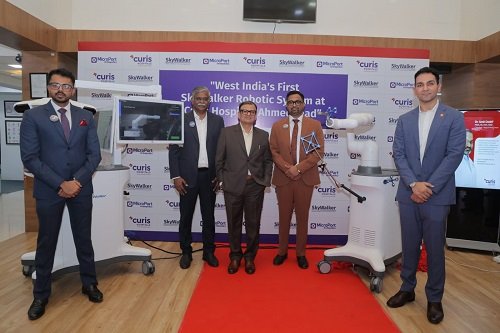
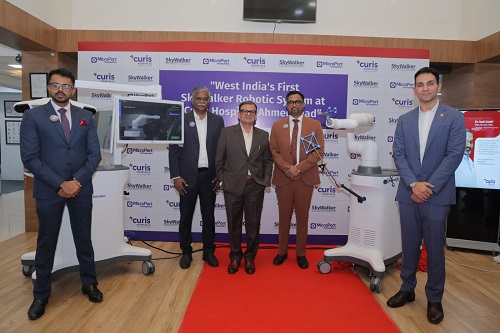
West India's First SkyWalker Orthopedic Robotic System Launched at CURIS Hospital, Ahmedabad

CURIS Hospital, Ahmedabad, has become the first medical institution in Western India to introduce the SkyWalker Orthopedic Robotic System for knee replacement surgery, in collaboration with U.S.-headquartered MicroPort Orthopedics Inc. This landmark installation marks a significant advancement in the orthopedic care landscape across Gujarat and parts of Rajasthan, M.P. and Maharashtra, and is a moment of pride for both Ahmedabad and CURIS.


https://www.newsvoir.com/images/article/image1/37508_image_25-11-2026.jpeg

R to L : Dr Mukesh Parmar, Dr Ajaysinh Devda, Dr Abhay Khandekar, Mr Ramesh Balasubramanian, Dr Harshil Shah for the launch of SkyWalker orthopedic robotic system at CURIS Hospital


SkyWalker is the only orthopedic robotic platform globally that is integrated with a patented True Medial-Pivot Knee philosophy, delivering sub-millimeter precision for highly accurate joint alignment. This technology enables superior stability, improved functional outcomes, and faster recovery—resulting in a durable, natural-feeling knee that allows patients to return more quickly to everyday activities such as walking long distances and climbing stairs with confidence and ease.


“CURIS Hospital is defined by patient-centric care, continuous advancement, and a commitment to remain at the forefront of medical science,” said Ramesh Balasubramanian, Chairman & Founder, CURIS Hospital. “Healthcare innovation should never be limited by geography. At CURIS, our vision is not simply to introduce advanced technology, but to transform the way healthcare is experienced by patients. We believe that patients in Ahmedabad and across Western India deserve access to world-class medical technology, clinical expertise, and surgical excellence comparable to the best anywhere in the world. The launch of SkyWalker marks an important milestone in this journey, bringing greater precision, innovation, and the promise of better patient outcomes closer to home—empowering patients to regain mobility, independence, and confidence without having to travel far for advanced treatment.”


Dr. Ajaysinh V Devda, Director of Orthopedic Department at CURIS Hospital, said “Entire Gujarat is witnessing significant rise in knee osteoarthritis— especially in elderly. Many of these patients are having bone-on-bone arthritis and severe deformities. Whether it is severe deformity or the more common case of knee osteoarthritis, patients seek total knee replacement surgery to regain mobility and independence. In this context, the SkyWalker Robotic System brings paradigm shift by supporting intelligent CT based patient specific planning capabilities and precise bone cutting through its proprietary Motion Follow technology, enabling accurate joint-line reconstruction with greater ease, reduced discomfort, and notably faster recovery.”


SkyWalker is fully compatible with the Evolution® Medial-Pivot Knee System, which closely replicates natural knee kinematics. This combination overcomes long-standing challenges associated with conventional knee replacement—such as instability and residual pain. These two advanced technologies are designed to enhance clinical outcomes and boost overall patient satisfaction.


“We believe that the real time dynamic gap balancing feature and built-in kinematic principles of SkyWalker allow complex cases to be managed far more effectively than traditional non-robotic techniques. It clearly stands apart from existing options, establishing a new patient-first benchmark in knee replacement surgery and elevating the overall surgical experience,” added Dr. Harshil Shah, Consultant, Orthopedics at CURIS.


Dr. Mukesh Parmar, Managing Director and Senior General Manager for South Asia, MicroPort Orthopedics, commented, “We are privileged to introduce the SkyWalker system at CURIS, an institution committed to patient outcomes. The Evolution® Medial-Pivot Knee, with over 95% patient satisfaction, 98.8% survivorship at 17 years and 91% Forgotten Joint Scores worldwide, brings proven long-term performance to patients in India. Combined with the SkyWalker system’s precision and personalised surgical planning, it offers a refined, customised approach to total knee replacement, in line with global standards.”


With the introduction of the SkyWalker Orthopedic Robotic System, CURIS, Ahmedabad, further strengthens its position as a leading destination for advanced orthopedic care in India, transforming patient outcomes and redefining standards in knee replacement surgery.


About MicroPort Orthopedics Inc.
With presence in over 100 countries, MicroPort Orthopedics Inc. leverages decades of orthopedic expertise and strong clinical evidence to improve patient outcomes and enhance provider satisfaction worldwide. Its mission is to partner with surgeons to redefine hip and knee replacement solutions that meet the evolving demands of today’s patients. With a focus on innovation and a commitment to helping patients achieve “Full Function, Faster”, MicroPort Orthopedics supports healthcare providers in delivering world-class care every day. Learn more: www.microportortho.com.


About CURIS Hospital
CURIS Hospitals is a multi-speciality healthcare network founded in July 2025 by Mr. Ramesh Balasubramanian. It was envisioned as a connected healthcare ecosystem built on trust, collaboration, and accessibility.


Driven by empathy and guided by clinical excellence, CURIS is developing a healthcare model that strengthens communities, improves patient outcomes, and expands access to advanced medical care across Tier 2, Tier 3, and Tier 4 cities. Through this approach, the organization aims to bridge critical healthcare gaps and ensure that more communities have access to reliable, affordable, and quality healthcare services.


CURIS Hospitals is invested by Inviga Fund, an AIF Category II Private Equity Fund sponsored by Dr. B. S. Ajaikumar, Founder and Chairman of the HCG Group. Together, CURIS and Inviga bring more than 80 years of combined healthcare experience and are committed to building and managing a robust network of hospitals across India. Learn more www.curishospitals.com.