Home Blog Page 33

Bisleri International Partners with Maharaja's College and Yuvaraja College, University of Mysore, To Promote Responsible Waste Management

Bisleri International, India’s leading packaged drinking water company, has signed a Letter of Association (LOA) with Maharaja’s College and Yuvaraja College, two of the constituent colleges of the University of Mysore, under its flagship sustainability initiative, Bottles for Change. The partnership aims to promote responsible plastic waste management, source segregation, and recycling practices across both campuses by engaging students through various activities.
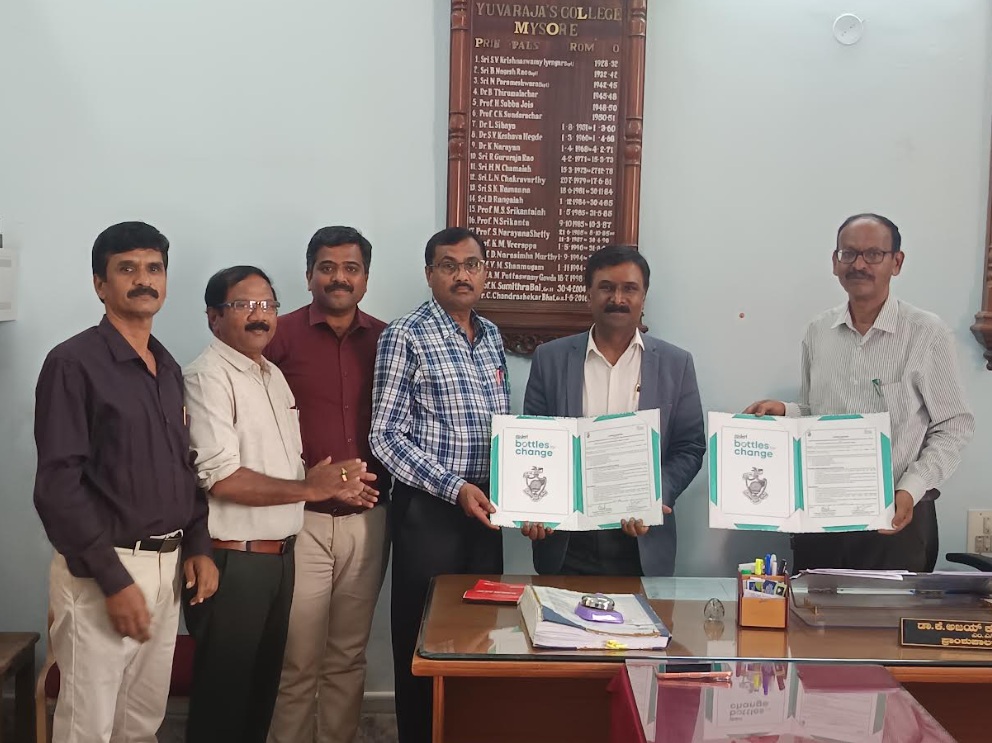
 

Bisleri International and Yuvaraja College, University of Mysore, partner to promote responsible plastic waste management under Bottles for Change


As part of the collaboration, Bisleri will provide training and guidance on responsible plastic waste management along with recycling support. The colleges will facilitate programme implementation and enable students, faculty members, and staff to participate and integrate sustainable practices into campus activities.
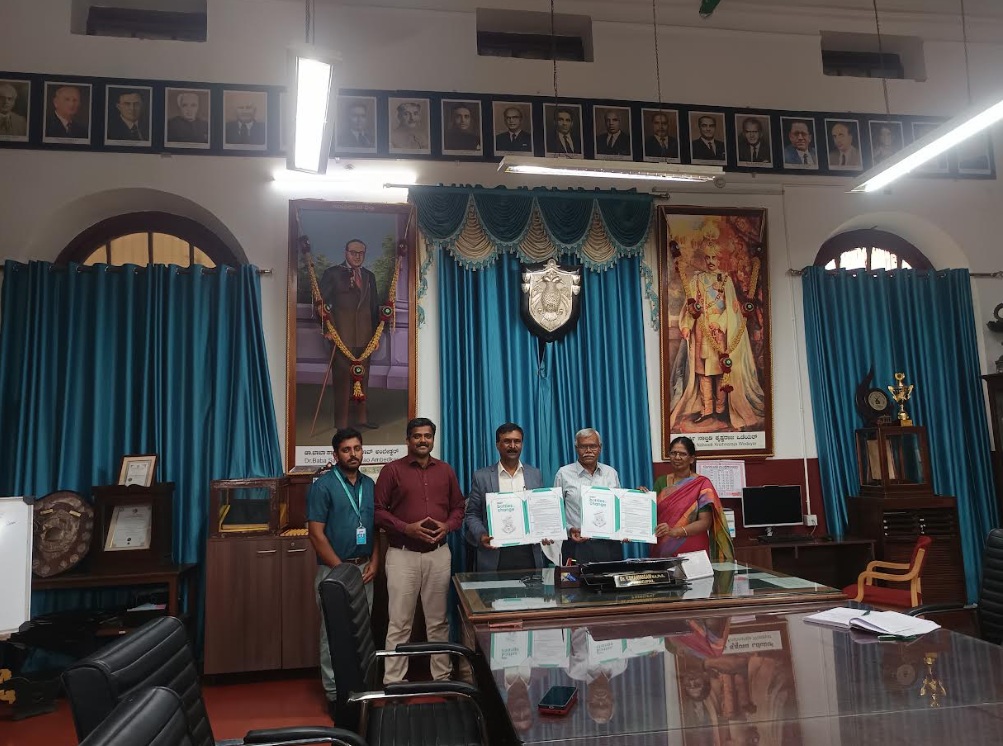
 

Bisleri International and Maharaja’s College, University of Mysore, join hands to build a culture of responsible plastic waste management on campus


The programme is designed to be highly engaging. It will use awareness sessions, workshops, and plastic collection drives to inform the participants about source segregation, collection, and recycling.  These activities will help students understand how used plastic can be a valuable resource, why it must be recycled, and encourage them to adopt sustainable waste management practices in their daily lives.


Commenting on the partnership, Mr K. Ganesh, Director, Sustainability & Corporate Affairs, Bisleri International Pvt. Ltd., said, “Educational institutions have the power to shape attitudes and behaviours that create long-term impact. Through Bottles for Change, we are working with young minds to build awareness around responsible plastic waste management and recycling. Our association with Maharaja’s College and Yuvaraja College will help strengthen sustainability practices on campuses and encourage students to become advocates for environmental responsibility within their communities.”


Dr. K. Ajay Kumar, Principal, Yuvaraja College, said, “We are delighted to partner with Bisleri International and bring the Bottles for Change initiative to our campuses. This collaboration will provide meaningful opportunities for students to understand sustainable waste management practices and apply them in their lives. We believe that learning by doing will inspire greater environmental responsibility among the youth and help build a culture of sustainability within our institutions.”


Adding to this, Dr. V. Shanmugam, Principal, Maharaja’s College, said, “Our association with Bisleri International is an important step towards encouraging responsible waste management across our campuses. Through the Bottles for Change initiative, we aim to sensitise students to the importance of segregating and recycling plastic waste and encourage them to adopt sustainable practices in their everyday lives. We hope this initiative will empower students to become active participants in building a cleaner and more sustainable future.”


As an integral part of Bisleri’s Greener Promise vision for a more sustainable future, Bottles for Change promotes responsible plastic management by raising awareness and building infrastructure to support collection and recycling. The initiative works with educational institutions, communities, and other stakeholders to encourage behavioural change and strengthen systems that help channel used plastic towards recycling.


The collaboration with Maharaja’s College and Yuvaraja College extends this effort by engaging students in hands-on sustainability initiatives. It also equips them to promote responsible waste management practices in the wider community, helping raise awareness towards the larger goal of building a circular economy for plastics.


About Bisleri International Pvt. Ltd

With a legacy of over 50 years, Bisleri International Pvt. Ltd has grown to become one of the largest premium beverage businesses in India. Being the makers of the country’s largest-selling packaged drinking water, Bisleri follows a stringent process of 90 quality tests and a 10-stage purification. It remains true to its core value of providing consumers with pure, safe and healthy water.


Bisleri International has a strong presence with 130 operational plants and a robust distribution network of over 6,000 Distributors and 7,500 Distribution Trucks across India and UAE market. It offers a range of beverages that are produced for all occasions. Whether it is the promise of goodness, trust, and purity with Bisleri packaged drinking water, or a daily dose of health offered through Vedica Himalayan Spring Water. Besides, Bisleri International has ventured into fun-filled refreshments with a diverse range of carbonated drinks available in multiple flavours, such as Bisleri Limonata, Bisleri Pop and Bisleri Soda. These Bisleri products are also available on the e-commerce platform – Bisleri@Doorstep. This D2C platform reassures customers that they will receive a safe and uninterrupted supply of their most trusted brand at their doorstep.


The core values of Bisleri International lie in yielding growth and embedding sustainability by being responsible in all aspects of the business. The organization has unveiled Sustainability 2.0 with Bisleri Greener Promise that focuses on creating greener future for all through implementing initiatives under the program of recycling, water conservation, and sustainability.


For more information on Bisleri International, our people, brands, and OSR initiatives, visit www.bisleri.com.


Nikhil Kamath Asks the People Building AI in San Francisco Whether the Boom is Real, and Where It Goes Next

Companies started six months ago are valued at a billion dollars. Investors trade secondaries “like they’re selling potato chips”. And the productivity gains everyone talks about have yet to show up in GDP. In the latest episode of WTF, recorded in San Francisco, Nikhil Kamath brings a stock market investor’s scepticism to four people building across the AI stack, and asks them whether the boom is real.


His guests are Akshay Kothari, Co-founder of Notion, the collaboration platform now built for humans and agents alike; Azalia Mirhoseini, Co-founder of Ricursive Intelligence, and Anna Goldie, Co-founder and CEO of Ricursive Intelligence, the frontier lab using AI to design AI chips; and Vijay Krishnan, Co-founder of Turing, which supplies the expert data used to train frontier models. Kamath opens by mapping the stack as he sees it: chips and data centres, frontier labs, neo labs, data trainers, inference providers, applications and, as the panel adds, services. From there the conversation moves through the economics of the boom, the slow spread of AI beyond the Valley, and what countries like India should build next.


The central debate is whether the money adds up. One panellist puts committed AI spending this year at around USD 700 billion, against roughly USD 100 billion in enterprise AI revenue. The bet, the argument goes, is not on software, which accounts for about 1% of US GDP, but on services and knowledge work, which together account for far more. Krishnan adds a challenge of his own: name one Fortune 500 company outside the AI business, “a Pepsi or a Coke”, that has meaningfully grown revenue or cut costs. Yet he is equally clear that software teams can now safely run at half to 60% of their former size, “a giant productivity improvement” that nobody in the Bay Area disputes. Goldie questions what should count as AI revenue at all. At Ricursive, she says, AI coding tools have made it possible to hire only a small team of deep experts, a strategy that would not have worked a few years ago.


Kothari’s explanation for the gap is diffusion. Capability is growing exponentially, but most people outside the Valley still use AI “as a better search tool”, and one study he cites finds the top 1% of companies spend ten times more on AI than the top 10%. New technologies have always taken time to absorb, he says: the first printing presses copied handwriting, and the first films were recordings of stage plays. He separates two ways of using AI: an efficiency branch, doing yesterday’s work with 30% of the people, and an ambition branch, where a team of a hundred does five times as much. Today, “the biggest barrier is just imagination.”


Mirhoseini starts at the bottom of the stack. AI inference demand is growing 10 to 100 times, and on a conservative estimate, she says, the world will need 100,000 times more compute in five years than it has today. “We are not going to get that simply by just scaling our data centers,” she says. Ricursive’s answer is AI that designs custom chips for specific workloads, a way out of the “hardware lottery” in which chips are built for today’s models and models are built for today’s chips. The two founders have done this before. AlphaChip, the AI system they built at Google for chip layout, has now been used across five generations of TPUs, Goldie says, as well as Axion, Pixel phones and Waymo chips, and has been adopted by MediaTek.


Krishnan explains the less visible work of making models smarter. A 2022 OpenAI paper showed that a small amount of high-quality, targeted data could improve a model substantially, which made it worth hiring experts to write problems today’s models can’t yet solve. Turing draws on more than 5 million knowledge workers across 70-plus countries, from software engineers and PhDs in physics and chemistry to lawyers and doctors. The catch, he says, is that “whatever it is we are doing today will be obsolete nine months from today because all models have learned it.”


Kothari brings the view from the application layer. At the start of the year, about 1% of Notion’s users were agents; today that figure is 30%. People who use Notion through other agents, without ever opening it, are two to three times more active, because users want a neutral place for their context as they switch between models. Companies, he notes, have moved within six months from “token maxing” to “token economics”, choosing cheaper models wherever the frontier isn’t needed. In software, he says, engineers in the Valley have gone in under a year from writing code to managing agents.


Goldie offers an insider’s view of the companies that shaped the field. She was at Google Brain the night the Transformer team got its breakthrough result, and watched Google hold back an early chatbot over fears of bad press before its creators left to start Character.AI. Nvidia’s moat, she argues, is no longer CUDA, its software platform, since models can now write assembly directly. It is the racks, the ecosystem and the scale.


Kamath brings ideas of his own to the table. If AI agents can move money, he asks, will humans become a business model, a “human friction layer” that sits between AI and execution, the way a nuclear launch still needs a person to turn the key? Krishnan points to a recent Stanford Business School talk arguing much the same: even a little friction becomes the rate limiter, which may be why no AI optimist is forecasting double-digit US growth. Kamath expects sovereign AI to follow the path of social media, with governments wary of foreign companies holding their citizens’ attention and pushing for domestic alternatives. And he says anything he writes now would sit behind a paywall rather than be absorbed by a model, because what travels is “the principle of my idea with the anonymized author”, not the author.


He is candid about his own experience too. Last year, he recalls, Sam Altman told him to buy luxury names like Hermès and LVMH, on the theory that rising productivity would send people looking for brands that set them apart. Those stocks have since fallen. He also admits that leaning on AI has made him worse at things he once did easily. Krishnan’s bigger worry is children: if they never build basic skills, “it is very difficult for me to see what value they can add over a model at all.”


The conversation also turns to risk. Krishnan compares the logic of autonomous weapons to the game theory of the nuclear age, while Mirhoseini and Goldie, both early Anthropic employees, say they believe the safety concerns voiced by its leadership are sincere.


For India, the advice is practical. The first answer comes immediately: “Build compute. That’s a no-brainer.” Kamath frames the stakes: as AI reshapes services, India will need something to fill the hole that IT outsourcing leaves behind. One guest calls it a missed opportunity that Indian IT companies have not become the world’s Turings, given how much of this work is already done by people in India. Kothari says it is still too hard to start a business there, with a single angel investment taking three months of paperwork and notarisation. Goldie points to a Stanford collaborator who was selected by the Indian government and given thousands of GPUs to build a speech model for Indian languages. And Kamath points to Skyroot, the Indian space company US investors are now competing to back. Space, the panel agrees, shows what India does best: “take something that the world is doing and actually do it at like a hundredth of the cost.”


Throughout the episode, Kamath returns to one question: if he had USD 100 million, where in the AI stack should he build? Mirhoseini points to compute efficiency: “If you’re spending USD 100 million on a model, but you’re saying, I’m 10x more efficient than my competition, then this is as if you’re spending a billion dollar on your model.” Goldie’s answer is blunter. Founders should ask what has to happen that only they can do, and if they can’t answer that, “maybe you shouldn’t start a company.” Other parting suggestions include a university for product design in India, and, from Krishnan, an AI tool that lets a child learn at ten times the pace. Kamath’s own instinct is social media, which he believes will turn the other way: “The new social media will almost be like, get off your device.”


The episode is available now on YouTube.


About People by WTF

People by WTF is a global podcast platform hosted by Nikhil Kamath, featuring in-depth conversations with leaders across business, policy, technology, culture and academia. The show explores long-term institutional, technological and economic questions shaping global society through candid, high-signal dialogue.


Past guests include Elon Musk, Prime Minister Narendra Modi, Bill Gates, Ajay Banga, Martin Escobari, Rishi Sunak, Akshata Murty and Ranbir Kapoor.


Notes to the Editor

Guest Information

  • Akshay Kothari: Co-founder of Notion, the collaboration platform for work. Kothari grew up in Ahmedabad and studied at Purdue and Stanford. He co-founded Pulse, a news app acquired by LinkedIn, and went on to run LinkedIn in India for three years. An early investor in Notion, he joined full-time in 2018, when the team was about eight people.

  • Azalia Mirhoseini: Co-founder of Ricursive Intelligence, a frontier lab founded in 2025 that uses AI to design custom chips for AI workloads. Mirhoseini did her PhD at Rice University and joined Google Brain in 2016, where she co-led AlphaChip. She was among Anthropic’s first 30 employees, later worked part-time on Gemini, and is CS faculty at Stanford, where she founded the Scaling Intelligence lab.

  • Anna Goldie: Co-founder and CEO of Ricursive Intelligence. Goldie studied computer science and linguistics at MIT and did her PhD at Stanford on reinforcement learning for chip design and LLM post-training. She joined the first cohort of the Google Brain residency, co-developed AlphaChip and was an early employee at Anthropic.

  • Vijay Krishnan: Co-founder of Turing, which helps frontier AI labs improve their models with expert data and helps enterprises deploy AI. Krishnan studied at IIT Bombay and Stanford, where he worked with Chris Manning and Andrew Ng. His first company, in personalised search and content recommendations, was acquired. Turing began by building remote engineering teams and, since 2022, has worked with frontier labs, starting with OpenAI.


Key Themes Discussed

  • The AI stack, from chips and data centres to frontier labs, neo labs, data, inference, applications and services

  • Why compute demand is outpacing supply, and how AI-designed custom chips could close the gap

  • How expert human data trains frontier models, and why it goes out of date within months

  • Agents as users, and the shift from “token maxing” to “token economics”

  • Whether AI investment is a bubble, and why productivity gains aren’t yet showing up in GDP

  • The slow diffusion of AI beyond Silicon Valley

  • What Google, Nvidia and the frontier labs got right and wrong

  • Open-weight models, distillation and sovereign AI

  • What India and other countries should build to share in the AI boom

  • AI risk, the future of devices and interfaces, and what AI means for learning and skills

Axis Max Life Recognised Among Top 50 India's Best Workplaces for Women 2026

Axis Max Life Insurance Limited (“Axis Max Life” / “Company”), formerly known as Max Life Insurance Company Limited, has been recognised among the Top 50 India’s Best Workplaces™ for Women 2026, Large Category, marking a significant progression from being among the Top 100 last year. The recognition reflects the Company’s sustained efforts to foster a workplace where women are supported across different stages of their careers and lives, with equitable opportunities to grow, contribute and lead. 


Axis Max Life recognised among Top 50 India’s Best Workplaces™ for Women 2026


The milestone underscores Axis Max Life’s continued focus on strengthening Diversity, Equity & Inclusion (DE&I) as an integral part of its growth journey. Over the years, the Company has built an ecosystem of policies, programmes and support mechanisms designed around the evolving professional and personal needs of women employees. 


Mrinal Sinha, Chief People Officer, Axis Max Life Insurance, said, “Being recognised among India’s Top 50 Best Workplaces™ for Women 2026 is a proud milestone and a reflection of our belief that inclusion is fundamental to business success. This recognition acknowledges the deliberate steps we have taken to create a workplace where women are empowered to grow, lead and thrive at every stage of their professional and personal journey. Moving from the Top 100 to the Top 50 is encouraging progress, but our ambition goes beyond rankings. We remain committed to building a culture rooted in Bharosa, where every individual feels valued, supported and equipped with opportunities to realise their full potential.”


Axis Max Life’s approach focuses on supporting women across key life and career stages, from parenthood and childcare to returning to work, career development, wellbeing and leadership. The Company offers 26 weeks of paid maternity leave, along with adoption, surrogacy and miscarriage leave provisions and performance protection during maternity. Its childcare ecosystem includes crèche reimbursement, additional healthcare support for children requiring special medical treatment and parent counselling.


To enable women to continue and restart their careers, Axis Max Life has built structured return-to-work support, including half-day/half-pay provisions for three months following 26 weeks of paid leave, flexible working hours for new mothers and need-based work-from-home support. Programmes such as Pragati further support women returning to the workplace, while platforms such as WINspire are designed to strengthen women’s communities and create opportunities for connection, development and growth. 


The Company’s women-centric framework also extends to health, wellbeing and work-life integration. It includes access to healthcare and expert guidance, consultations addressing physical, mental and emotional health, and regular sessions focused on health, fitness, nutrition, mental wellbeing and parenting. The women-centric policy framework shared by the Company groups these efforts across eight areas: Maternity & Parenthood, Childcare Support, Return to Work, Health & Wellness, Work-Life Balance, Family Support, Sabbatical Leave, and Equity, Inclusion & Safety. 


The recognition comes close on the heels of Axis Max Life’s recent Great Place To Work recognition, further reinforcing the Company’s efforts to build a culture anchored in Bharosa, care, inclusion and opportunity. As the organisation grows, it remains focused on creating an environment where diverse talent can thrive and inclusion translates into meaningful everyday employee experiences. 


About Axis Max Life Insurance Limited (https://www.axismaxlife.com)
Axis Max Life Insurance Limited (the “Company”), formerly known as Max Life Insurance Company Ltd., is a subsidiary of Max Financial Services Limited (“MFSL”) with Axis Bank Limited and its affiliates also being shareholders of the Company. Axis Max Life offers comprehensive protection and long-term savings life insurance solutions through its multi-channel distribution, including agency and third-party partners. The Company has built its operations on a need-based sales process, a customer centric engagement model and trained human capital. As per audited financials for FY2025-26, Axis Max Life recorded a gross written premium of INR 38,877 crore. 

IRDAI Registration. No – 104
Company Identification Number – U74899HR2000PLC143012
 

For more information, please visit the Company’s website at www.axismaxlife.com

Samsung Galaxy Tab S12 Ultra vs Galaxy Tab S12 Plus: Everything to Know Before Buying

Samsung launched the Samsung Galaxy Tab S12 Ultra and the Samsung Galaxy Tab S12 Plus in India on 7 October 2026, both powered by the 3nm MediaTek Dimensity 9500, running Android 17 with One UI 9, and shipping with an S Pen. The defining difference between them is screen size — and everything that follows from it.


Which Samsung tablet is worth buying? Explore the key differences between the Galaxy Tab S12 Ultra and S12 Plus before making your choice


Both tablets are available on Easy EMIs from Bajaj Finance. The Bajaj Finance Easy EMI Loan covers up to Rs. 5 lakh, and the Bajaj Finance Insta EMI Card covers up to Rs. 6 lakh — both with tenures from 3 to 60 months. Zero down payment is available on select models.


What sets the Samsung Galaxy Tab S12 Ultra and S12 Plus apart?

Display size

The Galaxy Tab S12 Ultra has a 14.6-inch Dynamic AMOLED 2X display at 2960 x 1848 pixels. The Galaxy Tab S12 Plus uses a 12.6-inch panel at 2800 x 1752 pixels. Both panels run at 120Hz and reach a peak brightness of 1,600 nits. For document work, photo editing, sketching with the S Pen, or extended streaming sessions, the two-inch difference in screen size translates to a noticeably larger working area on the Ultra.


Battery and endurance

The Ultra carries an 11,600 mAh battery against the 10,600 mAh cell in the S12 Plus. Samsung rates the Ultra at up to 23 hours of video playback and the S12 Plus at up to 21 hours. Both support 45 W fast charging. The extra capacity on the Ultra is particularly useful when the larger display is running at full brightness for long stretches — during travel, all-day work sessions, or back-to-back video calls.


Rear cameras

The Galaxy Tab S12 Ultra has a dual rear camera setup: a 13MP main lens and an 8MP ultrawide. The S12 Plus carries a single 13MP rear camera. The ultrawide on the Ultra makes it easier to scan wide documents, capture full rooms, or frame group shots in a single take. Both tablets share a 12MP ultrawide front camera for video calls.


Wireless connectivity

The Galaxy Tab S12 Ultra supports Wi-Fi 7 (802.11be); the Galaxy Tab S12 Plus uses Wi-Fi 6E. On a compatible Wi-Fi 7 network, the Ultra can achieve higher throughput and lower latency — a practical advantage for large cloud uploads, remote desktop work, and high-quality video conferencing. Both models are also available in 5G variants.


Weight and portability

The Ultra (Wi-Fi) weighs 692g; the S12 Plus weighs 553g. At 139g lighter, the S12 Plus is the easier choice for those who carry a tablet daily — to the office, college, client meetings, or on long commutes.


Where the Samsung Galaxy Tab S12 Ultra and S12 Plus match

Despite the size difference, these two tablets share a substantial amount of hardware and software:

  • Same processor: Both run on the 3nm MediaTek Dimensity 9500 with 12GB RAM, delivering identical performance for multitasking, app-heavy workflows, and photo or video editing.

  • Same Galaxy AI features: Both get the full Galaxy AI suite in One UI 9, including Note Assist, writing tools, and productivity features across supported apps.

  • Same S Pen experience: Both include an S Pen in the box with low-latency input, and both support Adobe Photoshop via the S Pen.

  • Same software longevity: Samsung promises seven generations of OS upgrades and seven years of security patches for both models.

  • Same build and durability: Both carry an IP68 dust and water resistance rating and use Samsung’s Enhanced Armor Aluminum frame.

  • Same thickness profile: The Ultra measures 5.1mm; the S12 Plus measures 5.3mm — both are among the slimmest tablets in their class.


Samsung Galaxy Tab S12 Ultra and S12 Plus price in India

Samsung Galaxy Tab S12 Ultra prices start at Rs. 1,49,999 for the 12GB + 256GB Wi-Fi variant, with the following full pricing:

  • 12GB + 256GB, Wi-Fi: Rs. 1,49,999

  • 12GB + 512GB, Wi-Fi: Rs. 1,69,999

  • 12GB + 256GB, 5G: Rs. 1,64,999

  • 12GB + 512GB, 5G: Rs. 1,84,999


Samsung Galaxy Tab S12 Plus prices start at Rs. 1,29,999 for the 12GB + 256GB Wi-Fi variant:

  • 12GB + 256GB, Wi-Fi: Rs. 1,29,999

  • 12GB + 512GB, Wi-Fi: Rs. 1,49,999

  • 12GB + 256GB, 5G: Rs. 1,44,999

  • 12GB + 512GB, 5G: Rs. 1,64,999


Updated: Oct, 2026

Disclaimer: Prices may change based on availability, offers, and location. Please check the latest price before buying.


Which Samsung Galaxy Tab S12 is the better buy?

The Galaxy Tab S12 Ultra suits buyers who prioritise a larger display, extended battery life, dual rear cameras, and Wi-Fi 7 connectivity — particularly for content creation, multitasking across multiple windows, or all-day productivity away from a desk.


The Galaxy Tab S12 Plus offers the same processor, Galaxy AI experience, and S Pen capability in a body that is 139g lighter and Rs. 20,000 less expensive at the base variant. For those who prioritise portability and value over maximum screen real estate, it delivers the same core experience in a more manageable form factor.


How to buy the Samsung Galaxy Tab S12 series on Easy EMIs

The Galaxy Tab S12 Ultra and Galaxy Tab S12 Plus are available at Bajaj Finance partner stores on Easy EMIs, spreading the cost across monthly instalments rather than paying the full amount upfront:

  1. Visit the nearest Bajaj Finance partner store.

  2. Select the preferred Galaxy Tab S12 Ultra or Galaxy Tab S12 Plus variant.

  3. Enquire about available Easy EMI options and current offers.

  4. Choose an instalment tenure between 3 and 60 months.

  5. Complete the purchase and take home the new tablet the same day.

India's CSR Spending Reaches Rs 40,794 Crore In FY25, Funding Remains Unevenly Distributed Against Need: Sattva Consulting Report

India’s corporate social responsibility (CSR) spending reached Rs 40,794 crore in FY 2024–25, growing at a compound annual growth rate (CAGR) of 15% over the past decade. However, a new analysis by Sattva Consulting and India Data Insights finds that CSR funding remains concentrated in established sectors and better-funded geographies, even as several development indicators show limited progress or deteriorating outcomes.


The eighth edition of Sattva Consulting’s annual State of CSR in India report examines CSR spending against India’s development indicators to assess how closely funding aligns with areas of greatest need. The analysis comes against a backdrop of uneven progress towards the 2030 Sustainable Development Goals (SDGs): just 33.3 per cent of indicators are on track, while 42.7 per cent show limited progress and 24 per cent are worsening. These findings point to the need to move beyond broad sector-level allocations towards specific development challenges and their underlying drivers.


Education, healthcare, livelihoods and skilling, environment, and rural development together account for over 80 per cent of CSR funding. While these sectors represent core development needs, a deeper analysis reveals that funding is concentrated within specific sub-sectors. This creates an opportunity to direct CSR capital towards unmet needs and emerging development priorities within these sectors.


Geographic disparities further illustrate the challenge. The five states with the highest multidimensional poverty receive just Rs 94 in CSR funding per capita, compared with Rs 455 in the five lowest-need states. Bihar’s Multidimensional Poverty Index (MPI) is nearly five times that of Maharashtra. Yet, Maharashtra receives nearly 19 times more CSR funding per capita. Between FY2021–22 and FY2024–25, Maharashtra received an additional Rs 3,381.9 crore in CSR funding, compared with Rs 292.5 crore in Bihar.


While CSR funding in higher-need states and districts is beginning to grow, the increase is yet to translate into funding commensurate with the scale of development challenges. The report identifies significant headroom to deepen this shift: redirecting an additional 5% of FY2024–25 CSR funding to high-need districts would triple the funding they receive today.


“CSR has brought scale and predictability to funding, but addressing India’s persistent challenges requires greater agility in how this capital is deployed. Corporate philanthropy cannot remain static in its approach. It must continuously reassess where it can make the greatest difference, directing capital towards critical gaps where regions have been unable to break inertia and other forms of capital are less likely to flow,” said Srikrishna Sridhar Murthy, Co-founder and CEO, Sattva Consulting.


The report recommends that companies use partnerships, innovation and technology to make CSR a multiplier of impact, unlocking outcomes that extend beyond what funding alone can achieve.


About Sattva Consulting

Sattva Consulting is a global impact consulting firm from India. Since 2009, we have engaged with communities, business, and government to achieve societal impact at scale. We believe that Civil society, Business, and Government all have a critical role to play in building an equitable and sustainable world, and we actively partner with all stakeholders to enable impact through our advisory and orchestration services, knowledge and data platforms—built as public goods for the ecosystem, and collaborative solutions and partnerships.


To know more, visit sattva.co.in.


About India Data Insights

India Data Insights (IDI), an initiative by Sattva Consulting, aims to empower India’s development sector with actionable, ready-to-use data insights to enable sharper decisions and maximise impact. Built as a public good, IDI consolidates public data across SDG practice areas on one, unified platform, offering insightful visualisations, interactives, blogs and ready-to-use-charts and dashboards.


To know more, visit India Data Insights

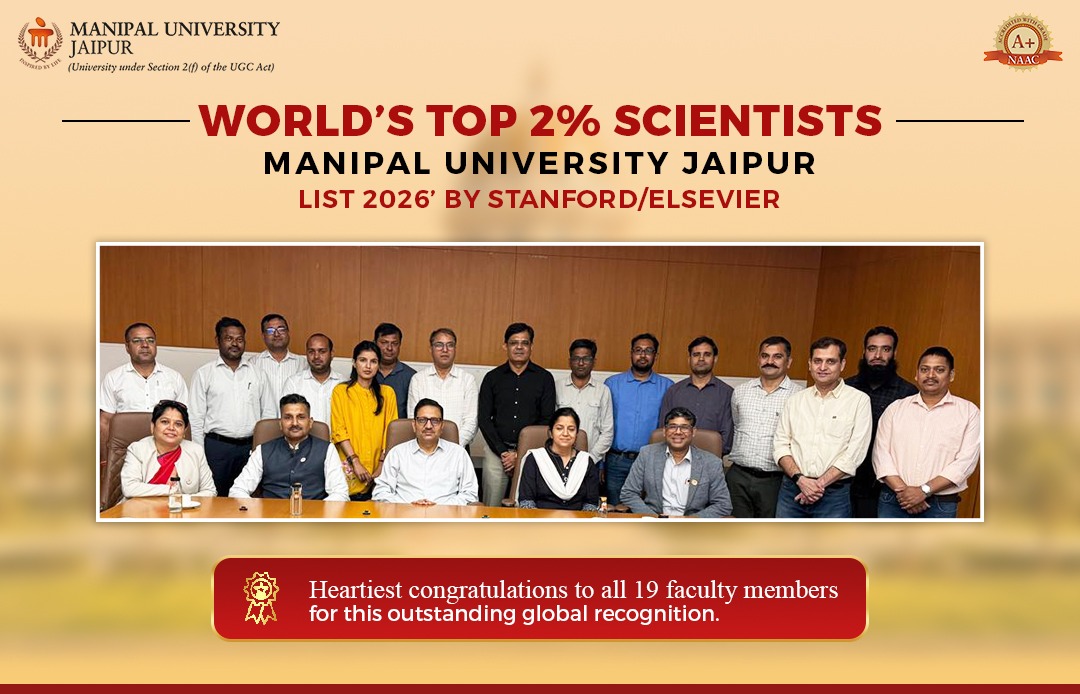
19 Manipal University Jaipur Researchers Feature in Stanford–Elsevier Top 2% Scientists List; Number of MUJ Researchers Doubles Compared to Previous Year

Manipal University Jaipur (MUJ) has achieved a significant milestone in research excellence, with 19 of its researchers featuring in the prestigious Stanford–Elsevier Top 2% Scientists List, which recognises researchers worldwide for the scholarly impact of their published work. The recognition marks a notable achievement for the university, with the number of its researchers featured in the list doubling compared to the previous year.
 

19 Researchers from Mnaipal University Jaipur felicitated by the university leadership


Compiled through a collaboration involving Stanford University and Elsevier, the list identifies scientists whose research has made a significant impact in their respective fields. The growing representation of MUJ faculty members reflects the university’s sustained efforts to strengthen its research ecosystem, promote innovation and encourage high-quality research across diverse disciplines.
 

The 19 researchers from Manipal University Jaipur featured in the list are Dr. Chaitanya Baliram Pande, Dr. Kuldip Singh Sangwan, Dr. Ajay Kumar, Dr. Pushpendra Kumar Singh Rathore, Dr. Deepak Kumar, Dr. Asaithambi Perumal, Dr. Ravi Kumar Sharma, Dr. Bishwajit Dey, Dr. Somya Rakesh Goyal, Dr. Abdul Haseeb Ganie, Dr. Vijaypal Singh Dhaka, Dr. Veer Singh, Dr. Ashish Goyal, Dr. Pramod Singh Rathore, Dr. Pulakraj Aryan, Dr. Jayasmita Jana, Dr. Saurabh Dewangan, Dr. Pravin Kumar Singh and Dr. Himmat Singh Kushwah.
 

On the occasion, Dr. N. N. Sharma, President of Manipal University Jaipur, interacted with the recognised researchers and congratulated them on their achievement. He appreciated their contributions to advancing knowledge and enhancing the university’s research profile and global academic standing.
 

The recognition underscores the contribution of MUJ’s faculty members to scientific inquiry, knowledge creation and research with wider academic and societal relevance. The university continues to focus on fostering interdisciplinary collaboration, supporting innovative research and creating an environment that enables faculty members and scholars to pursue impactful research.
 

In the year 2025, there were total 10 researchers from Manipal University Jaipur featured in the top 2% scientists list and in the year 2024, the number was 5 only. The year-on-year increase in the number of recognised researchers reflects the university’s continued emphasis on research-driven academic development. With a growing focus on innovation, scholarly collaboration and global engagement, Manipal University Jaipur is working towards further strengthening its position in the national and international research landscape.
 

About Manipal University Jaipur

Established in 2011, Manipal University Jaipur is a NAAC A+ accredited institution and part of the Manipal Education and Medical Group (MEMG). This year Manipal University Jaipur received QS 5 Star overall rating. Located on a 122-acre campus in Rajasthan, the university offers programmes across diverse disciplines, including engineering, computer science, management, law, architecture, humanities and sciences. With an emphasis on academic excellence, interdisciplinary research, innovation, entrepreneurship and industry collaboration, MUJ provides an environment that encourages students and faculty members to engage with emerging technologies and address contemporary societal challenges. The university continues to strengthen its national and international academic partnerships and research ecosystem in alignment with its vision of advancing knowledge, fostering innovation and preparing graduates for a rapidly evolving global landscape.
 

To know more about Manipal University Jaipur please visit jaipur.manipal.edu.

High Tech to Be the Main Theme of the "Made in Russia" Forum

Moscow, Russia
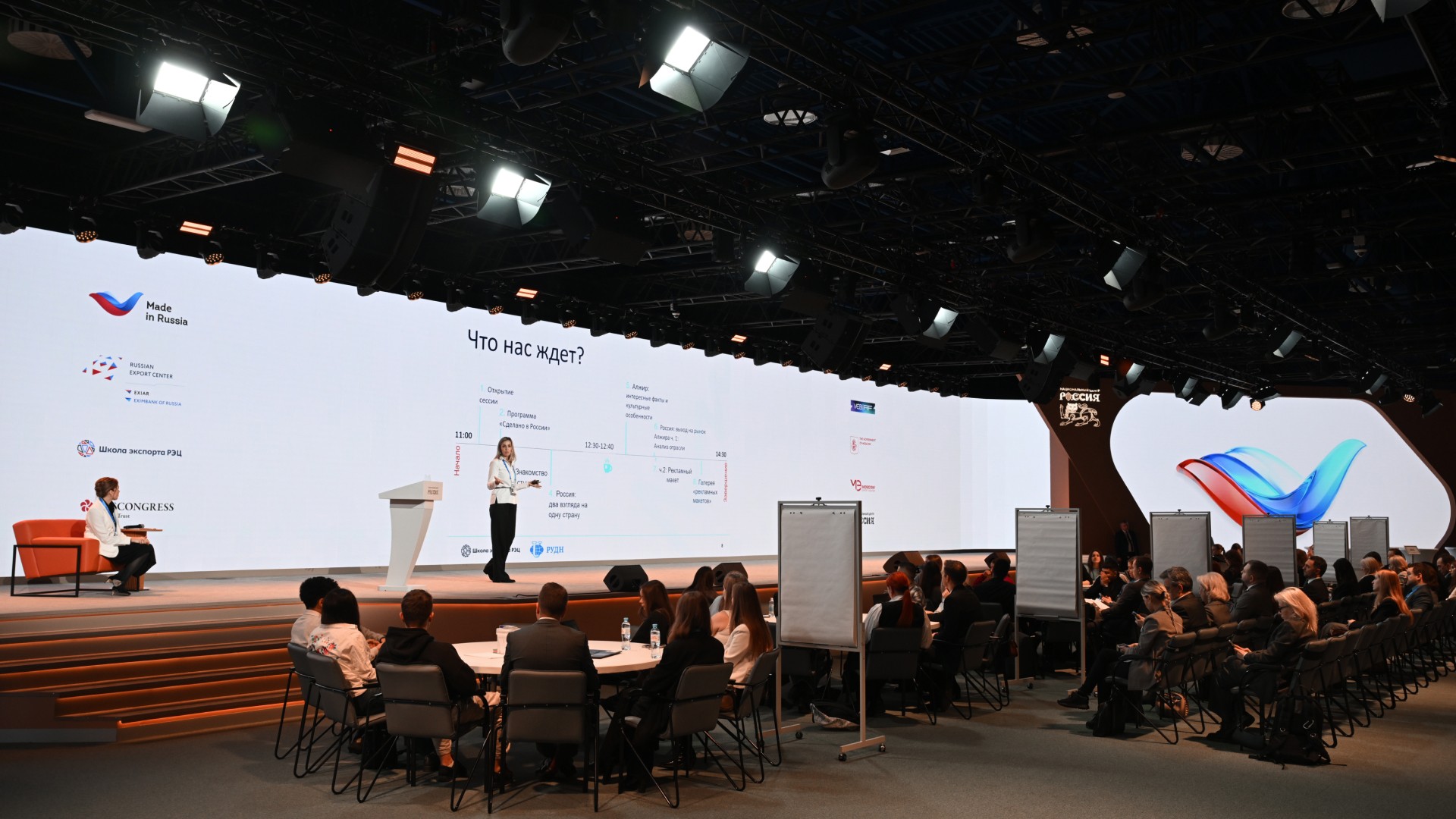
Technology exports, high tech, and advanced solutions will be the key theme of the “Made in Russia” international export forum. The high-tech track will shape the business program, from promoting Russian innovations in foreign markets to international cooperation in innovation. The forum is organized by Russian Export Center (REC, VEB.RF Group). It will take place on November 16 at the National Centre RUSSIA in Moscow. Registration is open.


High Tech to Be the Main Theme of the “Made in Russia” Forum
 

For Indian partners, the Made in Russia programme has become a practical tool for entering the market. On 21 August 2026, Russian Export Centre (REC) opened the first permanent Made in Russia national pavilion in India, in Navi Mumbai. It is the programme’s eighth pavilion abroad. Its participants include MAKFA, United Confectioners and Miratorg. By the end of the year, REC plans to launch a pilot project placing Made in Russia shelves in Indian retail outlets. In September, REC organised a business mission for 23 Russian companies at INNOPROM India in New Delhi. Earlier, in May, a business programme in Mumbai produced agreements with an export potential of more than $15 million. Trade between the two countries is also growing: according to India’s Ministry of Commerce and Industry, bilateral trade in January–July 2026 rose by 24.3% to $47.7 billion.
 

The 2026 forum program will focus on the priority areas of foreign economic activity. Technology exports and the promotion of high tech will take center stage: participants will discuss how Russian companies can scale up supplies of knowledge-intensive products, integrate into global value chains, and find partners for joint innovation projects. The program will also address the impact of geopolitical shifts on international trade, the evolution of global supply chains, and mechanisms for developing the export potential of small and medium-sized businesses. Financing for foreign economic activity and the adoption of modern digital solutions will also be in focus.
 

Direct business meetings between Russian exporters and foreign partners will once again be an important part of the forum. The 2026 forum will bring together representatives of federal and regional authorities, the business community, banks, export support centers, industry associations, and trade groups, as well as foreign delegations, financial institutions, trade and logistics companies, and leading industry exporters. The forum will serve as a platform for active dialogue and exchange of experience among all stakeholders, reaffirming its reputation as the year’s top event for entrepreneurs looking to scale their businesses, start exporting, and find reliable partners.
 

During the forum, REC will host a Made in Russia exhibition at the National Centre RUSSIA, showcasing the best technology solutions from Russian regions. An interactive zone with cutting-edge products from Russian exporters will be a key component, highlighting the achievements of Russian technology companies. The exhibition will present solutions in key areas of human life and the national economy: medicine, robotics, industry, and IT. In this way, the forum’s high-tech agenda will be brought to life not only in discussions but also in specific products and projects ready to enter international markets.
 

Last year, the forum drew participants from more than 100 countries. At 18 multi-format events, 140 leading speakers took the floor, including Russian Prime Minister Mikhail Mishustin. The total number of B2B meetings exceeded 500. Online broadcasts of the forum generated more than 6.3 million impressions.
 

About REC
Russian Export Center (REC, VEB.RF Group) is a state institution that supports non-resource, non-energy exports. It provides companies across various industries with both financial and non-financial assistance at every stage of entering international markets, including under the national project “International Cooperation and Exports.” Most of the services offered by the REC Group are available online on the My Export digital platform (Gosuslugi VED). REC Group includes the Russian Agency for Export Credit and Investment Insurance (EXIAR), Roseximbank, and the REC Export School.

India's Festive Season Business Report 2026: How MSMEs are Preparing for the Diwali Demand Surge

The upcoming Diwali season presents a great opportunity for many Micro, Small and Medium Enterprises (MSMEs) in India. Traders, wholesale dealers and manufacturers will have to build up their stock, arrange for raw material procurement, and set aside extra funds for meeting the increased expenses before new sales start coming in. It makes sense for any business to plan ahead and prepare cash flow in advance so that it does not have to adjust its regular operations to accommodate festive season sales.


MSMEs Prepare for Diwali Demand Surge 2026


The Economic Survey 2025-26, released by the Government of India’s Ministry of Finance, underlines the contribution that the sector makes to the economy: 31.1% of India’s GDP, 35.4% of manufacturing output and 48.58% of exports. Against this backdrop, it is important to take note of the financial preparedness of MSMEs, who need to manage seasonal demands while continuing with their operations.


Preparing for the Festive Demand Surge
Preparing for the festive season means that MSMEs have to consider the purchase of materials and costs against the amount of sales that they expect to make. Reviewing previous sales patterns, working with suppliers, and projecting expenses can help businesses deal with the purchases. Managing the gap between upfront expenditure and payments received from customers is equally important to maintaining healthy cash flows during this period.


Access to finance can be one of the factors businesses consider when preparing for this gap. However, financing requirements need to be assessed against expected cash flows, repayment capacity, and the cost of borrowing to ensure that seasonal expansion remains financially sustainable.


Role of Business Financing in Seasonal Preparedness
Access to timely finance can help eligible Micro, Small & Medium Enterprises (MSMEs) to meet their seasonal expenses and also to gear up for any festive spurt in demand. Lendingkart provides corporate business loans of up to Rs. 50 lakh to eligible businesses. Such financing may be considered by enterprises evaluating their working capital requirements ahead of the festive season.


Commenting on the importance of financial preparedness, Aman Khanna, Digital Marketing Director, Lendingkart, said, “The festive season presents significant growth opportunities for India’s MSMEs, but capitalising on demand requires careful financial planning. Anticipating working capital needs and accessing credit responsibly can help businesses manage seasonal fluctuations and build long-term resilience.”


As the festive season approaches, a combination of demand forecasting, disciplined inventory management, and prudent financial planning can help MSMEs meet seasonal requirements while keeping longer-term business priorities in view.


About Lendingkart
Lendingkart is a fintech company focused on facilitating access to business finance for micro, small, and medium enterprises (MSMEs) across India. Through its technology-driven approach, the company offers business loans of up to Rs. 50 lakh to eligible businesses, subject to assessment and verification.


Lendingkart helps eligible enterprises meet their working capital requirements and also provides finance to meet their operational expenses and foster business growth. Through its digital lending model, Lendingkart has simplified the loan application journey for business owners across India.


For more information, visit www.lendingkart.com

L&T Finance's Pitch Point Launchpad for AI Start-ups: Past winners Arrowhead AI and SpoofSense Share Success Stories Ahead of the Second Edition

L&T Finance Ltd. (LTF), one of the leading Non-Banking Financial Companies (NBFCs) in the country, has launched the second edition of ‘Pitch Point,’ a competition for AI startups ahead of RAISE’ 26, India’s premier Artificial Intelligence (AI)-themed event in the BFSI (Banking, Financial Services, and Insurance) sector. LTF is offering an opportunity to AI startups that are in their early to growth stage to present their solutions, applicable for BFSI or Non-BFSI domains, to a panel of Venture Capitalists, LTF’s senior management, and global industry experts at RAISE’ 26.


Past winners encourage incoming applicants to view Pitch Point as a partnership opportunity rather than just a contest


Dr. Debarag Banerjee, Chief Data & AI Officer at L&T Finance Ltd., said, “As L&T Finance advances its vision to become a Risk-first, Technology-first, AI-native Retail financial services institution, Pitch Point 2026 serves as a strategic launchpad for high-potential early-stage AI startups. More than a contest, Pitch Point offers gateway to a collaborative design partnership that bridges cutting-edge startup innovation with real enterprise scale. Artificial intelligence is rapidly redefining financial services into predictive intelligence. We encourage all forward-thinking AI entrepreneurs to apply, validate their solutions against real-world enterprise demands, and join us in shaping the future of intelligent finance.”


Past winners share experience, enterprise impact, and growth

The first cohort of Pitch Point saw intense competition, culminating in Arrowhead AI and SpoofSense emerging as winners from high-caliber AI startups that participated. For them, Pitch Point served as a catalyst for enterprise readiness, commercial deployment, and rapid scale of business.


Ms. Devyani Gupta, CEO of Arrowhead AI, an enterprise voice AI Start-up, said, “Pitch Point came to us at exactly the right moment. Being chosen as one of five finalists and then as one of the two winners gave us direct access to senior decision-makers and the credibility to turn that access into real deployment. Pitch Point shortens the long, uncertain path to winning the trust of a large organisation.”


Mr. Kartikeya Bhardwaj, Founder of SpoofSense, a provider of AI-driven digital identity verification and fraud prevention, said, “The main benefit for SpoofSense was enterprise validation, it gave us direct feedback from decision-makers who evaluate AI solutions on scalability, security, and operational readiness. Winning provided strong third-party validation, reassuring prospective clients that our technology performs in real-world enterprise environments.”


Following this success, SpoofSense is leveraging its Pitch Point recognition to advance discussions across the financial services sector and establish its platform as a core security layer for digital identity verification.


Beyond recognition, mentorship from L&T Finance leadership offered startups crucial design partnerships. Arrowhead AI now serves as LTF’s voice AI partner across different verticals. Meanwhile, SpoofSense utilised LTF’s feedback to refine its Application Programming Interfaces (APIs) for enterprise deepfake and liveness detection.


Reflecting on the Pitch Point’s vision, Ms. Sushma Kaushik, Head of Innovation Fund at Larsen & Toubro, said, “AI is reshaping financial services from reactive decision-making to predictive intelligence. This will be the key differentiator in the BFSI industry. I commend L&T Finance for taking the lead and creating a platform like this that brings diverse voices from across the ecosystem to discuss how AI can be applied responsibly and at scale.”


Advice for the next cohort

Both founders encourage incoming applicants to view Pitch Point as a partnership opportunity rather than just a contest.


“Don’t view it as just a pitching contest. Treat it as an opportunity to test your solution against real enterprise demands,” advised Bhardwaj. Gupta added, “Come with a working product and a clear, specific problem you can solve. Winning opens the door, but how quickly and reliably you deliver afterwards decides how far the relationship goes.”


About Pitch Point 2026

The product offering that will be evaluated at ‘Pitch Point’ must align with one of the domains that synergises with any of the L&T Group Company’s current and future offerings, namely, Cyber Security & Fraud Prevention, Rural & Agri Fintech, Gen AI Application, Embedded Finance Solutions, Alternate Data Based Lending Solutions, AI-Driven Credit Scoring & Risk Assessment, Regulatory Technology & Compliance Tools, AI-Powered Collections & Recovery Solutions, AI-based BFSI ready Enterprise Agentic AI, Image Processing and Recognition, and AI Geospatial and Remote Sensing, Portfolio Optimisation Solutions, and Quantum Computing for BFSI.


LTF encourages eligible startups to apply online by submitting the registration form along with their pitch deck. Shortlisted applicants will be invited for a virtual interaction round, and five finalists will then be selected to present live at RAISE’ 26.


The application period for this programme is open till October 31, 2026. The final shortlist is set to be announced on December 1, 2026. The programme culminates in a final event at RAISE’ 26 on December 16, 2026, which will be held at the Jio World Convention Centre in Mumbai.


Link to the ‘Pitch Point’ page: www.ltfraise.com/event/Raise/pitch-point


For any questions pertaining to the application process, eligible companies can contact the organising team at: raise.pitchpoint@ltfs.com


About L&T Finance RAISE

LTF’s RAISE’ 26 is an AI-focused event centered on the theme, ‘Transforming Financial Services with AI’ and offers a unique opportunity to explore the latest Enterprise Agentic AI solutions reshaping the BFSI landscape. RAISE was launched in the year 2024, with resounding success, convening over 4,500 participants including regulatory leaders, unicorn founders, deep tech innovators, and media representatives. It has since emerged as the largest AI-themed gathering in the BFSI domain, underscoring the sector’s growing reliance on AI and ML.


Find more information at: www.ltfraise.com


About L&T Finance Ltd. (LTF)

L&T Finance Ltd. (LTF) ( www.LTFINANCE.com ), is a leading Non-Banking Financial Company (NBFC), offering a range of financial products and services. Headquartered in Mumbai, the Company has been rated ‘AAA’ — the highest credit rating — by four leading domestic rating agencies. LTF is also rated by International Rating Agencies. S&P Global Ratings has affirmed LTF with long-term Issuer Credit Rating at “BBB/Stable” and short-term issuer credit rating at “A-2”. Fitch Ratings has affirmed LTF Long-Term Foreign and Local-Currency Issuer Default Ratings of “BBB-” with a Stable outlook. It has also received leadership scores and ratings by global and national Environmental, Social, and Governance (ESG) rating providers for its sustainability performance. The Company has been certified as a Great Place To Work® and has also won many prestigious awards for its flagship CSR project – “Digital Sakhi”- which focuses on women’s empowerment and digital and financial inclusion. Under Right to Win, being in the ‘right businesses’ has helped the Company become one of the leading financiers in key Retail products. The Company is focused on transforming into a Risk-first, Technology-first, AI-native Retail financial services institution as part of the Lakshya 2031 plan. The Company has over 3 Crore customer database, which is being leveraged to cross-sell, up-sell, and identify new customers.


Facebook: www.facebook.com/LnTFS

X: x.com/LnTFinance

LinkedIn: www.linkedin.com/company/lntfinance

Instagram: www.instagram.com/lntfinance

YouTube: www.youtube.com/user/ltfinance

Keralam Home Minister Seeks Faster Interstate Action Against Drug Networks, Proposes Home Ministers' Conference

Keralam Minister for Home, Vigilance and Coir Ramesh Chennithala has urged Union Home Minister Amit Shah to strengthen interstate operational coordination against narcotics trafficking and convene a special conference of the Home Ministers of all States and Union Territories.


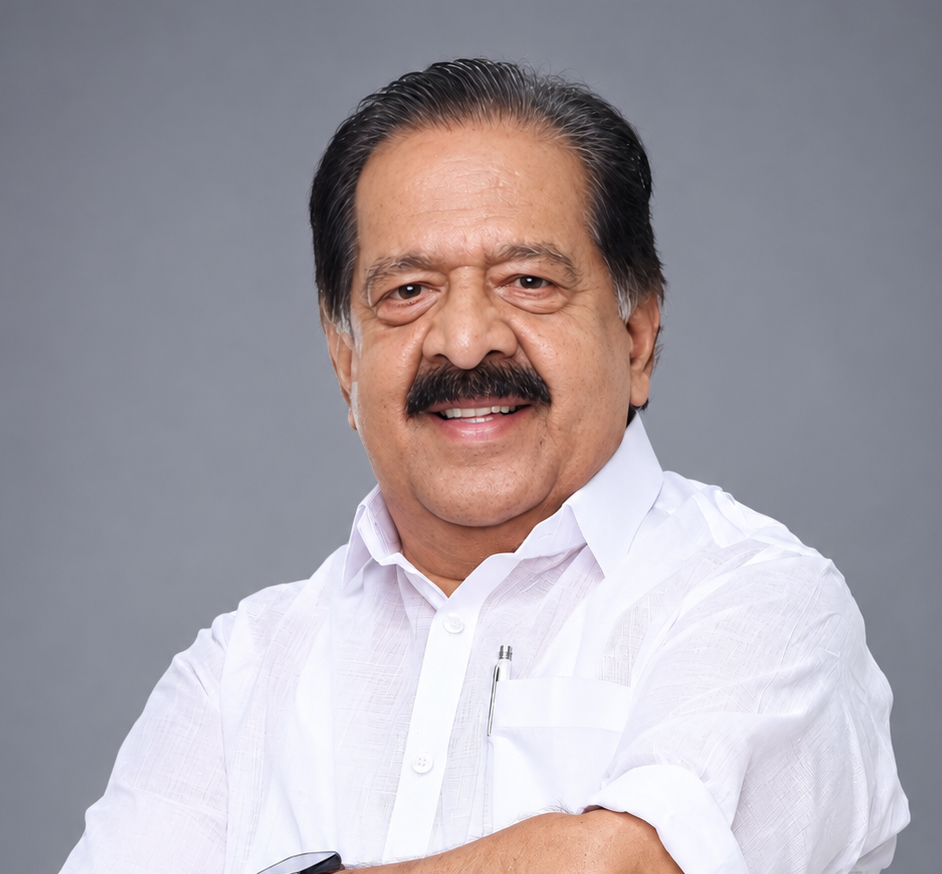
Keralam Minister for Home, Vigilance and Coir Ramesh Chennithala


In a letter submitted to the Union Home Minister, Chennithala has proposed a time-bound interstate operational protocol under the Narco-Coordination Centre (NCORD), faster real-time intelligence sharing, coordinated investigation of the financial networks behind drug trafficking, and a structured review of legal and procedural challenges under the NDPS framework.


The proposals draw on Keralam’s experience under Operation Toofan, the statewide anti-narcotics mission launched on 2 June 2026.


In 140 days, Keralam Police have registered 13,357 cases and arrested 14,409 persons under the operation. More than 27 kg of drugs and 1,796 kg of illicit substance have been seized.


Chennithala has pointed out that investigations originating from seizures within Keralam have repeatedly led police teams across State boundaries and, in some cases, to networks with links beyond India.


A seizure of 97 grams of drugs at Manjeri led Malappuram Police to a storage point in Coimbatore, where about 13 kg of illicit substance intended for Keralam was recovered. The investigation subsequently took police teams through Delhi, Noida, Kolkata, Bihar and Chennai in pursuit of the wider network.


In another case, a seizure of 609 grams of illicit substance at Angamaly led Ernakulam Rural Police to a key supplier in Nagaon, Assam. Further investigation resulted in arrests in Delhi and Bengaluru linked to networks supplying narcotics to Keralam.


“These operations succeeded because of the cooperation and goodwill of our counterparts in other States. But much of this coordination still depends on case-by-case arrangements,” Chennithala said in the letter.


“When an investigation crosses a state boundary, the pursuing team should be able to secure necessary coordination and local assistance within hours rather than days,” he said.


Four Proposals for Stronger National Coordination


1. A Time-Bound Interstate Operational Protocol Under NCORD

Chennithala has proposed a standard protocol for urgent interstate narcotics investigations and joint operations, including round-the-clock nodal officers in every State and Union Territory.


The proposed mechanism would cover immediate assistance to investigating teams, coordination of arrests and transit remand, preservation and transfer of evidence, and other time-sensitive operational requirements.


2. Strengthened Real-Time Operational Intelligence Sharing

The Minister has called for faster intelligence sharing among State Anti-Narcotics Task Forces and other Drug Law Enforcement Agencies on trafficking routes, repeat offenders, courier networks, source points, financial links and emerging substances.


The proposal seeks to build on the existing NCORD architecture and the National Integrated Database on Arrested Narco-Offenders (NIDAAN).


3. A Coordinated Mechanism to Follow the Financial Trail

Chennithala has proposed structured coordination among State Police forces, the Narcotics Control Bureau, Enforcement Directorate, FIU-IND and other competent agencies in major NDPS cases involving interstate or international networks.


Investigators, he said, should be equipped to follow hawala channels, mule bank accounts, digital-payment trails and virtual digital assets wherever the evidence leads.


“Following the money must become an integral part of following the drug.”


The objective, he said, must be to dismantle not merely the carriers of narcotics but also the financiers and organisers who sustain trafficking networks.


4. Review of Legal, Procedural and Enforcement Challenges

The letter calls for a structured consultation involving States, enforcement agencies, forensic experts, prosecutors and legal experts to examine emerging challenges under the NDPS framework.


Among the issues flagged are cases in which traffickers are alleged to split consignments in an attempt to remain below commercial-quantity thresholds, delays in forensic examination, prolonged proceedings relating to proceeds of narcotics trafficking, and the rapid emergence of synthetic and new psychoactive substances.


The letter notes that all these challenges may not necessarily require legislative amendments. Some may require changes in rules or procedures, greater forensic capacity, improved investigation protocols or other administrative measures.


Conference of Home Ministers Proposed

Chennithala has also requested the Union Government to convene a conference of the Home Ministers of all States and Union Territories focused on interstate narcotics trafficking and implementation of the Vision Document on Drug Control (2026–2029) released by Amit Shah at the 10th Apex-Level NCORD meeting.


Keralam has offered to host the conference.


Chennithala said such a meeting could bring States and Central agencies together to share operational experience, develop common protocols and identify gaps requiring coordinated national action.


Keralam, he said, would be ready to place its experience under Operation Toofan before the conference and work with the Union Government in developing its agenda.


“The fight against drugs is a fight for the future of our young people and must rise above political differences.”


Keralam stands ready to work with the Union Government, the NCB and every State and Union Territory to dismantle narcotics networks “from the source to the kingpin,” the Minister said


Chennithala has also sought an opportunity to discuss the proposals with the Union Home Minister.