Home Blog Page 4

LIBA Ranked Among India's Top B-Schools, Reinforcing Its Position as a Preferred Destination for Management Aspirants

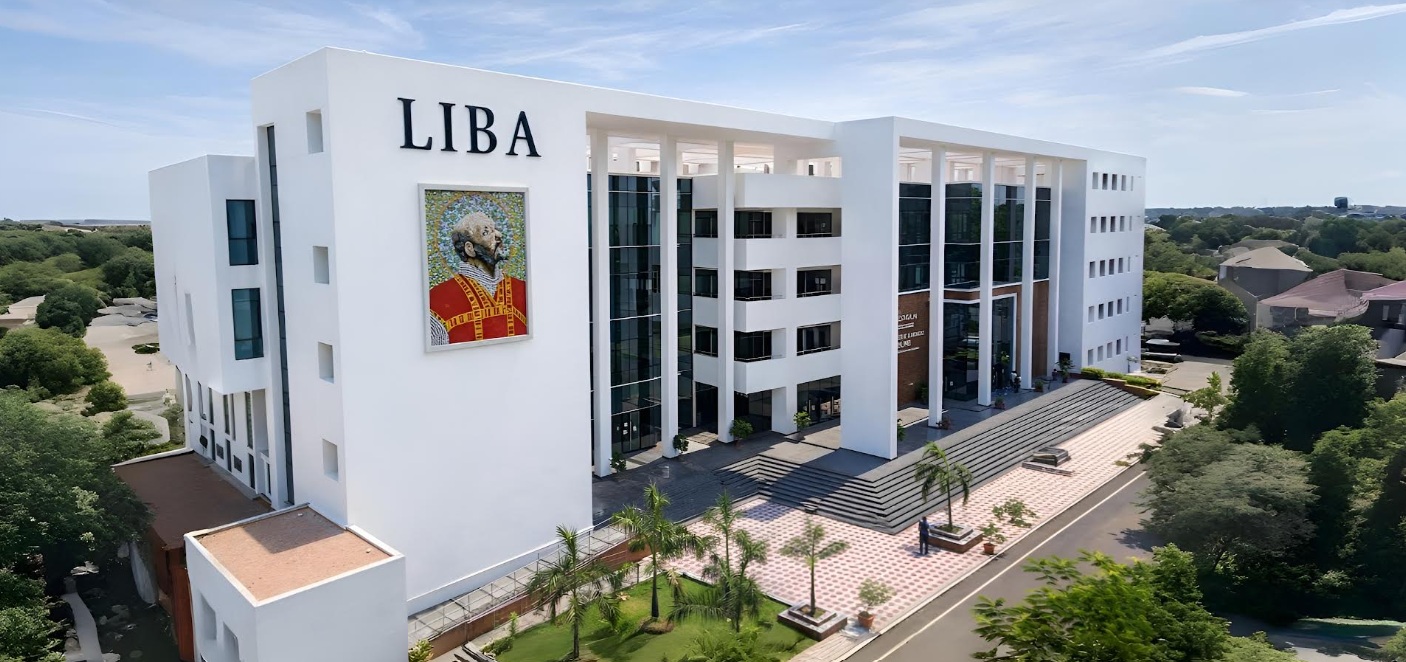
Loyola Institute of Business Administration (LIBA), Chennai, has secured top positions across multiple national B-school rankings, reaffirming its standing as one of India’s prominent institutions for management education. The latest recognitions further strengthen the institute’s appeal among aspiring management professionals seeking quality education anchored in academic rigour and ethical leadership.


Loyola Institute of Business Administration (LIBA)


A renowned Jesuit institution, LIBA has secured the 7th position among private MBA and B-schools in the Outlook 2026 rankings, placing it among the country’s highly regarded private management institutions. The institute has also been ranked 15th among private MBA colleges in India by IIRF 2026 and 42nd among management and business schools by India Today 2026.


Further reinforcing its national standing, LIBA was ranked 55th in the Management Category of the NIRF 2025 rankings. Its recognition across multiple ranking frameworks highlights the institution’s continued prominence in India’s evolving management education landscape.


The institute’s growing recognition validates its emphasis on delivering rigorous management education while placing a strong focus on ethical leadership. As national rankings and industry benchmarks increasingly influence students’ choices of management institutions, LIBA’s consistent performance across these platforms is strengthening its position among prospective PGDM applicants.


With management education undergoing a significant transformation in response to the AI-driven business landscape, LIBA continues to focus on equipping future leaders with the competencies and mindset required to navigate an increasingly complex global economy.


Speaking about the evolving focus of management education, Rev. Dr C. Joe Arun, SJ, Director of LIBA, said, “At LIBA, it has always been of paramount importance to equip future leaders with the right mindset to build impactful global businesses. Our transformative curriculum carries forward the Jesuit legacy while upholding our philosophy of ‘Excellence with Ethics’. We strive to equip students not only with tomorrow’s management competencies but also with the values and social responsibility required to lead with purpose.”


LIBA’s recognition among the top 10 private B-schools in the Outlook 2026 rankings has further strengthened its institutional visibility among management aspirants. The business school is witnessing a positive uptick in applications for the upcoming academic year, reflecting continued interest in its industry-driven PGDM programme.


Commenting on the institute’s continued evolution, Rev. Dr C. Joe Arun, SJ, Director of LIBA, added, “We have been around for nearly five decades and have received multiple accreditations and recognition across national ranking frameworks. The fact that our highly specialised, industry-driven pedagogy continues to garner attention further validates our purpose. It reinforces our responsibility to keep forging ahead and transforming the way management education is imparted in this country.”


With admissions now open for the upcoming academic year, LIBA is inviting eligible candidates to apply for its two-year PGDM programme. Designed around a continuous assessment model, the programme emphasises academic rigour, industry-specific capabilities and exposure to emerging business trends. Through its dynamic learning environment, LIBA seeks to prepare students to meet evolving industry expectations while developing into responsible and ethical business leaders.


Prospective candidates can connect with LIBA’s admissions counselling team to learn more about eligibility criteria, the application process and programme details at info@liba.edu.


About LIBA

Loyola Institute of Business Administration (LIBA), Chennai, is a premier Jesuit business school committed to developing competent, ethical and socially responsible business leaders. Guided by its philosophy of “Excellence with Ethics”, LIBA offers a two-year residential Post Graduate Diploma in Management (PGDM) programme that combines academic rigour, industry relevance and holistic development. With a legacy spanning nearly five decades, LIBA strives to nurture management professionals equipped to contribute meaningfully to business and society.

NAREP Real Estate Summit 2026 to Convene India's Leading Regulatory and Industry Voices

The National Association of Real Estate Professionals (NAREP) will host the NAREP Real Estate Summit 2026 on November 25 at The Park, New Delhi. Bringing together policymakers, regulatory authorities, developers and industry leaders, the summit will explore the opportunities and challenges shaping India’s real estate sector.
 

The summit’s theme, “The Next Billion Square Feet,” will guide discussions on regulatory reform, sustainable urbanisation, emerging residential formats, commercial real estate and evolving investment and development priorities.
 

Among the distinguished participants will be Shri N. Saravana Kumar, Vice Chairman, Delhi Development Authority (DDA), and serving and former RERA chairpersons: Dr. Anand Kumar, IAS (Retd.), Former Secretary to the Government of India and Chairman, RERA, Delhi & Chandigarh; Mr. Parneet Sachdev, IRS, Chairman, RERA, Haryana; Mr. Ajoy Mehta, IAS (Retd.), Former Chairman, Maharashtra RERA; and Mr. Rakesh Kumar Goyal, Chairperson, RERA, Punjab. India’s largest PR and communications firm for Real Estate sector, ICCPL Group, is managing the media strategy for NAREP’s maiden event in Delhi.
 

Mr. Lokesh Yadav, HCS, SDM, Manesar, will participate as Guest of Honour, bringing an administrative perspective to discussions on urban governance, infrastructure development and regional growth.
 

The summit will feature four thematic panel discussions. The inaugural session, “Policy to Progress: Enabling Real Estate’s Next Growth Story,” will examine regulatory reforms, transparency, policy frameworks and responsible development. It will be moderated by Mr. Santhosh Kumar, Group Vice Chairman, ANAROCK.
 

“Women Who Build: Redefining Leadership and the Future of Real Estate” will focus on the growing role of women in the industry. Panelists will include Dr. Reena Sharma Kher, Founder, NAREP and Head – Training & Development, Central Park; Ms. Chitra Jain, Architect and Director, Samyak Properties and Infrastructure Pvt. Ltd.; and Ms. Surabhi Gupta, Executive Director & Regional Head – North, Corporate Leasing & Advisory, ANAROCK.
 

Changing consumer preferences and new residential formats will be the focus of “Beyond Four Walls: Branded Residences, Hospitality and Senior Living.” The panel will feature Mr. Rakesh Bohra, Pioneer Urban; Mr. Sahil Agarwal, Nimbus Group; Mr. Sudeep Bhatt, Whiteland Corporation; Mr. Kulmeet Singh Dhari, ACPL; and a representative from BPTP. The session will be moderated by Mr. Shalin Raina, Managing Director & Head – Residential Services, Cushman & Wakefield.
 

The commercial real estate discussion, “Cubicles to Clouds: The New Commercial Real Estate Playbook,” will feature Mr. Varun Sharma, DLF, and examine changing workplace needs, corporate real estate strategies and the future of commercial spaces in India.
 

Mr. Rishabh Periwal, Promoter, Pioneer Urban Land & Infrastructure Limited, will deliver a keynote address on the next phase of real estate development and emerging opportunities across the sector.
 

Founded by Mr. Vishal Sikarwal and Dr. Reena Sharma Kher, NAREP aims to provide an inclusive platform for real estate professionals and encourage collaboration among regulators, developers and other industry stakeholders.
 

Through initiatives such as the NAREP Real Estate Summit, the association seeks to promote knowledge exchange, professional development and constructive dialogue between policymakers and market participants. The 2026 summit is designed to support meaningful discussion, strengthen industry connections and contribute to a more transparent, progressive and sustainable real estate ecosystem.
 

As India enters its next phase of urban and infrastructure development, “The Next Billion Square Feet” calls attention to more than the scale of construction. It also highlights the importance of quality, sustainability, transparency and long-term value in the built environment.
 

About NAREP
The National Association of Real Estate Professionals (NAREP) is an industry platform founded by Mr. Vishal Sikarwal and Dr. Reena Sharma Kher. It brings together real estate professionals, developers, regulatory authorities and allied stakeholders, with a focus on professional excellence, knowledge sharing, industry collaboration and responsible growth across India’s real estate sector.

WAE Earns Great Place To Work® Certification™ for the Fourth Consecutive Year

WAE Limited, an Indian water technology and engineering company, has earned Great Place To Work® Certification™ for the fourth consecutive year, scoring 91% in this year’s employee assessment. The certification is valid from November 2026 to November 2027.


The independent assessment draws on confidential employee feedback and measures trust in leadership, fairness, respect, camaraderie and pride in the workplace. WAE’s score builds on its previous assessments and reflects how employees experience the organisation in their day-to-day work.


“At WAE, trust has practical consequences. It gives people the confidence to question a decision, the room to test a better idea and the responsibility to see it through,” said A Vikram Joshe, Managing Director, WAE Limited. “Earning this certification for the fourth consecutive year is a source of pride. The credit belongs to our colleagues, whose judgement, candour and willingness to work across teams shape the company we are becoming.”


WAE sees people development as integral to business performance. The company treats learning as part of how work gets done, giving colleagues opportunities to deepen their expertise, take on greater responsibility and learn across disciplines. Its approach to inclusion rests on a practical expectation for leaders to seek out different perspectives and give people a meaningful voice in decisions that affect their work.


“Engineering better ways to treat, deliver and reuse water takes people who are willing to challenge established practice,” Joshe added. “Our responsibility as leaders is to make it possible for colleagues to speak candidly, act on their judgement and grow through the work they do. As WAE grows, those conditions deserve deliberate attention in every team.”


The certification gives WAE a benchmark as it grows, with employee feedback informing how the company develops its leaders, strengthens career pathways and supports well-being across the organisation.


About WAE Limited

WAE Limited is an Indian original equipment manufacturer and engineering company working across the water lifecycle, from intake to reuse. The company designs, manufactures and operates systems for water treatment and purification, atmospheric water generation, on-site glass bottling, water recycling and sustainable beverage infrastructure. Through digital monitoring and long-term operating partnerships, WAE helps organisations measure water use, improve resource efficiency and manage the environmental impact of their operations.


WAE — We Are Environment.

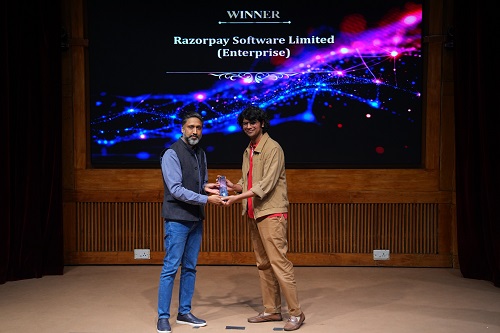
Razorpay Wins 'Most Innovative AI Product for COO's Office' at The Economic Times Most Innovative AI Product Awards 2026

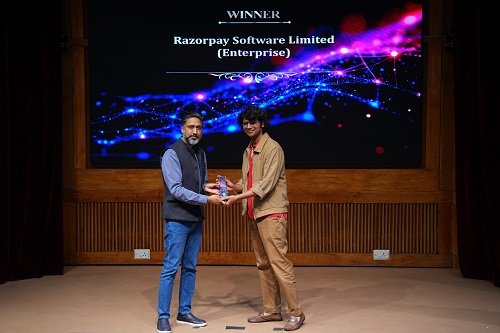
Razorpay, India’s Omnichannel Payments Platform for Businesses, has been recognised with the ‘Most Innovative AI Product for COO’s Office’ award at ET’s Most Innovative AI Product of the Year 2026. The recognition recognises Razorpay’s use of AI to transform business operations internally and solve real-world challenges.


https://www.newsvoir.com/images/article/image1/37494_Razpay_image_.jpeg

Winner of the Most Innovative AI Product for COO’s Office – Razorpay


Organised by The Economic Times, the awards recognise organisations pushing the boundaries of artificial intelligence through innovative products and real-world applications. The awards saw participation from over 500 companies, highlighting the growing momentum of AI innovation and adoption across India’s enterprise landscape.


Razorpay’s winning entry, Razorpay Ray and Yogi – the AI Agents for Ticket Resolution, bringing AI into both merchant-facing interactions and internal operations. Ray acts as an AI assistant for merchants, accessible through WhatsApp and the Razorpay Dashboard, helping them with everyday needs such as checking payment, settlement, and refund status, creating payment links, getting answers to Razorpay-related queries, and navigating onboarding. For instance, a merchant waiting for a settlement can simply ask Ray on WhatsApp for an update, rather than having to raise a support ticket or reach out to the support team.


Yogi, on the other hand, works behind the scenes to understand incoming merchant support queries, identify the steps needed to resolve them, and autonomously handle a range of tickets without human intervention. For example, when a merchant raises a query about account activation or KYC, Yogi can assess the issue, identify the action required, and take the necessary steps to move it towards resolution, without a team member having to manually process every ticket.


Together, the AI agents are helping reduce manual effort, improve turnaround times, and make merchant support and operations more efficient. The solution is already being deployed across Merchant Support and Activations/KYC Checker Operations Teams at Razorpay.


Rahul Kothari, Chief Operating Officer, Razorpay, said, “For us, building an AI-first organisation is as much about rethinking how we work as it is about the technology we build. Across our business and operations teams, we are increasingly embedding AI into everyday workflows, from resolving customer queries and automating operational processes to enabling smarter business decisions. What is particularly encouraging is how quickly our teams have embraced this shift, identifying opportunities to solve problems differently and putting AI to work in meaningful ways. This recognition is a testament to that collective effort and reinforces our conviction that the real impact of AI comes from making it an integral part of how an organisation operates.”


Razorpay continues to invest in AI-led innovation across its business, with a focus on building technology that delivers measurable outcomes for businesses and improves how financial services operate at scale.


About Razorpay
Razorpay, an omnichannel payments platform for businesses, strives to help Indian businesses with innovative solutions built with technology to address the payment and banking journey for businesses. Established in 2014 by alumni of IIT Roorkee, Shashank Kumar and Harshil Mathur, the company strives to provide technology payment solutions to many businesses. A few angel investors have also invested in Razorpay’s mission to simplify payments and business banking.

WTM Spotlight India Research Reveals Shifting Indian Outbound Travel Trends, Opening New Opportunities for Global Destinations

  • Indian arrivals to Vietnam and the Philippines increased by 33% and 32%, respectively, highlighting growing interest in emerging Asian destinations

  • Destinations outside India’s 10 largest outbound markets increased their combined share of total departures from 28.6% to 32.3%, highlighting opportunities for destinations looking to attract Indian travellers

  • WTM Spotlight India, taking place from 2–4 March 2027 at Yashobhoomi, New Delhi, will connect international destinations with India’s travel trade through a curated buyer programme and structured business meetings


A growing number of destinations across Asia are attracting more Indian travellers, highlighting emerging opportunities for international tourism businesses looking to strengthen their presence in one of the world’s most important outbound travel markets, according to new insights from VIDEC, a research partner for WTM Spotlight India.
 

Yashobhoomi on Wikimedia Commons: “Yashobhoomi – India International Convention and Expo Centre, Delhi.jpg” by Ayush Raj is licensed under CC BY-SA 4.0


Four destinations outside India’s 10 largest outbound markets recorded particularly strong growth between January and August 2026. Indian arrivals to Vietnam and the Philippines increased by 33% and 32%, respectively, while Japan and South Korea each recorded 19% growth, despite an overall slowdown in India’s outbound travel market.
 

These gains reflect a broader diversification of Indian outbound travel, with destinations outside the country’s top 10 collectively recording 4.2% growth in departures. Their share of total Indian outbound traffic increased from 28.6% in 2025 to 32.3% in 2026, highlighting opportunities for a wider range of destinations to attract Indian travellers beyond established travel corridors.
 

For international destinations looking to capitalise on these changing travel patterns, establishing strong relationships with India’s travel trade will be essential to converting growing interest into bookings. WTM Spotlight India is designed to facilitate these connections through a curated buyer programme and structured, pre-scheduled business meetings, giving international destinations and travel suppliers direct access to qualified Indian buyers and opportunities to establish new distribution partnerships.
 

Taking place from 2–4 March 2027 at Yashobhoomi in New Delhi, the inaugural event will bring together international tourism boards, destinations, hospitality groups, airlines, travel technology companies and Indian travel buyers, creating a dedicated platform to introduce new products, strengthen market visibility and explore commercial opportunities across India’s evolving outbound travel sector. These opportunities span both emerging destinations and established travel markets, with VIDEC’s research highlighting the continued importance of traditional travel corridors alongside growth across Asia.
 

The Gulf, in particular, remains India’s largest outbound travel corridor, supported by established business, leisure, religious and visiting friends and relatives (VFR) demand. The UAE and Saudi Arabia retained their positions as India’s two largest outbound destinations, collectively accounting for 33.5% of departures during January–August 2026.
 

The UAE attracted 4.6 million Indian departures during the period, while Saudi Arabia recorded approximately two million. Qatar, Oman and Kuwait also remained among India’s 10 largest outbound markets, reinforcing the Gulf’s continued importance to the Indian travel industry.
 

Elsewhere in Southeast Asia, Thailand maintained its position as India’s third-largest outbound destination, recording 1.4 million departures. Although visitor volumes remained broadly unchanged, its share of India’s outbound market increased from 6.6% to 7.2%, while Singapore and Malaysia continued to attract significant numbers of Indian travellers.
 

The research also indicates that India’s outbound travel market is showing signs of stabilisation following a challenging period in 2026. Overall departures reached 19.8 million between January and August, down nearly 8% year-on-year. However, the pace of contraction has moderated considerably, with departures declining by an average of 4.5% between June and August, compared with almost 19% during March to May.
 

According to VIDEC, the improving trend, combined with growth across emerging destinations, points to opportunities for tourism businesses that can respond to changing traveller preferences, strengthen air connectivity and develop competitive travel products for the Indian market.
 

Virendra Jain, CEO and Co-Founder of VIDEC, said: “What stands out from the latest research is the increasingly diverse performance of India’s outbound travel destinations. Despite the wider slowdown, markets such as Vietnam, the Philippines, Japan and South Korea have recorded significant growth, showing that opportunities remain for destinations well positioned to attract Indian travellers.”
 

“The Gulf continues to account for the largest proportion of Indian outbound travel, reflecting the strength of established travel corridors. However, the increasing share being captured by destinations outside the top 10 suggests that the competitive landscape is evolving. For destinations targeting India, understanding these shifts, alongside the importance of affordability, air connectivity and distribution, will be essential to capturing future demand.“
 

These evolving travel patterns highlight the importance of strengthening connections between international destinations and India’s travel trade. With established markets retaining significant visitor volumes and emerging destinations capturing a greater share of outbound demand, tourism boards and travel suppliers have opportunities to build awareness, establish distribution partnerships and introduce new products to Indian travellers.
 

For destinations seeking to increase their share of Indian outbound travel, these findings reinforce the value of understanding where demand is emerging and developing closer relationships with the travel businesses responsible for bringing products to market. WTM Spotlight India’s curated buyer model will prioritise verified decision-makers, including senior travel professionals with purchasing and contracting responsibilities across leisure, luxury, MICE and corporate travel.
 

Through pre-scheduled appointments and targeted networking, exhibitors will be able to engage with relevant buyers, discuss opportunities for new travel products and itineraries, and develop relationships with partners who can support their long-term growth in the Indian market.
 

Umang Gupta, Country Head, RX India, said: “India represents a significant opportunity for international tourism businesses, but unlocking this potential requires meaningful engagement with the country’s travel trade, distribution networks and decision-makers.”
 

“WTM Spotlight India has been conceived as a dedicated business platform to facilitate these connections. Through its curated buyer programme, structured business meetings, knowledge-sharing platforms and experiential showcases, the event will help international destinations and travel suppliers build partnerships, explore new business opportunities and strengthen their presence in the Indian market.”
 

Supporting this focus, WTM Spotlight India’s Intelligence Hub will provide data-led insights into India’s evolving travel market, including the India Outbound Index, analysis of key travel corridors, high-growth regional markets and performance across different travel segments. These insights will help international destinations and suppliers better understand where opportunities are emerging.
 

The Exchange, an executive-level forum, will bring together senior industry leaders, travel buyers, destinations, airlines and technology companies for strategic discussions and executive roundtables. In addition, WTM Immerse will showcase experiential and high-value travel opportunities through live activations, product showcases and segment-focused zones. 
 

The Discovery Zone will also offer a dedicated platform for high-potential destinations and underrepresented markets, enabling them to showcase emerging tourism products and connect with buyers looking to expand their destination portfolios. 
 

As part of the established World Travel Market portfolio, which includes WTM London, Arabian Travel Market, WTM Latin America, WTM Africa and WTM Spotlight Riyadh, WTM Spotlight India will draw on an extensive travel industry network to facilitate commercial partnerships, knowledge exchange and new business opportunities.
 

For more information about WTM Spotlight India or to enquire about exhibiting, visit www.wtm.com/spotlight-india/en-gb.html.

 About WTM Spotlight India
WTM Spotlight India is an international travel marketplace within the World Travel Market portfolio, organised by RX. Designed to connect global travel suppliers with India’s evolving travel market, the event brings together international destinations, travel brands, industry leaders and qualified buyers through business meetings, market intelligence and executive dialogue. Its inaugural edition will take place from 2–4 March 2027 at Yashobhoomi, New Delhi.
 

Dates: 2–4 March 2027
Venue: Yashobhoomi, India International Convention & Expo Centre, New Delhi
Website: www.wtm.com/spotlight-india/en-gb.html


About RX 
RX is a global leader in events and exhibitions, leveraging industry expertise, data, and technology to build businesses for individuals, communities, and organisations. With a presence in 25 countries across 41 industry sectors, RX hosts approximately 350 events annually. RX is committed to creating an inclusive work environment for all our people. RX empowers businesses to thrive by leveraging data-driven insights and digital solutions. RX is part of RELX, a global provider of information-based analytics and decision tools for professional and business customers. For more information, visit www.rxglobal.com. 


About RELX
RELX  is a global provider of information-based analytics and decision tools for professional and business customers. RELX serves customers in more than 180 countries and territories and has offices in about 40 countries. It employs more than 36,000 people, over 40% of whom are in North America. The shares of RELX PLC, the parent company, are traded on the London, Amsterdam and New York stock exchanges using the following ticker symbols: London: REL; Amsterdam: REN; New York: RELX.


*Note: Current market capitalisation can be found at www.relx.com/investors

From Innovation to Market: SRMIST Licenses Patented Poly-Herbal Technology to Dr. SHREEVARMA's Wellness

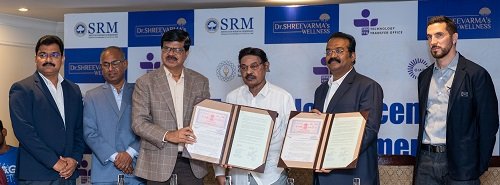
SRM Institute of Science and Technology (SRMIST) has licensed its patented Poly-Herbal Formulation technology (Indian Patent IN 572814) to Dr. SHREEVARMA’s Wellness Private Limited under a non-exclusive agreement for manufacturing and marketing in India. The licensing ceremony took place on Friday, 20 November 2026, at Ramada Plaza, Chennai, marking a step in translating university research into an industry-led development and commercialisation programme.


Acharya Dr. SHREEVARMA of Dr. SHREEVARMA’s Wellness signs MoU with Dr. T. R. Paarivendhar of SRMIST for Ayurvedic products using Poly-Herbal Formulation Technology


The formulation was developed by Dr. Sathish Kumar, Dean, Interdisciplinary Institute of Indian System of Medicine (IIISM), SRMIST, and his research team.


India faces a substantial diabetes burden. The ICMR–INDIAB study, published in 2023, estimated approximately 101 million people living with diabetes and 136 million with prediabetes in India for 2021. Separately, the International Diabetes Federation’s 2025 Atlas estimated 89.8 million adults aged 20–79 with diabetes in India in 2024, the second-highest national total globally. The estimates cover different populations and methodologies, but both underline the need for prevention, early diagnosis, ongoing medical care and rigorous research into potential supportive interventions.


The licensed poly-herbal technology is intended for further development as an Ayurvedic approach to diabetes-related support. The parties see the initiative as an opportunity to connect botanical knowledge, pharmaceutical quality systems and responsible product commercialisation. Its patent status does not, by itself, demonstrate clinical efficacy or establish that the product prevents, treats or reverses diabetes. Product-specific safety, efficacy, regulatory permissions and permissible claims must be established through the appropriate processes before launch.


Nine generations of traditional knowledge — a commitment to scientific evidence
Acharya Dr. SHREEVARMA, Founder and Chairman of Dr. SHREEVARMA’s Wellness, described the collaboration as a beginning rather than a destination. His family’s traditional healing heritage spans nine generations; the organisation’s institutional journey began in 1999 and its portfolio includes more than 900 traditional herbal formulations.


“We have inherited traditional knowledge, practised it and preserved it. Our responsibility now is to examine it scientifically and pass it forward with integrity. Science should not exist merely to prove that we are right; science should help us discover what is true,” said Dr. SHREEVARMA.


A bridge from India to global research
Dr. Henoc Marceau, Director, investor and co-founder associated with Dr. SHREEVARMA’s Wellness, was born in France and came to India to study Ayurveda. He studied alongside Dr. SHREEVARMA at The Venkataramana Ayurveda College, experienced the family’s Thiruvithancode traditional medicine practices, and has spent approximately 25 years working with and promoting Ayurveda. Their professional association began with Apollo Wellness and continued through Dr. SHREEVARMA’s Wellness.


“My journey from France to India taught me to value the depth of traditional Ayurveda. International acceptance requires us to welcome questions about ingredients, consistency, safety and clinical evidence. This collaboration is an opportunity to strengthen that scientific foundation and share traditional knowledge responsibly with the world,” said Dr. Marceau.


Vision 2047: from traditional wisdom to globally credible herbal science
Looking towards India’s centenary of independence in 2047, Dr. SHREEVARMA’s Wellness envisions a long-term programme of botanical authentication, phytochemical standardisation, quality and safety assessment, ethical clinical research, researcher development and international regulatory readiness. The SRMIST licence is the first step in a broader ambition to connect academic researchers, AYUSH practitioners, manufacturers and young scientists. Any further joint research programmes would require separate agreements and appropriate scientific oversight.


The licensing ceremony was presided over by Dr. T. R. Paarivendhar, Chancellor, SRMIST, in the presence of Prof. Muthamizhchelvan Chellamuthu, Vice Chancellor, and Dr. S. Ponnusamy, Registrar. SRMIST was represented by its academic and research leadership, while Dr. SHREEVARMA and Dr. Henoc Marceau represented the industry partner.


About Dr. SHREEVARMA’s Wellness
Dr. SHREEVARMA’s Wellness is an India-based Ayurveda and wellness organisation engaged in clinical services, traditional herbal formulations, manufacturing and wellness product development. It seeks to integrate traditional knowledge with scientific research, quality standards and responsible innovation.

Bolna's inaugural Symphony Brings India's Voice AI Ecosystem Together, Drawing 1,800+ Participants in Bengaluru

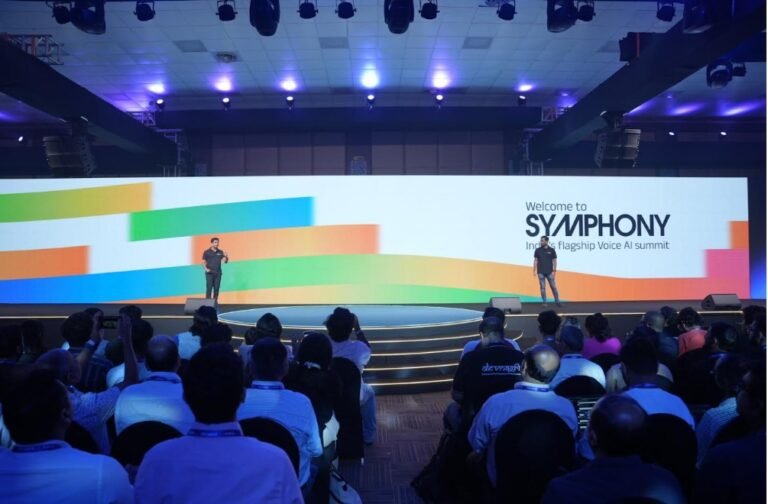
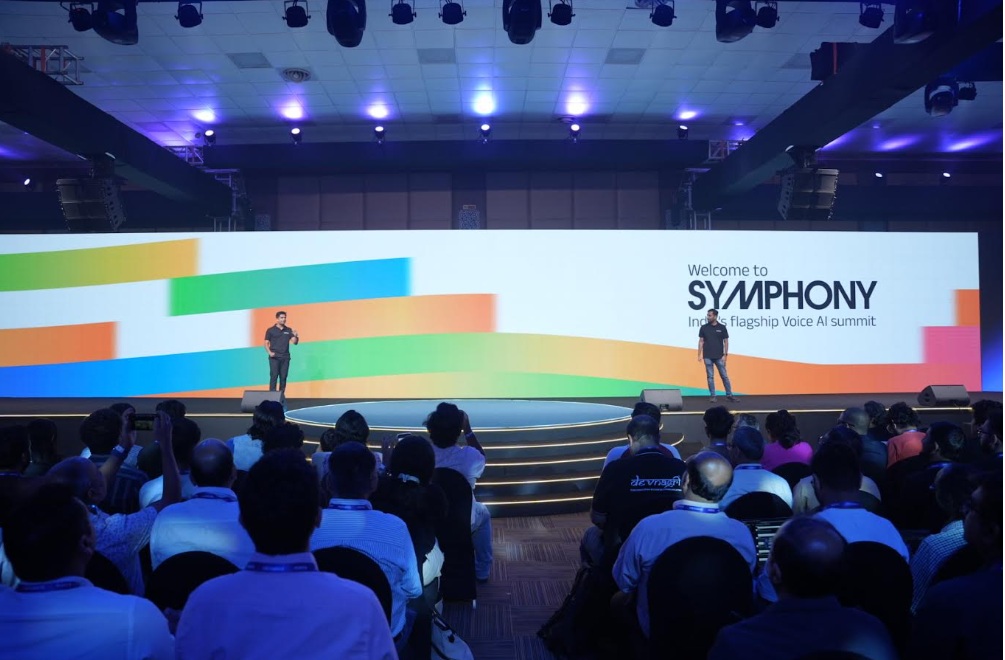
Bolna, the Y Combinator-backed Voice AI platform, successfully concluded the inaugural edition of Symphony, its flagship Voice AI summit, on 20 November at The Lalit Ashok, Bengaluru. The event brought together over 1,800 attendees, including founders, enterprise leaders, investors, researchers and developers, and featured 42+ speakers from organisations such as Google DeepMind, General Catalyst, the Gates Foundation, NVIDIA, Sarvam AI, Exotel, Deepgram, Truecaller for Business and AT&T.


Maitreya Wagh, Co-founder and CEO, and Prateek Sachan, Co-founder and CTO, Bolna, delivering a keynote at Symphony in Bengaluru


Symphony was designed as a common platform for an ecosystem that spans research, model development, speech infrastructure, telephony and enterprise applications. The one-day programme ran across three stages: Sur for keynotes and panels, Abhyas for technical builds and the Buildathon finale, and Mehfil for partner showcases and live demos.


“Voice AI is at a stage where the technology is advancing rapidly, but its adoption will depend on how well the ecosystem comes together to solve real-world challenges. We started Symphony because we wanted to bring the entire value chain into one room, from researchers and model builders to enterprises putting these systems into production. Seeing more than 1,800 people participate in our first edition is encouraging. We hope Symphony becomes a platform where the industry can exchange ideas, build partnerships and collectively push the boundaries of what voice can do,” said Maitreya Wagh, Co-founder and CEO, Bolna.


Prateek Sachan, Co-founder and CTO, Bolna, said, “Building Voice AI for India requires solving for a combination of languages, accents, latency, network conditions and cost. No single model can address every enterprise requirement, and the strongest systems will bring together different models and infrastructure. Symphony gave builders an opportunity to see these developments first-hand and understand how the underlying technology is evolving. Syl, our in-house ASR model launched at Symphony, is one step in that journey.”


Bolna also launched Syl, its in-house automatic speech recognition (ASR) model, during the Bolna Launches session, “We hear. We remember.”, presented by Bolna’s Siddharth Batra, Head of Product, and Prabal Rastogi, Head of Engineering. Syl is built for the shortest replies on a call, such as “haan”, “ji” and “theek hai”, which are easily lost on noisy phone lines and in calls that switch languages. More than 4 million calls a month on Bolna include short replies, and about one in ten of them previously came back empty. On held-out production calls, Syl transcribed 93% of one-word yes/no replies correctly, with a median latency of 250 milliseconds, at 10x lower cost than current state-of-the-art models. Deployed on an agent it had never been trained on, it cut the number of times the agent asked callers to repeat themselves by 31%, and the number of times callers repeated themselves by 47%.


In the next phase, Bolna plans to make Syl context-aware and use-case-aware and to extend it to more languages. It also previewed memory, which carries a caller’s name, preferred language, best time to call and earlier progress into the next conversation; 48% of calls on Bolna go to someone the same agent has spoken to before. Syl is the first in a planned family of Bolna models spanning ASR, LLM, text-to-speech and decision-making, with models for understanding and speaking expected by the end of the year.


In the fireside “Frontier Labs to a Billion Voices”, Dr. Manish Gupta, Vice President at Google DeepMind, discussed Project Vaani, an IISc and ARTPARK initiative that has collected more than 31,000 hours of speech across 165 districts and 105 languages, and the Vaani Atypical Speech Corpus, built with Google’s Project Euphonia to improve recognition for people with atypical speech. The session included a demonstration of a pipeline that speeds up support for underrepresented dialects.


In the same session, Srinivas Narayanan, former CTO of B2B Applications at OpenAI, in conversation with Aarthi Ramamurthy, Founder of Schema Ventures, named organisational context, security and verifiability as the main barriers to enterprise AI adoption, and argued that businesses should redesign workflows and build domain-specific evaluations rather than automate isolated tasks.


Other panels on Sur covered speech models built for human nuance, the infrastructure stack behind India’s voice agents and scaling Voice AI in Indian enterprises. A panel on Voice AI for public services brought together Sanjay Jain, Director of Digital Public Infrastructure at the Gates Foundation, Vivek Raghavan, Co-founder of Sarvam AI, Aniket Doegar of Haqdarshak and Santosh Kevlani of EkStep Foundation. On Abhyas, Exotel, Sarvam AI, Kalpa Labs and NVIDIA led masterclasses and sessions for developers.


An investor panel, “Investing in Voice AI: Who Adds Value, and What Gets Funded Next in India”, featured Akarsh Shrivastava, Partner at General Catalyst, and Pratyush Choudhury, Co-founder of Activate. The session was moderated by Thiyagarajan Maruthavanan (Rajan), Co-founder and CEO of Kalmantic Lab, and focused on how Indian startups can build globally competitive AI businesses by staying close to customers and turning India’s constraints on language, cost and latency into an advantage.


Demos went beyond customer service to FMCG retailer restocking, consumer feedback and student engagement. Voice Tank let startups pitch to investors through their own voice agents built on Bolna, followed by live questions.


The Bolna Buildathon, organised with Plivo and OpenAI, held its finals on Abhyas, where the winning team earned an interview with Grey Baker, General Partner at Y Combinator.


The Symphony Awards closed the evening on Sur, recognising Voice AI deployments in six categories: Enterprise Deployment of the Year, Voice AI for Social Impact, Bolna Partner of the Year, and Best Voice AI Deployment in BFSI, Education and e-Commerce. The Buildathon winners were announced alongside the awards.


About Bolna

Bolna is a Voice AI orchestration platform that enables enterprises to build, test, deploy and monitor human-like, multilingual AI agents at scale. Supporting 22+ Indian vernacular languages, Bolna handles 1.5M+ daily calls for customers across e-commerce, logistics, BFSI, recruitment and education sectors. The company is backed by General Catalyst, Y Combinator, Blume Ventures, and operates primarily in India while serving global customers.

Website: www.bolna.ai
X: x.com/bolna_dev
LinkedIn: in.linkedin.com/company/bolna-ai

World Animal Protection Urges Urgent Action to Transform Food Systems and Tackle Antimicrobial Resistance through Better Animal Welfare

World AMR Awareness Week (World Antimicrobial Resistance Awareness Week) is observed annually from 18 to 24 November to raise awareness of drug-resistant infections and promote responsible antimicrobial use across human, animal, plant, and environmental health. For the 2026 observance, the World AMR Awareness Week campaign uses the theme “One Health, One Action: Prevent AMR Now,” aligned with the updated Global Action Plan on AMR (2026–2036).
 

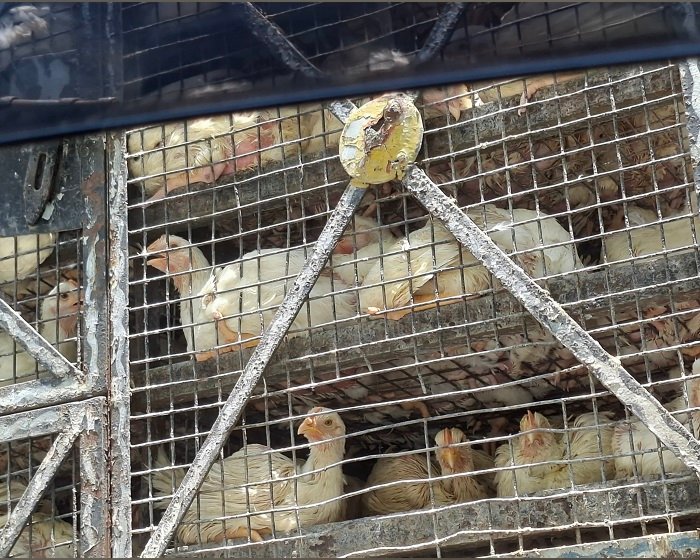
Chickens in factory farm conditions in Delhi photograph by Shubhobroto Ghosh
 

World AMR Awareness Week (WAAW) serves as a critical annual reminder that human health is inextricably linked to the environment and animal welfare. While public awareness often focuses on the misuse of medicines in human clinics, World Animal Protection highlights a more devastating cause of antimicrobial resistance (AMR), the industrial food system. Factory farming, the commercial exploitation of wildlife, and the resulting contamination of natural ecosystems form a dangerous cocktail that breeds untreatable “superbugs.” World Animal Protection has produced a film on this subject named, ‘The Silent Killer,’: youtu.be/zpV_aC_vkKg?si=o6G21c7WjLYorMq8
 

Globally, approximately three-quarters of all critical antibiotics are not used to treat sick people, but are fed routinely to farmed animals. In commercial factory farms, thousands of animals are crammed into stressful, squalid, and overcrowded cages or pens with no access to natural light. To prevent these animals from dying due to poor immunity caused by severe stress and psychological distress, industrial systems rely on mass prophylaxis that involves dosing entire herds or flocks in their communal feed and water supply systems.
 

According to available research, the vast majority of global antimicrobials in animal agriculture are used for prevention or as artificial growth promoters rather than for targeted, individual medical treatment. This mass, low-dose exposure provides an ideal evolutionary incubator for bacteria to mutate, develop resistance, and transform into lethal superbugs. These resistant pathogens then exit the farm gates and find their place on the meat itself, threatening consumers with hard-to-treat foodborne illnesses worldwide.


The threat of AMR does not stop at the agricultural perimeter, it leaks heavily into the environment and impacts wildlife and wildlife habitat. Superbugs and antibiotic residues escape factory farms through untreated manure spread on crop fields, liquid waste discharged directly into nearby waterways, and airborne dust traveling from massive ventilation systems. This process creates a severe ecological crisis for wild animals. When rivers, soils, and natural foraging habitats are contaminated with industrial farming waste, wild animals, from migratory birds to rodents and aquatic animals ingest these resistant pathogens. This toxic exposure disrupts the natural homes of wild animals and leaves them vulnerable to disease.


Furthermore, the commercial exploitation of wildlife for traditional medicine, luxury meats, and the exotic pet trade mimics the worst conditions of factory farming. Wild animals captured and bred in intensive captivity suffer high stress and crushed immune systems, leading breeders and traders to routinely dose them with antibiotics. The resulting zoonotic spillover risks are two-fold, not only can new viruses emerge from wildlife markets, but they can be accompanied by drug-resistant bacterial infections that modern medicine cannot easily cure.
 

World AMR Awareness Week strongly champions the One Health framework, which recognises that human, animal, and environmental health are a single, interconnected system. To halt the rise of superbugs, World Animal Protection argues that society must fundamentally transform global food systems away from intensive confinement that is inherent in factory farming of animals, including cows, pigs, chickens, ducks, turkeys and other animals.

The primary solution lies in adopting high-welfare farming practices and responsibly limiting the use of antibiotics. When animals are raised with adequate space, natural light, and low-stress environments, they develop robust, natural immunity. This naturally eliminates the need for routine, preventative antibiotics. Additionally, enacting global moratoriums on the expansion of factory farming will prevent further environmental antibiotic pollution and protect local wildlife habitats from waste and effluents of factory farming. On 18 November, 2026, the United Nations World Health Organization declared that, “Common bacteria are becoming highly resistant to front-line and even “last-resort” antibiotics,” warning that the situation today is worse than it was in 2019. 
 

Finally, a global shift toward plant-based diets can reduce the overall demand for intensive animal agriculture. Ultimately, safeguarding life-saving antimicrobial medicines requires an urgent end to the cruel practices of factory farming and the exploitation of wildlife. “True global health security cannot be achieved without putting animal welfare at the heart of our food production systems. Intensive farming practices and the irresponsible use of antibiotics pose serious risks to animal health, human health and the environment. We need to move towards more humane, equitable and sustainable food systems that prioritise animal welfare, responsible antibiotic use and a greater shift towards plant-based proteins. In India, World Animal Protection is working with corporates and other stakeholders to integrate these principles into food production practices and supply chains. By making animal welfare an integral part of responsible food production, we can contribute to preventing antimicrobial resistance and building a healthier future for animals, people and the planet,” says Gajender Kumar Sharma, Country Lead, World Animal Protection.


For more information, please contact: Gajender Kumar Sharma, Country Lead, World Animal Protection

Email: gajenderksharma@worldanimalprotection.org.in

Mobile phone: 9313333283

IRDAI and General Insurance Council Along with Universal Sompo General Insurance Concludes Grievance Redressal Camp in Amaravati

  • 39 insurance companies participated

  • 227 policyholder complaints resolved

  • Over INR11.1 Crore were settled during the camp


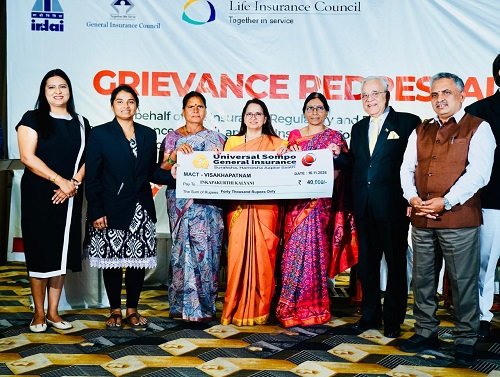
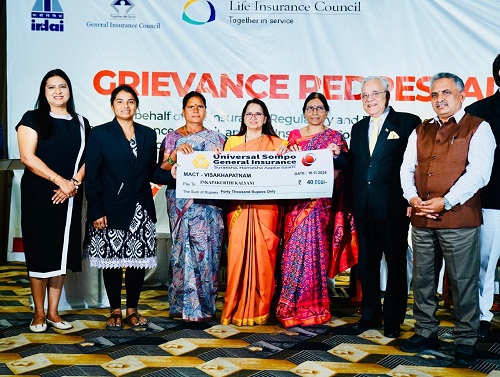
On behalf of the General Insurance Council, under the aegis of IRDAI, Universal Sompo General Insurance Co. Ltd., successfully concluded a Grievance Redressal Camp in Amaravati, Andhra Pradesh, on 16th November 2026.


https://www.newsvoir.com/images/article/image1/37484_irdia_image.jpeg

Grievance Redressal Camp in Amaravati


The camp was conducted as part of the Insurance Regulatory and Development Authority of India’s (IRDAI) Grievance Resolution Month – November 2026, aimed at accelerating the resolution of pending policyholder grievances and strengthening trust in the insurance sector. The theme of the initiative is “Resolve Grievances. Restore Confidence. Build Trust.”


The camp witnessed participation from 39 insurers across General Insurance, Life Insurance and Health Insurance. A total of 227 disputes were successfully resolved on the spot. Claims worth over INR11.1 Crore were settled during the camp.


The camp was attended by Mr. A.V. Rao- General Manager, PPGR Department- IRDAI, Ms. G. Shobha Reddy, Insurance Ombudsman, Hyderabad, Professor Bejon Kumar Misra- IRDAI nominated EC member to General Insurance Council, Ms. Varsha Gujarathi- Chief Customer Officer, Universal Sompo General Insurance, Ms. A. Uma Devi- Manager, CRM- LIC of India, Mr. Harishankar Menon- Consultant & EA to Secretary General, GI Council, and other senior dignitaries from IRDAI and Universal Sompo General Insurance.


While addressing to the participants and policyholders, Mr. A. V. Rao has briefed about the three-tier grievance redressal framework comprising the Company Grievance Redressal Officer, the Bima Bharosa Portal of IRDAI, and the Local Ombudsman Office. Speaking on the initiative, Mr. Rao urged insurers to continue these efforts throughout the year and resolve grievances speedily, with a focus on humanitarian considerations, thereby strengthening trust and encouraging greater insurance adoption.


Ms. G. Shobha Reddy, Insurance Ombudsman, Hyderabad said, “Insurance is a promise built on trust, while a claim is the moment of truth, when every policyholder should be treated with empathy. It is important to have meaningful and transparent interactions at the time of policy purchase to ensure that customers understand their coverage and rights. There is also a need for greater collaboration among stakeholders to bridge the information gap between insurers and policyholders and strengthen trust in the insurance ecosystem.”


The event focused on strengthening grievance redressal mechanisms and leveraging platforms such as the Bima Bharosa portal and the Insurance Ombudsman framework to promote transparency and accountability. The key discussions highlighted the insurance industry’s collective responsibility to strengthen consumer trust and contribute towards the national vision of ‘Insurance for All by 2047‘. Customers also expressed satisfaction with the timely settlement of their claims and resolution of grievances.


Speaking about the camp, Ms. Varsha Gujarathi, Chief Customer Officer, Universal Sompo General Insurance, said, “At Universal Sompo General Insurance, our customers are at the heart of everything we do. IRDAI’s Grievance Resolution Month is a meaningful initiative towards strengthening customer trust and ensuring timely resolution of concerns. We are privileged to host the camp in Amaravati and thank IRDAI, the General Insurance Council, the Life Insurance Council and all participating insurers for their support. Seeing the relief and happiness on our customers’ faces as their concerns were resolved was truly rewarding for our team and made all our efforts worthwhile. We remain committed to meaningful customer engagement and prompt grievance resolution across the country.”


It was heartening to see policyholder provide their feedback. Claimant Chilakalapalli Ramlal said, “After my wife met with a road accident, Universal Sompo promptly settled her injury claim of INR4 lakh. We are extremely happy with the quick response, cooperation and support extended by the team. The timely settlement brought great financial relief and peace of mind to our family.” 


The initiative brought together insurers and policyholders on a common platform to facilitate timely grievance redressal, address outstanding concerns and create awareness about the grievance resolution mechanisms available in the insurance sector, including the Insurance Ombudsman framework.


The Amaravati camp was one of 16 Grievance Redressal Camps being organised across India during November 2026, with eight camps coordinated by the General Insurance Council and eight by the Life Insurance Council.


The initiative reflects the insurance industry’s collective commitment to improving grievance redressal, reducing prolonged disputes and ensuring that policyholder concerns are addressed fairly and effectively.


About Universal Sompo General Insurance
Universal Sompo is a joint venture of Indian Bank, Indian Overseas Bank, Karnataka Bank, Dabur Investments, and a global insurer SOMPO. The company is headquartered in Mumbai and has 132 offices nationwide, with representation through its digitally enabled employees across over 300 cities. It has a strong distribution network of agents, point of salespersons, bank branches, automobile dealers, brokers, common service centres, and digital platforms/ e-commerce players. The Company offers a diverse and comprehensive portfolio comprising 183 products and 2,127 add-on covers, serving customers across retail, SME, and corporate segments through solutions spanning motor, health, property, marine, engineering, liability, employee benefits, and other specialized insurance lines of business.

Work is a Refuge, But Loyalty Must be Earned: Pluxee Brings its 14-country Study on Employee Engagement and AI to India

Pluxee, a global player in employee benefits and engagement, has launched in India its second international employee engagement study, Work: a refuge in turbulent times?. Released globally in September 2026, the study surveyed 11,000 respondents across 14 countries, including more than 1,000 employees in India, and highlights three paradoxes that offer a vivid snapshot of employee engagement today:
 

  • While work plays a less central role in employees’ lives, their connection to their company grows stronger;

  • Despite persistent financial pressure, employees are prepared to leave a job that no longer interests them;

  • Although artificial intelligence is poised to profoundly transform employees’ jobs, it inspires more enthusiasm than fear.
     

Pluxee New Global Study​
 

Abhijit Dey, Country Managing Director, Pluxee India, commented, “Indian employees are among the most optimistic about AI and the most connected to their skills training, especially in AI. For Indian organisations, the message is clear. Engagement is a two-way street, and employees expect their employers to invest in them in return.”
 

Key figures from the study

  • Inflation and purchasing power are employees’ number one concern, cited by 70% of employees globally (68% in India), including 25% who say they ‘can’t stop thinking about it’ (29% in India).

  • Job satisfaction is higher than overall life satisfaction, with an average score of 7.6/10 vs. 7.3/10 globally. In India, both job and life satisfaction score 8.1/10.

  • Employees remain strongly connected to their organizations, with 87% saying they ‘love’ or ‘like’ their company, +4 points vs. 2025 (95% in India).

  • More employees are adopting “Measured Engagement”, with 38% of employees globally engaging with work more intentionally to protect their boundaries, values and work-life balance, up 5 points since 2025. In India, this figure is 21%, up 6 points since 2025.

  • Loyalty is becoming more conditional, with 33% of employees globally intending to stay with their company as long as their job remains interesting, +6 points since 2025. In India, this figure reaches 42%, +12 points vs. 2025.

  • Well-being, recognition and benefits top employees’ HR priorities. Globally, well-being and working conditions rank first (35%), followed by recognition (33%) and employee benefits that complement compensation (29%). In India, the ranking differs: developing skills through training, particularly in AI, comes first (35%), followed by career development, flexibility and better management (29% each). Well-being and working conditions (28%), recognition (28%) and employee benefits (26%) follow.

  • Employees are surprisingly optimistic about AI, with 65% expressing a positive attitude towards its use at work (83% in India), including 40% who say they “love” it (67% in India).

  • Employees see AI as more of an opportunity than a threat: 40% are confident their job will not disappear as a result of AI (30% in India), while 42% believe AI will positively transform the content of their job (51% in India).
    ​

Find the full research paper on the Pluxee website: www.pluxee.in/work-a-refuge-in-turbulent-times/


An international study in 14 countries

Pluxee’s global employee engagement study explores how employees worldwide are experiencing work amid economic pressure and the rise of artificial intelligence. Conducted by Ipsos in May 2026 with 11,000 employees across 14 countries, the study tracks changes observed since the first edition in 2025. The countries surveyed include Belgium, Brazil, Chile, Colombia, France, Germany, India(i), Italy, Mexico, Romania, Spain, Turkey, the UK and the USA.
 

The findings are analysed by Jean-Baptiste Barféty, a public policy expert specializing in work, digital transition and the common good, and former advisor to the French Ministry of Labor, together with Antoine Solom, Senior Consultant at FOCUS, specializing in research, advisory and strategy for engaging transformations.
 

Three paradoxes shaping employee engagement

Despite mounting pressure on household budgets and the rapid transformation of work driven by AI, employees continue to demonstrate a surprising capacity to adapt and move forward with confidence. Contrary to many assumptions, the findings reveal a workforce that remains engaged, strongly connected to employers and broadly positive about work.
 

Yet beneath this resilience lie three striking paradoxes that capture the changing reality of employee engagement today.
 

While work is becoming less central to people’s lives, employees feel increasingly connected to their company

As reduced purchasing power and lower life satisfaction prompt employees to make bigger trade-offs at work to better focus on their personal lives, work is becoming less central to their lives. The share of employees who say work is the center of their lives has fallen from 19% to 13%, while “Measured Engagement”(ii) has increased from 34% to 38%, reflecting a growing tendency to engage with work more deliberately to protect boundaries, values and work-life balance.
 

This shift should not be mistaken for disengagement. On the contrary, employees’ connection to their organizations continues to grow: professional satisfaction remains high (above 7 in all countries), and 87% report they either ‘love’ or ‘like’ their company, up four percentage points.
 

According to Jean-Baptiste Barféty, the workplace has become a reliable ‘refuge’ for employees, serving as a place of connection and “a shock absorber protecting them from some of the discomforts they might be experiencing because of inflation and global uncertainty”.
 

Despite financial pressures, employees are prepared to leave jobs they no longer find interesting

Financial difficulties are having a tangible impact on workers’ lives, with 70% citing inflation and cost-of-living as their top worry and 25% saying they ‘cannot stop thinking about it’. In most of the countries studied, more than half of employees struggle to make ends meet, sometimes running out of money by the tenth day of the month.
 

However, despite a challenging context, employee loyalty is increasingly conditional: the percentage of employees who want to stay with their company ‘for as long as I can’ has fallen by 5 points compared to 2025. Meanwhile, the percentage of employees who ‘intend to stay as long as my job remains interesting’ is on the rise, increasing by 6 points globally.
 

Interesting work, the variety of tasks and recognition are driving employee engagement. This development reinforces a trend highlighted in the first edition of the study: employees expect reciprocity from their company in exchange for their engagement. Globally, when asked what their company’s HR priorities should be in the coming months, beyond higher salaries, employees’ top priorities are well-being and working conditions (35%), recognition of their commitment and achievements (33%), and employee benefits that complement compensation (29%).
 

Employees also expressed a need for growth, with 25% wishing to be ‘provided with better individual support and career development opportunities’ and 21% calling for their company’s HR to put developing ‘people’s skills through more training, particularly in AI’ at the top of their agenda.
 

AI is transforming jobs, yet employees see more opportunity than threat

While workers across the globe recognize that AI will be a major force in transforming the world of work, they are unexpectedly optimistic about its potential: 65% welcome the AI revolution, and 40% described AI as ‘great’ and say they ‘love’ using it.
 

This confidence is reflected in perceptions of AI’s impact on employment: 40% of employees are confident that their jobs will not disappear as a result of AI, and 42% concede that the content of their jobs will most likely change, ‘but in a positive way’, making work ‘less routine and more interesting’.
 

Employees are increasingly embracing AI and adapting to its growing role in the workplace. Among regular AI users, 39% say they learn to use the technology on their own, compared with just 9% who rely on managers and 9% on colleagues. With 31% of employees identifying improving efficiency as a key challenge for their organization in the years ahead, many employees view AI as a tool to save time, simplify work and reduce complexity.
 

The study also highlights a clear link between employee engagement and openness to AI. Using the Engagement Spectrum introduced in Pluxee’s 2025 global study The New Rules of Engagement, researchers found that the more engaged and outwardly curious employees are, the more likely they are to embrace AI. While 64% of “All Parts Engaged” employees say they love AI and use it frequently, this falls to 39% among “Work Centrists” and 27% among “Outsiders”.
 

Companies now face the challenge of ensuring that AI becomes the game-changer employees expect for efficiency and well-being, so that their current enthusiasm for the technology endures.


About Pluxee 

Pluxee is a global player in Employee Benefits and Engagement that operates in 28 countries. Pluxee helps companies attract, engage, and retain talent thanks to a broad range of solutions across Meal & Food, Well-being, Lifestyle, Reward & Recognition, and Public Benefits. Powered by leading technology and more than 5,600 engaged team members, Pluxee acts as a trusted partner within a highly interconnected B2B2C ecosystem made up of more than 500,000 clients, 37 million+ consumers and 1.7 million+ merchants. Conducting business for 50 years, Pluxee is committed to creating a positive impact on local communities, supporting well-being at work for employees and protecting the planet. 
 

For more information, please visit www.pluxeegroup.com.
 

About Pluxee India

Pluxee is a leader in employee benefits and motivation, supporting businesses in attracting, engaging, and retaining talent through a broad range of solutions across Meal, Childcare, Wellbeing, Learning, Rewards & Recognition & whole range of other offerings. With 29+ years of expertise in India, Pluxee partners with 11,000+ companies across the public and private sectors also fostering a trusted network of 180,000+ merchant partners on meal and 5 million+ merchants on other benefits. Every day Pluxee India works to supports 3.5 million+ consumers in 2,200+ towns nationwide.
 

Powered by innovative technology and a dedicated team, Pluxee India delivers meaningful and personalized experiences through a single card and app to enhance the well-being of its consumers at work and beyond. Carrying forward a global legacy of over five decades, Pluxee is committed to creating a positive impact on local communities, promoting sustainability, and enabling its stakeholders to do what matters the most.
 

For more information visit www.pluxee.in.
 

(i) To ensure comparability of results across markets, responses from India were excluded from the consolidated global analysis due to distinct response patterns observed within the dataset. India results are reported separately.

(ii) Measured Engagement, first identified in Pluxee’s 2025 study The New Rules of Engagement, describes employees who engage with work deliberately to protect their boundaries, values and work-life balance.