
Home Blog Page 41

LIBA's PGDM Sees Rising Interest from Children of Gulf-Based Indians

With admissions for the 2027–29 academic year now underway, LIBA is witnessing a notable increase in enquiries and applications from eligible students exploring the Children of Indian Workers in Gulf Countries (CIWG) category. The admission pathway, mandated by the Indian government, enables eligible candidates to apply under the prescribed CIWG provisions, subject to applicable eligibility requirements, selection criteria and documentation.

 

Loyola Institute of Business Administration (LIBA)


Elaborating on the exclusive opportunity and the gradual increase in numbers, Rev. Dr C. Joe Arun, SJ, Director of LIBA, stated, “We have consistently seen interest from students whose parents are working in the Gulf, and this year the level of enquiries around the CIWG category has been particularly encouraging. For eligible candidates, the category provides an opportunity to explore LIBA’s PGDM programme while availing themselves of the applicable domestic fee structure, subject to the prescribed eligibility and admission criteria.”


LIBA, a Jesuit business school in Chennai, combines industry-oriented management education with its philosophy of “Excellence with Ethics”. Its experiential approach to learning has also attracted students from Indian families based overseas, including the Gulf region. Students admitted under the CIWG category account for approximately 15% of each PGDM batch.


“Over the last few years, we have seen growing interest from students from Gulf-based Indian families. Many of these students have already completed or are pursuing their undergraduate education in India, making a PGDM a natural next step as they prepare for careers in a competitive global business environment,” added Rev. Dr. C. Joe Arun, SJ.


While candidates under the CIWG category are required to meet the prescribed eligibility and admission criteria, including applicable entrance-test requirements, the category provides eligible children of Gulf-based Indians with a distinct pathway to apply to LIBA’s PGDM programme. Final selection remains subject to the institution’s admission process and verification of the required documents.


Admissions for LIBA’s 2027–29 PGDM programme are now open. Eligible students interested in exploring the CIWG category can contact LIBA’s admissions team for information on eligibility, documentation and the application process. Further details are available at LIBA’s official website.


About LIBA

A Jesuit business school, LIBA (Loyola Institute of Business Administration) is known for its industry-oriented approach to management education, combining academic rigour with experiential learning. Its Post Graduate Diploma in Management (PGDM) programme is designed to equip aspiring business leaders with the knowledge, skills and ethical perspective needed to navigate a dynamic global business environment. Guided by its philosophy of “Excellence with Ethics”, LIBA continues to nurture responsible leaders who can create meaningful impact across industries.

Asia's No. 1 Business School Uses AI to Sharpen Judgement in Leaders

As businesses across Indonesia and Southeast Asia accelerate their use of artificial intelligence (AI), NUS Business School is exploring a different question: as AI gets better at providing answers, how can leaders get better at asking questions?


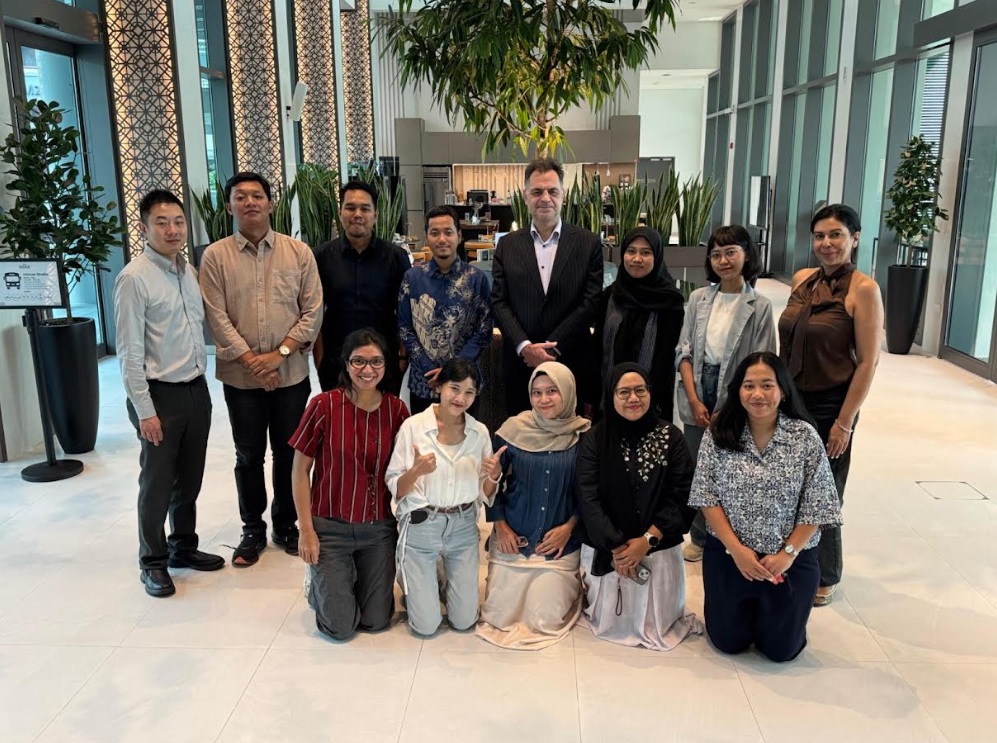
Dr. Emir Hrnjic, Senior Lecturer in Finance, NUS Business School (fifth from left), at a media engagement with Indonesian media in Singapore


For more than a century, case-based learning has put students in the shoes of business leaders by giving information they need to analyse a problem, and then ask them how they would solve it.

Now, artificial intelligence (AI) is changing what it means to solve a case. Since January 2026, NUS Business School has been piloting an AI-enabled approach in which students are given an AI-simulated problem where they must determine what information they need, decide whom to ask, evaluate the answers they receive and make a recommendation under uncertainty.

The simulation is built on ScholAIstic, a generative AI platform developed by the NUS AI Centre for Educational Technologies (AICET) to support roleplaying and simulation-based learning.

Dr Emir Hrnjic, a Senior Lecturer in Finance at NUS Business School, has been working with AICET to adapt and refine these capabilities for management education, developing executive personas around the business case.

To date, the tool has now been used by close to 100 MBA and Executive MBA students across Singapore and Jakarta, many of whom are senior executives.


Sharpening the human instinct behind good decisions
In the pilot, students interview AI-simulated executives, including a Chief Executive Officer, Chief Financial Officer and Chief Product and Technology Officer, each offering a different perspective to the same business situation. Students must navigate these perspectives, assess the information they gather and reach their own conclusions.


After each interview, students receive personalised feedback on on their questioning, allowing them to reflect and adapt their approach in subsequent interviews.

Dr Hrnjic said: “Students must decide what they need to know, ask the right questions, challenge what they hear and exercise judgement without having the complete picture. The aim is not to replace that human instinct with AI, but to sharpen in by helping students become more discerning about what to ask and trust. That is much closer to how leaders make decisions in the real world.”

Early findings suggest that effective use of AI is not about asking more questions but about asking the right ones. Analysis of interview transcripts showed found that stronger interviews had more targeted questions, follow-ups and adaptation as new information emerged, rather than simply working through a prepared list.

The findings point to a broader role for generative AI in management education. Rather than using AI primarily to search for information or generate answers, the technology can recreate the real-world scenarios, sharpening executives’ judgement to better navigate uncertainty and competing perspectives they face in real organisations.

NUS Business School sees potential for similar AI-simulated tools to be applied to other areas of business education where students need to question stakeholders, negotiate competing interests and make decisions under uncertainty. The ambition is to move beyond the largely static information environment of the traditional case towards a dynamic one where students actively acquire information, pursue emerging lines of inquiry, challenge assumptions and exercise judgement as the problem unfolds.


The simulation is one part of NUS Business School’s broader approach to integrating AI into education. The school is exploring how AI can enhance, rather than replace, meaningful learning, thereby helping students develop the judgement, critical thinking and adaptability needed to navigate an increasingly AI-enabled workplace.

This becomes increasingly important as AI takes on a greater role in business. Companies across Asia, including Indonesia, are rapidly adopting AI across their operations, making the ability to question and assess AI-generated information an increasingly important leadership skill. For Indonesia, the economic stakes are significant. A 2020 study by Kearney and EDBI projected that AI could contribute USD 366 billion to the country’s GDP by 2030, equivalent to 12 per cent of projected GDP.


www.linkedin.com/school/nus-business-school
x.com/NUSBizSchool
www.facebook.com/NUSBusinessSchool
www.instagram.com/nusbizschool/?hl=en


About National University of Singapore (NUS)

The National University of Singapore (NUS) is Singapore’s flagship university, which offers a global approach to education, research and entrepreneurship, with a focus on Asian perspectives and expertise. We have 15 colleges, faculties and schools across three campuses in Singapore, with more than 40,000 students from 100 countries enriching our vibrant and diverse campus community. We have also established around 15 NUS Overseas Colleges entrepreneurial hubs around the world.

Our multidisciplinary and real-world approach to education, research and entrepreneurship enables us to work closely with industry, governments and academia to address crucial and complex issues relevant to Asia and the world. Researchers in our faculties, research centres of excellence, corporate labs and more than 30 university-level research institutes focus on themes that include energy; environmental and urban sustainability; treatment and prevention of diseases; active ageing; advanced materials; risk management and resilience of financial systems; Asian studies; and Smart Nation capabilities such as artificial intelligence, data science, operations research and cybersecurity.

For more information on NUS, please visit nus.edu.sg.


About NUS Business School

With 50,000 alumni and 60 global chapters, the National University of Singapore (NUS) Business School is known for providing management thought leadership from an Asian perspective, enabling its students and corporate partners to leverage global knowledge and Asian insights.

The school has consistently ranked first in Asia by independent publications and agencies, such as The Financial Times and Quacquarelli Symonds, in recognition of the quality of its programmes, faculty research and graduates.

The school is accredited by AACSB International (Association to Advance Collegiate Schools of Business) and EQUIS (European Quality Improvement System), endorsements that the school has met the highest standards for business education.

For more information about NUS Business School, please visit bschool.nus.edu.sg.

To discover our MBA, MSc or Executive Education courses, visit mscbiz.nus.edu.sg, mba.nus.edu.sg or executive-education.nus.edu.sg

Big Bang Boom Solutions Announces Ambitious Plan to Build a Sovereign Quantum Radar at IEEE MILCOM 2026

Big Bang Boom Solutions (BBBS), an Indian deep-tech company, organized QuantEW 2026, a workshop on quantum technologies for electronic warfare, at IEEE MILCOM 2026, the IEEE Military Communications Conference, held in the Washington, DC area. At the workshop on 12 October, BBBS Co-founder and Chief Technology Officer Dr. Shivaraman Ramaswamy delivered the opening keynote. In it, he unveiled the company’s plans to build quantum radars and presented a technology assessment and development roadmap.
 

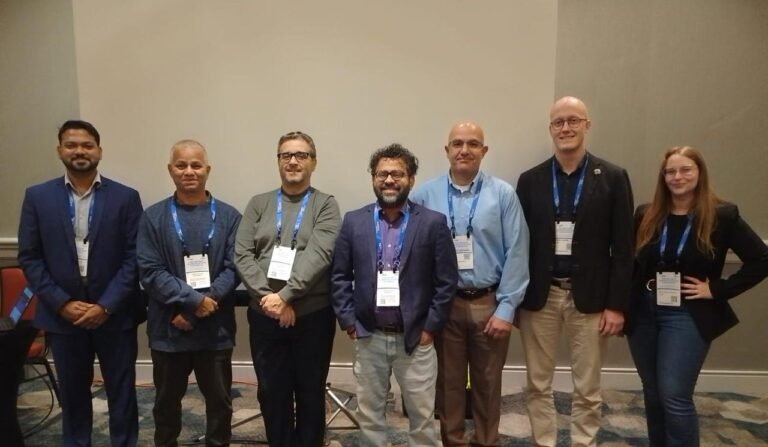
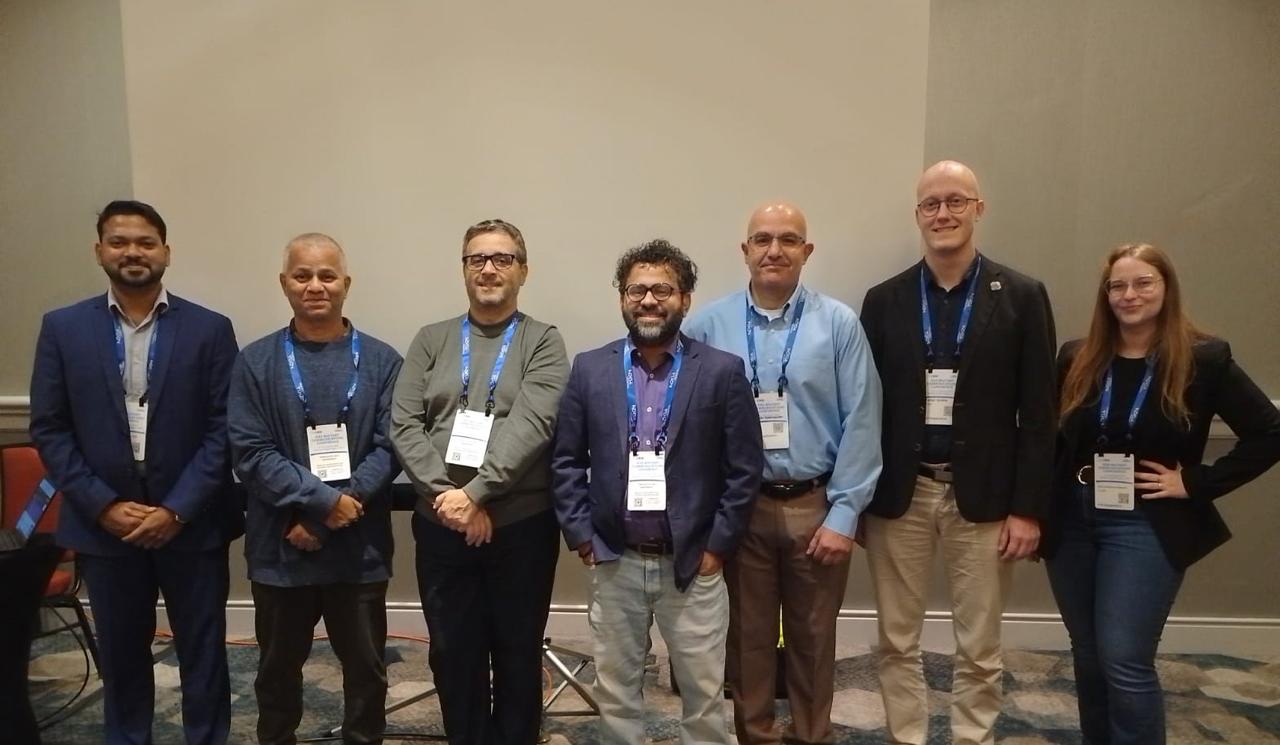
Dr. Shivaraman Ramaswamy (centre) with attendees at QuantEW 2026, organized by BBBS at IEEE MILCOM 2026
 

A dedicated quantum-EW forum at IEEE MILCOM

IEEE MILCOM is one of the world’s leading conferences on military communications, bringing together researchers, defence agencies, armed forces and industry. Hosting a workshop in its official technical programme is a significant milestone for an Indian company, especially a young startup such as BBBS.
 

QuantEW 2026 created a forum devoted entirely to the point where quantum technologies and electronic warfare meet. Submitted papers went through peer review, and accepted papers presented at the workshop will be published in the IEEE MILCOM 2026 workshop proceedings and IEEE Xplore.
 

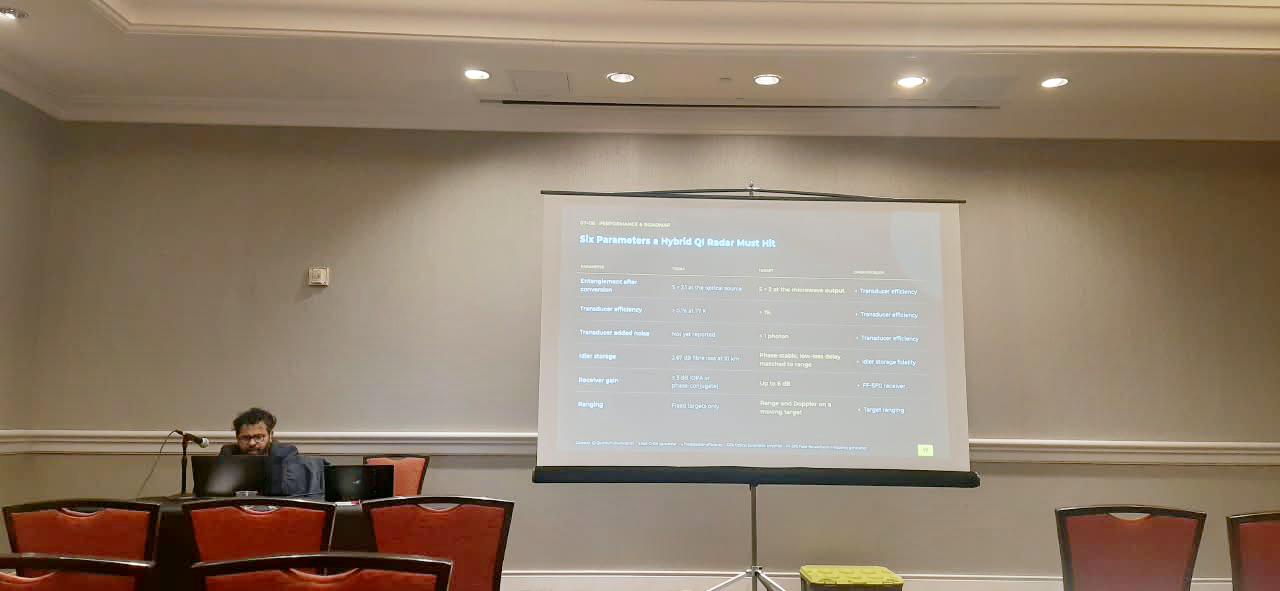
Dr. Shivaraman Ramaswamy, Co-founder and CTO of BBBS, delivering the opening keynote on quantum radar at QuantEW 2026
 

Keynote: the case for quantum radar

Dr. Shiva’s keynote focused on cutting edge tech around quantum illumination radar. This technique uses entangled signal and idler photons to detect low-observable targets against strong background noise. In such conditions, conventional radar is limited by stealth shaping, thermal noise and spoofing from digital radio frequency memory (DRFM) jammers. Theory shows that quantum illumination can give up to a significant advantage in the detection error exponent over the best classical scheme with the same transmitted energy. That advantage applies in the low-signal, high-noise regime where conventional sensors have the most trouble. The keynote then mapped the gap between this theoretical advantage and what can be built in practice, noting that no field-deployable quantum radar exists today and that cryogenic requirements remain a critical barrier while outlining BBBS’ plans for the same supported by National Quantum Mission.
 

“Bringing the quantum and electronic warfare communities together at MILCOM was a milestone for BBBS. Quantum Radar is moving from the laboratory toward engineering reality. Our approach is designed to deliver measurable advantage in the contested, noise-dominated environments where it matters most,” said Dr. Shiva.
 

Roadmap and collaboration

BBBS currently places its quantum radar programme at technology readiness level (TRL) 3 and targets TRL 4-5 in about 24 months, with platform-mounted demonstrators and an operational prototype as longer-term goals. The company welcomes collaboration with academia, government laboratories and industry on the open research problems the keynote highlighted.
 

About QuantEW 2026

QuantEW 2026: Quantum-Enhanced Electronic Warfare and Secure Military Communications was held on Monday, 12 October 2026, as part of IEEE MILCOM 2026, which runs from 12 to 16 October in the Washington, DC area. The workshop was organized by BBBS.
 

About Big Bang Boom Solutions

Big Bang Boom Solutions Private Limited is a Chennai-based deep-tech company, founded in 2018, building defence, homeland security and strategic technologies. Its work spans AI, electronic warfare, autonomous systems and counter-UAS, supported by in-house R&D, engineering and manufacturing and a 20,000 sq. ft. SHAKTI R&D Hub in Chennai. BBBS has won eight iDEX (Innovations for Defence Excellence) projects.

The VinFast MPV 7 Gives the Last Row The Love It Deserves

The VinFast MPV 7 combines flexible seating, dedicated third-row air-conditioning controls and multi-link rear suspension to make family journeys more comfortable for everyone, including those furthest from the driver.


https://www.newsvoir.com/images/article/image1/37124_vinfast_15-10_2026.JPG

The MPV 7 lets the cabin adapt, rather than making the family adapt to the cabin


A flexible second row gives the third row room to stretch

If you’ve ever owned a seven-seater, you’ll know that a family trip with grandparents, parents and children calls for all three rows. And when the last row is occupied, those passengers deserve more than just a seat and a wish for good luck.


With its 2,840-mm wheelbase, the VinFast MPV 7 offers the foundation for a spacious three-row cabin, giving even those furthest from the driver room to settle in.


The trick is in the second row. Its seats slide forwards and backwards, while the backrests can be adjusted to suit different preferences. Rather than leaving the space between rows set in stone, families can rearrange it according to who is travelling.


If the grandparents are sitting in the third row, for instance, the second row can slide forward to give them extra legroom. Those in the middle row can still adjust their own seating position, so making room for one passenger does not have to mean asking another to sit like a well-cooked shrimp.


That flexibility comes in handy when the passenger list changes from one trip to the next. A drive with just the parents and children may call for one seating arrangement; a family outing with grandparents or relatives may call for another. The MPV 7 lets the cabin adapt, rather than making the family adapt to the cabin.


And when the third row is not needed, the seats can fold away to create more luggage space. A stroller, suitcases or those mysteriously bulky bags that seem to accompany every family holiday can then have their turn taking up room.


The point is that an MPV’s value is not simply about fitting seven people inside. It is about making those seven seats work for the people using them, and knowing when to trade a couple of seats for a little extra luggage space.


Dedicated air vents and multi-link suspension: the last row gets its share of care

Legroom is a good start, but nobody wants to sit at the back waiting for the air-conditioning to remember they exist. With a full cabin on a hot Indian day, getting cool air to the third row is a practical necessity, not a luxury reserved for those sitting closer to the dashboard.


The VinFast MPV 7 addresses this with dedicated air-conditioning vents and controls for the third row, helping passengers at the back stay comfortable when all seven seats are occupied. In other words, the last row need not be the last to feel the breeze.


There are other details to make the journey more comfortable, such as adjustable headrests in the third row that provide support for passengers and a PM2.5 air filter that helps keep the cabin air cleaner. Small considerations, perhaps, but useful when the journey is long and the destination is still a few hours away.


For those sitting at the back, bumps can sometimes feel rather more personal. The MPV 7’s multi-link trailing-arm rear suspension is designed to help manage wheel movement and deliver a more composed ride over speed bumps and uneven roads. Indian roads may have their surprises, but passengers in the last row should not have to experience every one of them quite so enthusiastically.


Ultimately, a seven-seat family car should offer more than enough places to sit. It should make room for different passengers, different luggage loads and the small adjustments that turn a crowded trip into a comfortable one. With its flexible seating, dedicated third-row air-conditioning, adjustable headrests and multi-link rear suspension, the VinFast MPV 7 gives the people at the back more reasons to enjoy the journey, even if they are furthest from the front seat and the music controls.


About VinFast

VinFast (NASDAQ: VFS), a subsidiary of Vingroup JSC, one of Vietnam’s largest conglomerates, is a pure-play electric vehicle (“EV”) manufacturer with the mission of making EVs accessible to everyone. VinFast’s product lineup today includes a wide range of electric SUVs, e-scooters, and e-buses. 


VinFast is currently embarking on its next growth phase through rapid expansion of its distribution and dealership network globally and increasing its manufacturing capacities with a focus on key markets across North America, Europe, the Middle East and Asia.


Learn more at: www.vinfastauto.in.

Best-Selling Used Hatchbacks in India in 2026: Why These Five Still Lead the Market

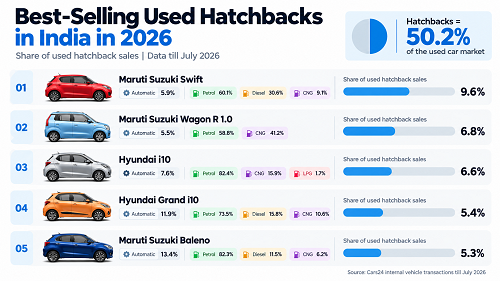
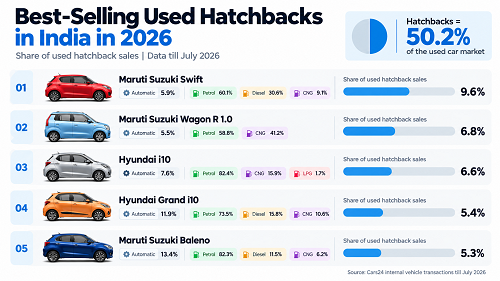
Five hatchbacks alone account for roughly one in every three used hatchbacks sold through one of India’s largest organised resale platforms. The Maruti Suzuki Swift, Wagon R 1.0, Hyundai i10, Hyundai Grand i10 and Maruti Suzuki Baleno together take 33.7% of sales, and the Swift alone accounts for 9.6%, the largest share of any single model.


Best Selling Used Hatchbacks  in India in 2026


Hatchbacks still hold the bulk of India’s used car market, accounting for 50.2% of all used cars sold. That share has been slipping, though, as demand for SUVs keeps rising and more buyers look for extra ground clearance and a commanding road presence. Even so, a hatchback remains the most practical way into car ownership for first-time buyers, small families and city drivers. The same five names keep showing up at the top of used hatchback sales, and each one earns its place for a slightly different reason.


These figures are based on data derived from Cars24’s internal vehicle transactions till July 2026, covering the best-selling used hatchbacks in 2026. Within that dataset, Maruti Suzuki’s three models account for 21.7% of used hatchback sales, with Hyundai’s two at 12.0%. Petrol leads on every model, and manual transmissions still dominate across the board, at 86.6% or more on each one. All shares below are a model’s share of used hatchback sales.
 

Maruti Suzuki Swift
The Swift leads the list at 9.6%, well clear of the Wagon R at 6.8%. It looks sporty, drives with some energy and has stayed within reach of young buyers and small families for two decades. That long history matters on the used side too: because so many people want a Swift, resale is rarely a worry, and that confidence is half the reason people buy one. Fuel choice is varied, with petrol at 60.1%, diesel at 30.6% and CNG at 9.1%. Manual variants account for 94.1% of used Swift sales.


Maruti Suzuki Wagon R 1.0
The Wagon R 1.0 takes second place at 6.8%, and its fuel mix is the most unusual on the list: 41.2% of used sales are CNG, with the remaining 58.8% petrol. CNG buyers tend to be daily commuters who care about cost per kilometre above all else, and the tall-boy body adds generous headroom and an easy driving position. If you’re looking at a CNG one, check the cylinder’s test date and remember that it eats into boot space. Budget helps too, since older examples often turn up among second hand cars under 2 lakhs, depending on age, kilometres and city. Manual variants make up 94.5% of used Wagon R 1.0 sales.


Hyundai i10
The i10 holds 6.6%, a strong showing for a car that’s no longer sold new. Its small size is the draw: it fits tight parking spots, threads through narrow lanes and costs little to maintain, which suits drivers who spend most of their time in dense city traffic. That mix of low upkeep and easy parking is a big part of why older i10s are still bought in such large numbers. Petrol dominates at 82.4%, followed by CNG at 15.9% and LPG at 1.7%. Automatics are rare here, at 7.6% of sales, so 92.4% of buyers chose the manual.


Hyundai Grand i10
The Grand i10 sits at 5.4% and often appeals to buyers who like the i10’s footprint but want a roomier, more modern cabin. It’s also the only Hyundai on the list with a diesel option, taken by 15.8% of buyers, while petrol leads at 73.5% and CNG makes up 10.6%. Automatic uptake is higher than on the i10, at 11.9%, which makes sense for buyers stepping up from a first car. Before you commit to either Hyundai, it’s worth reading a used Hyundai i10 buying guide for the checks that matter on older small cars, from service history to clutch feel.


Maruti Suzuki Baleno
Rounding out the list at 5.3% is the Baleno, the premium pick here. That shows up in transmission choice: 13.4% of buyers go automatic, the highest share of the five. Petrol makes up 82.3% of used Baleno sales, with diesel at 11.5% and CNG at 6.2%. Even so, manual still wins comfortably at 86.6%.


What do these five hatchbacks have in common?
Looked at together, these five are built around low running costs, easy servicing and resale confidence rather than outright features. Manual transmissions dominate every model on the list, while CNG has carved out a place on every one of them, most visibly on the Wagon R. Hatchbacks may be losing share to SUVs, but none of these five is chasing novelty, and that’s arguably the point: buyers here are backing cars that have already proven themselves over years of real-world use.

Noida Expressway Is Rewriting the City's Luxury Housing Map

Noida’s luxury housing landscape is acquiring a new centre of gravity along the Expressway. Across sectors such as 150, 151 and 152, luxury residential developments are expanding the choice of addresses available to homebuyers. Improving connectivity, planned infrastructure and an emphasis on larger homes and integrated living environments are helping these neighbourhoods establish their place on the city’s luxury housing map.


Noida Expressway: Redefining luxury living with connectivity, space and lifestyle


The corridor’s evolution comes against a backdrop of sustained residential activity in NCR. Home sales in the region outpaced new launches, with 13,365 housing sales in Q2 2026 compared with 11,205 new launches, according to ANAROCK data. While these regional numbers do not directly translate into Expressway luxury demand, they do suggest ongoing buyer activity and provide a broader context for the growth of emerging residential destinations. Changing expectations around space, amenities and the overall residential experience are also driving the corridor’s increasing appeal.


Connectivity is still a key benefit of the Expressway. Its closeness to the NCR road network and the employment hubs of Noida and Greater Noida makes it a preferred residential destination. Accessibility is key to the housing proposition for households that struggle to balance work and family.


Planned infrastructure is expected to strengthen that advantage. The approved 11.56-km metro extension between Sector 142 and Botanical Garden, comprising eight elevated stations, is expected to improve access to Delhi Metro’s Blue and Magenta lines once operational. The planned connection adds another layer to the corridor’s transport network, potentially bringing emerging residential neighbourhoods closer to the wider metropolitan system and reinforcing their long-term residential appeal.


Yet the Expressway’s luxury positioning is being shaped by more than transport links. The residential proposition increasingly centres on what buyers can experience within their neighbourhoods. Larger floor plans offer room for changing household requirements, while landscaped surroundings, recreation facilities and wellness amenities extend the living experience beyond the apartment. Taken together, these features point to a growing emphasis on space, convenience and lifestyle in the luxury housing segment.


Across Sectors 150, 151 and 152, this development pattern is broadening Noida’s residential geography. Sector 150’s established luxury housing presence, together with development activity in adjoining sectors, is creating a more varied corridor of residential choices. Top developers including Godrej Properties, Experion Developers, Max Estates, Prateek Group and County Group are contributing to this landscape, bringing different housing formats and lifestyle propositions to the broader Expressway corridor.


Projects such as Prateek Canary in Sector 150 reflect this wider shift towards larger residences, landscaped settings and lifestyle-led amenities. As these characteristics become more closely associated with the corridor, attention is also turning towards how the next phase of development could build on the area’s evolving residential proposition. As emerging micro-markets continue to broaden Noida’s luxury housing landscape, the possibility of a fresh offering points to another phase in the corridor’s evolution, with further developments are potentially adding to its growing range of luxury residential choices.


The Expressway is consequently doing more than extending Noida’s residential footprint. It is reshaping how luxury addresses are evaluated, with accessibility, space and integrated planning giving emerging neighbourhoods a stronger identity. As the corridor’s residential ecosystem continues to evolve, its next phase could further expand the choices available to homebuyers seeking a well-connected home within an environment designed around everyday comfort and lifestyle.

India's Next Growth Story is Being Built in Bharat: Sankalp Bharat Returns to Lucknow

India’s next generation of entrepreneurs is emerging from its smaller cities, towns and villages, building businesses that solve local problems and serve national markets. Bringing this ecosystem together, Aavishkaar Foundation and Intellecap will host the third edition of Sankalp Bharat on October 28 at Clarks Avadh, Lucknow. 


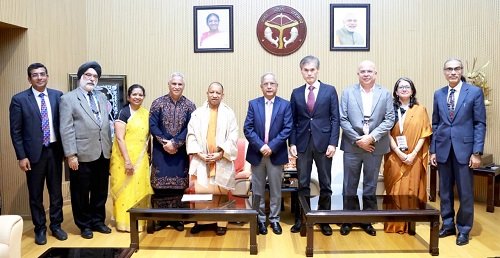
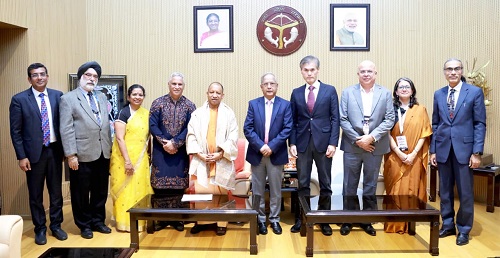
 A delegation from Aavishkaar Group and Intellecap, led by Vineet Rai and U.K. Sinha, met the UP Chief Minister during the 2nd Sankalp Bharat Summit in Lucknow on Dec. 12, 2025


Themed “The Bharat Story: Climate, Culture & Compute”, the summit will convene over 600 founders, investors, institutions and policymakers to explore the opportunities shaping India’s next growth story. 


Entrepreneurs building Bharat 
The summit opens with Manu Nair, founder of reusable-rocket company EtherealX. Bharat Bol, the founder series, will feature Surya Prakash Yadav (UnORG, Lucknow), Tanutejas Saraswat (ShopKirana, Indore, acquired by Udaan), Divya Hegde (Baeru, Udupi), Prof. Nagaraja Prakasam (Nativelead, Madurai), Mausmi Ambastha (Shifu Foundation, Patna) and Tushar Suhalka (Regrip, Jaipur/Gurugram). 


Vineet Rai, Founder and Vice Chairman, Aavishkaar Group, said, “The people closest to a problem are building India’s best solutions, in climate, space tech, AI and livelihoods alike. Our job is to bring them the capital, markets and institutions to turn a good idea from a small town into a national company.” 


Rooted in Uttar Pradesh’s entrepreneurial ecosystem 
Aavishkaar Foundation’s programmes across 25 districts of Eastern Uttar Pradesh have reached 30,000+ students in 500+ government schools and colleges. Its Entrepreneur Investment Programme has backed 40 first-generation entrepreneurs, 80% women, including Pravidhaan Farmer Producer Company in Gorakhpur, supporting 2,000 farmers, and Shiksha Saathi in Varanasi, connecting 237+ schools and 6,700+ learners. 


At Sankalp Bharat, the EIP’s young entrepreneurs will also present their ideas before a jury of investors, policymakers and established founders. 


Lisa Rodricks, CEO, Aavishkaar Foundation, said, “What is exciting is the problems these entrepreneurs are choosing to solve. They are building businesses around real needs in manufacturing, agriculture, skilling and livelihoods. Sankalp Bharat gives us a chance to put these stories and their potential on a larger stage as we create the next phase of India’s entrepreneurial growth.” 


Making capital flow 
Sessions spanning impact investing, venture capital, capital markets and CSR will examine how appropriate financing can reach underserved enterprises, particularly women-led businesses. 


The programme includes an angel investing primer for Uttar Pradesh, an NSE-led Social Stock Exchange masterclass, Ajay Sharma of Edelweiss Public Alternatives speaking on “The Two Indias: Which One Are You Building?”, and a UN Women ARISE workshop helping women SME owners access finance. 


Climate, Culture & Compute 
Climate: GIZ and Intellecap will convene government and financial institutions for a closed-door roundtable on Financing Climate Adaptation, identifying opportunities for GIZ’s i-Adapt: The Climate Adaptation & Innovation Hub, which connects adaptation innovation, financing and implementation. 


Culture: A mainstage discussion, Climate-Informed, Culturally Relevant: Building Liveable Cities for All India, will examine climate-responsive, culturally rooted urban planning, particularly as Uttar Pradesh plans 100 new townships over five years. 


Compute: EkStep Foundation, Caret Capital and JanAI will explore how open digital infrastructure, job-matching platforms and local-language voice AI can expand access to identity, employment and services beyond metropolitan India. 


Syna Dehnugara, Director, Sankalp, said, “Climate, culture and compute may seem like three different conversations, but they are deeply connected in Bharat. How we build our cities, preserve livelihoods and deploy technology will determine whether India’s next phase of growth is truly inclusive and sustainable. These are the questions we want Sankalp Bharat to confront.” 


Together, these conversations will examine how innovation, capital and opportunity can reach entrepreneurs building solutions for Bharat and taking them to the world. 


The detailed summit agenda is attached and can also be accessed here 


About Intellecap
Intellecap, a part of the Aavishkaar Group, is a pioneer in building enabling ecosystems and channeling capital to create and nurture a sustainable & equitable society. Founded in 2002, Intellecap works across critical sectors like Agriculture, Livelihoods, Climate Change, Clean Energy, Financial Services, Gender & Inclusion, Healthcare, Water and Sanitation, and has delivered over 800+ global engagements across 70+ countries and syndicated investments of over USD 2 Billion USD in Capital. Intellecap, through its presence in India and Africa, provides a broad range of Consulting, Research and Investment Banking Services, to Multilateral Agencies, Development Finance Institutions, Social Enterprises, Corporations, Investors, Policy Makers and Donors. Our common action platform, Sankalp Forum, one of the largest global inclusive development platforms, brings together the ecosystem to shape the way markets work for delivering the SDGs 2030. For more details please visit www.intellecap.com


About Aavishkaar Foundation
The Aavishkaar Foundation is the Aavishkaar Group’s Section 8 arm, focused on mass entrepreneurship in Eastern Uttar Pradesh. We currently work across 25 districts, taking entrepreneurship education into government schools and colleges. The Foundation’s belief is that focused intervention in a concentrated geography will help build a thriving entrepreneurial ecosystem in a shorter time and deliver measurable impact. aavishkaarfoundation.in

Beyond Cakes & Cookies: 3 Creative Ways to Bake with California Walnuts

When it comes to baking, cakes, cookies and brownies may be the familiar favorites, but there’s a whole world of delicious possibilities beyond them. From savory flatbreads and rustic vegetable tarts to comforting fruit crisps, baking offers endless opportunities to experiment with flavours, textures and ingredients. With their distinctive nutty flavour, satisfying crunch, plant-based omega-3 ALA goodness and versatility across sweet and savory creations, California walnuts make a delightful addition to both everyday bakes and special occasions. Whether you’re looking to try something new in the kitchen or add a creative twist to your favorites, these three recipes offer plenty of inspiration to think beyond the usual bake.


California Walnut and Beet Flatbread


Dressing and Flatbread


Ingredients


Dressing
¼ cup fresh basil leaves, torn
2½ tablespoon olive oil
1½ tablespoon white wine vinegar
2 teaspoon shallots, chopped
½ teaspoon Dijon mustard


Flatbread
2 medium beets, stem ends trimmed
2 pieces naan bread
170gm fresh mozzarella cheese, torn into ½-inch pieces
½ cup California walnuts, roughly chopped and divided
½ cup arugula
¼ cup soft goat cheese, crumbled
Freshly grated lemon zest


Preparations
1. Place all dressing ingredients in a small blender and process until smooth. (May be prepared several days in advance and stored in a covered container in the refrigerator.)
2. Preheat oven to 250°C. Wrap each beet in foil, folding over the top and sides but leaving room for air to circulate. Place on a small baking sheet and cook for 1 hour or until beets are tender. When cool enough to handle, remove peels and thinly slice. 
3. To prepare flatbread, line 2 medium baking sheets with parchment paper. Place naan bread on baking sheets and top with equal amounts of mozzarella cheese. Sprinkle with about half of the walnuts and bake for 10 minutes. Remove from oven and let cool slightly.
4. Layer beets over the top and drizzle with about half of the dressing. Top with equal amounts of arugula, goat cheese and remaining walnuts. Finish with lemon zest.
5. Cut into wedges or squares and serve with remaining dressing.


Walnut Oat and Fruit Crisp with Walnut Cream
 

 Fruit Filling and Walnut Oat Topping


Ingredients


California Walnut Cream

½ cup California walnuts
¼ cup water, room temperature
2 tablespoon light brown sugar
Pinch of kosher salt


Fruit Filling
4 cups mixed stone fruit (peaches, nectarines, plums), fresh or frozen, sliced
¼ cup light brown sugar
2 tablespoon all-purpose flour
1 tablespoon freshly squeezed lemon juice
Pinch of kosher salt


Walnut Oat Topping
½ cup California walnuts, finely chopped
¼ cup all-purpose flour
¼ cup rolled oats
¼ cup light brown sugar
Pinch of kosher salt
4 tablespoon unsalted butter, cold and cubed


Preparations
1. Make your walnut cream. Combine walnuts, water, brown sugar, and salt in a high-speed or professional blender.
2. Start the blender on low, then quickly increase the speed to the highest speed.
3. Blend 3-5 minutes until a very smooth consistency, scraping sides as necessary.
4. Cool over an ice bath, then transfer to a container. Set aside in the fridge until ready to use. Walnut cream can be stored in the refrigerator for up to 3-5 days.
5. Preheat your oven to 180°C
. In a medium cast-iron skillet or baking dish, toss together your stone fruit, brown sugar, flour, lemon juice, and salt. Set aside.
6. In a separate mixing bowl, toss walnuts, flour, oats, brown sugar, and salt together. Add butter and mix together until your topping gets crumbly.
7. Sprinkle your walnut oat topping over the fruit filling and transfer to the oven to bake for 45 to 50 minutes, until the fruit is bubbly and soft, and the walnut oat topping has a golden hue.
8. Once your crisp is fully cooked, spoon it into bowls and top with the cold walnut cream.


Walnut Ricotta Tart with Roasted Veggies


Walnut Ricotta Tart with Roasted Veggies


Ingredients
1 cup whole-milk ricotta cheese
½ cup California walnuts, toasted and finely chopped, divided
1 small garlic clove
Kosher salt and freshly ground black pepper, to taste
220gm sheet puff pastry, thawed
1 egg, beaten
1 tablespoon water
2 large red heirloom tomatoes, sliced
1 medium yellow squash, thinly sliced
2 tablespoon extra-virgin olive oil
Fresh basil leaves, for garnish


Preparations
1. Preheat your oven to 200°C.
2. In a food processor, blend your ricotta with ¼ cup of your walnuts, garlic, salt, and pepper until smooth.
3. Roll out the puff pastry to 10×14 inches and about ⅛-inch thick. Score a 1-inch border with a knife. Transfer puff pastry to a baking sheet lined with parchment paper.
4. In a small bowl, crack your egg and add your water. Whisk with a fork until completely combined. Brush the edges of the puff pastry with your egg wash.
5. Spread the walnut ricotta inside the border of the puff pastry. Then, layer the tomatoes and squash in the center. Season the tomatoes and zucchini with salt and pepper and drizzle with extra-virgin olive oil.
6. Transfer to the oven to bake for 20 to 25 minutes until golden, puffed, and the tomatoes are jammy, and the zucchini is cooked.
7. Remove from the oven. Top with your remaining ¼ cup of walnuts and basil leaves. Slice into squares and serve.

Origen Realty Inaugurates Sales Gallery for its First Residential Project, The Oryza, in Gurugram

Origen Realty, a leading real estate developer in Delhi NCR, has inaugurated the sales gallery for its first residential project, The Oryza, in Sector 88A, Dwarka Expressway, Gurugram. Completed in just 45 days, the sales gallery reflects focused planning, coordinated execution and the collective commitment of the teams involved in bringing the vision to life. 


The sales gallery will serve as a dedicated engagement centre, offering prospective homebuyers and channel partners an opportunity to interact with the company’s team and gain a comprehensive understanding of the project.


The brand’s flagship project The Oryza is spread across approximately 18,836.09 sq. m (4.65 acres) in Phase 1. It forms part of the licensed master-planned development spanning 33,437.15 sq. m (8.26 acres) along the Dwarka Expressway. The residential development features thoughtfully designed 3 BHK residences, with an emphasis on contemporary living, spacious layouts and strategic connectivity.


Situated in Sector 88A, along the Dwarka Expressway, the sales gallery benefits from its location within one of Gurugram’s prominent real estate growth corridors. The area’s evolving connectivity and urban development make it a strategic location for customer engagement. The new facility will provide a welcoming environment for prospective homebuyers and channel partners to interact with the team, explore the residential offering and gain a better understanding of the company’s vision.


Commenting on the inauguration, Ashish Tandon, Chief Business Officer, Origen Realty, said, “Completing our sales gallery within 45 days is really commendable and it reflects the dedication, planning and collective effort of our team. Bringing this vision to life within a defined timeline required close coordination and a shared commitment at every stage of execution. Beyond the milestone itself, the gallery represents a meaningful step in our journey, creating a dedicated space where prospective homebuyers and channel partners can engage with us and gain a deeper understanding of our residential offering. This also speak volumes about the pace at which we are here to execute our projects, going forward. As we continue to build our presence in Gurugram, we remain focused on translating our vision into meaningful experiences for our customers.”


Origen Realty is a young, debt-free real estate development company led by a team of experienced professionals. Backed by over 30 years of construction expertise of its founders, the company is focused on building a professional and customer-centric organisation. The founders have delivered over 250 developments spanning approximately 5.5 million sq. ft. across commercial, industrial and retail spaces, as well as premium residential floors across Delhi and Gurugram, including developments in DLF Phases 1 and 2 and Sushant Lok 2 and 3, among other locations.

BPTP Unveils 'The Boulevard at Green Oaks', a High-Street Retail Destination in Gurugram's Sector 70A

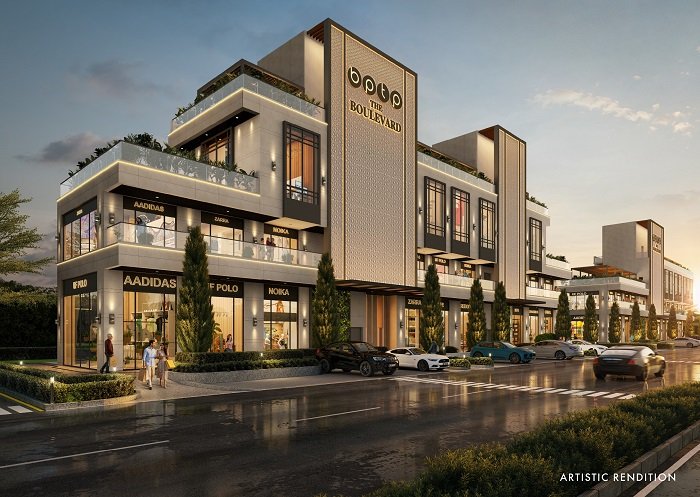
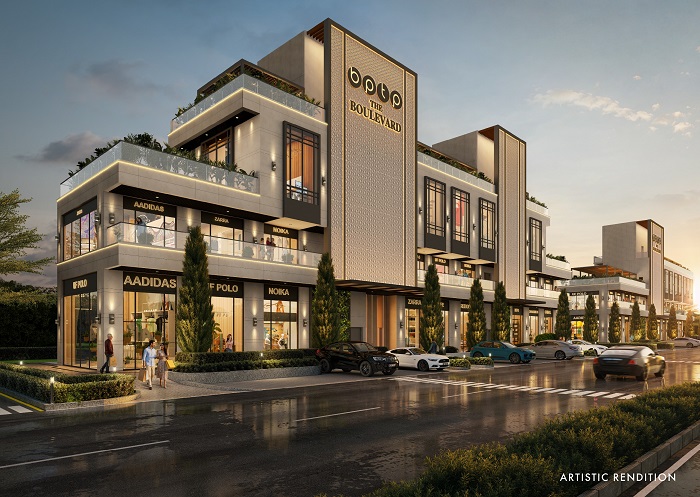
BPTP, one of the established real estate developers in the National Capital Region, has announced the launch of The Boulevard at Green Oaks, a high-street retail destination located in Sector 70A, Gurugram, adjacent to the 100-acre Astaire Gardens ecosystem. Designed around the evolving needs of modern neighbourhoods, the development brings together everyday retail, food and beverage, wellness and lifestyle experiences within a pedestrian-friendly commercial environment.
 

The Boulevard at Green Oaks by BPTP
 

The Boulevard at Green Oaks forms part of the wider Astaire Gardens ecosystem, with immediate residential communities including BPTP Visionnaire, BPTP Fortuna, BPTP Green Oaks and BPTP Pedestal creating an established and growing residential base. Strategically located in Sector 70A, Gurugram, The Boulevard at Green Oaks enjoys prominent frontage on a 24-metre-wide road, with convenient access to Sectors 68-72, the Southern Peripheral Road (SPR), and Golf Course Extension Road, connecting the development to established residential communities across the area.


Conceptualised as a neighbourhood-centric retail destination, The Boulevard at Green Oaks comprises 52 units ranging from 612 sq. ft. to 1,217 sq. ft., with opportunities for cafes and restaurants, grocery, beauty and wellness, pharmacy and neighbourhood services. The project has been planned around the idea that contemporary retail is increasingly about convenience, accessibility and experience. With landscaped walkways, open retail spaces and a modern façade, it is envisioned as a vibrant community destination where residents can shop, dine, socialise and unwind in a well-integrated setting.


The development has been designed with a focus on premium aesthetics, functionality and sustainability. Its clad façade with glass railings offers an elegant and durable architectural finish, while the building is IGBC registered, reflecting an emphasis on enhanced sustainability and environmental performance. The project also features high-capacity premium lifts with a metal finish, designed to offer durability and an enhanced user experience. Surface parking has been provided to ensure convenient and hassle-free access for visitors and occupants.


Commenting on the launch, Amaan Chawla, President, BPTP, said, “The Boulevard at Green Oaks reflects our approach to creating commercial destinations that respond to how urban communities live and engage today. As residential ecosystems mature, the demand for convenient, well-planned retail and lifestyle destinations grows alongside them. With its strategic location within Astaire Gardens, strong surrounding residential base and pedestrian-friendly design, The Boulevard at Green Oaks is envisioned as a destination that integrates everyday convenience with meaningful experiences for residents, businesses and visitors.”


Beyond its immediate residential base, The Boulevard at Green Oaks is positioned to benefit from the continued development of the wider Gurugram growth corridor. Ongoing residential and commercial expansion, improving infrastructure and the maturation of established urban communities are contributing to a more integrated pattern of residential, retail and lifestyle activity across the region.


The launch reinforces BPTP’s focus on developing commercial spaces that combine location advantage, functional planning, accessibility, premium design and long-term relevance, while responding to the changing requirements of businesses and consumers.


RERA Details:

The Boulevard: RC/REP/HARERA/GGM/1062/794/2026/34 dated 05.06.2026

The Boulevard II: RC/REP/HARERA/GGM/1064/796/2026/36 dated 08.06.2026


About BPTP Limited
BPTP is one of NCR’s leading real estate developers with over two decades of experience in creating landmark residential and commercial developments. With a portfolio of more than 50 projects and over 25,000 homes delivered, the company has consistently transformed the urban landscape through thoughtfully planned communities, premium design, sustainable development, and customer-centric innovation. Recognised among the Top 3 Developers in the ET Now Real Estate North Survey 2026, BPTP continues to redefine modern living by creating destinations that combine quality, innovation, trust, and long-term value.