
Home Blog Page 6

Monumental Painting of Krishna Debuts at Miami Art Week, "DARSHAN" Curated by Entrepreneurs Sathi Roy and Annie Winger

A monumental painting of Lord Krishna by Satguru and devotional artist Paramahamsa Vishwananda will make its international debut during Miami Art Week this December, as an exhibition co-curated by American entrepreneurs Sathi Roy and Annie Winger brings India’s centuries-old tradition of darshan to an international contemporary art audience.

 

(L–R) Sathi Roy and Annie Winger, co-curators of “DARSHAN”: The Art of Being Seen


Titled “DARSHAN”: The Art of Being Seen, the exhibition will take place from December 1-6, 2026, at InScope Miami Beach during Art Basel week, against the backdrop of one of the world’s most prominent annual gatherings of artists, collectors and cultural audiences.


At its centre is an eight-foot-by-four-foot acrylic painting of Lord Krishna, created in October 2026 by Paramahamsa Vishwananda. The exhibition also presents works by renowned devotional artist Srimati Syamarani Dasi, bringing together two distinct artistic interpretations of India’s spiritual tradition.


The exhibition draws its name from darshan, a Sanskrit concept describing an encounter in which the devotee not only sees the Divine but is also seen in return. Rooted in Indian philosophical and spiritual traditions, the idea offers a different way of experiencing art, moving beyond observation towards reflection, connection and contemplation.


For Sathi Roy, a first-generation Bengali American entrepreneur and founder of Our Highest Mantra (OHM), a modern membership for longevity and consciousness, the exhibition represents a deeply personal effort to bring India’s spiritual and artistic heritage into conversation with contemporary international culture.


“Modern life rarely gives us the chance to experience something without immediately moving on to the next thing,” said Sathi Roy, Founder of OHM and Co-Curator of DARSHAN. “As a first-generation Bengali American, bringing this tradition into the contemporary art conversation is deeply meaningful to me. It’s an honor to showcase Krishna at this scale. I know everyone who has the chance to visit this exhibition will experience the art, not just see it.”


Paramahamsa Vishwananda, born in Mauritius in 1978, is the founder of Bhakti Marga, an international spiritual mission with a presence in more than 80 countries. His artistic practice draws upon his devotional tradition, where sacred imagery has long served as a medium for storytelling, meditation and spiritual expression.


The exhibition also features Srimati Syamarani Dasi, widely known as Jadurani Didi, whose artistic practice spans more than five decades and over 400 paintings in Krishna temples around the world. Together, the works explore how an artistic tradition rooted in ancient Indian philosophy continues to find expression across generations and geographical boundaries.


Co-curator Annie Winger, founder of Amari Om Capital, brings both entrepreneurial and philanthropic experience to the exhibition. A five-time entrepreneur and exited founder, she dedicated her life to global humanitarian affairs six years ago after becoming a devoted student of Paramahamsa Vishwananda. For Winger, this exhibition is an offering and an opportunity to both serve his mission and introduce people to a tradition that has transformed her life.


“I’ve spent much of my professional life building businesses and bringing new ideas into the world, but this exhibition comes from a very different place,” said Annie Winger, Co-Curator of DARSHAN. “It is an offering to my Guru, Paramahamsa Vishwananda, and to Krishna, and it also gives an opportunity to share something deeply meaningful with people who may be encountering this tradition for the very first time. I hope visitors leave with a sense of connection and a profound experience that stays with them long after Miami Art Week.“


While Roy’s relationship with Indian spiritual traditions is rooted in her Bengali heritage, Winger discovered the tradition as an adult upon meeting Paramahamsa Vishwananda. Their collaboration reflects two different journeys towards a shared appreciation of devotional art and its ability to connect audiences across cultural and religious backgrounds.


“We are delighted to welcome DARSHAN to this year’s show,” said Hayley River Smith, Director of InScope Miami Beach. “Part of what makes the experience meaningful is the opportunity to encounter perspectives, traditions, and forms of expression beyond our everyday experience. DARSHAN brings a beautiful dimension to InScope, creating an opportunity for visitors to engage with a cultural tradition in a way that feels both unexpected and deeply meaningful. It’s exactly the kind of experience we want to make room for.”


Proceeds from the exhibition, including sales of the centerpiece and the limited-edition prints, support Bhakti Marga America, a 501(c)(3) nonprofit charitable organization. DARSHAN is a non-profit initiative, carried out by Our Highest Mantra, individual donors and volunteers in the spirit of seva, selfless service.


Paramahamsa Vishwananda will not attend in person; the darshan offered is an artistic one, happening through his original painting of Krishna’s eyes.


DARSHAN will be exhibited on the sand at Ocean Drive and 8th Street in Miami Beach.


A press and preview day is scheduled for December 1, followed by public viewing beginning December 2, including a special evening viewing from 5:00 to 7:00 PM. Signed limited-edition prints of selected artworks will also be available, subject to availability.


Exhibition Details

Exhibition: DARSHAN: The Art of Being Seen

Dates: December 1-6, 2026

Venue: InScope Miami Beach, Ocean Drive and 8th Street, Miami Beach, Florida

Press and preview: December 1

Public viewing: December 2-6

Special evening viewing: December 2, 5:00-7:00 PM

Co-curators: Sathi Roy and Annie Winger

Featured artists: Paramahamsa Vishwananda and Srimati Syamarani Dasi Presented in partnership with: Our Highest Mantra (OHM)

Admission: Included with InScope Miami Beach admission

Website: darshanexhibition.art

Enjoy Cherry Blossom Viewing with Naruto at SHINOBI-ZATO "Celebrate Spring with Naruto Cherry Blossom Viewing Party"

NARUTO&BORUTO SHINOBI-ZATO, one of the popular attractions at Nijigen no Mori, an anime theme park on Awaji Island, Japan, will host a special spring event, “Celebrate Spring with Naruto. Cherry Blossom Viewing Party,” on weekends from Saturday, April 3, through Sunday, April 18, 2027.


Celebrate Spring with Naruto Cherry Blossom Viewing Party


During this special event, Naruto Uzumaki will make an appearance every weekend. Visitors can enjoy cherry blossom viewing and take commemorative photos with Naruto, who will also distribute sweets as a special gift to visitors.


But there’s an exciting surprise. Some of the sweets will come with a special cherry blossom sticker, making those who receive them lucky winners. Visitors who receive one of these special sweets will have the exclusive opportunity to take a one-on-one commemorative photo with Naruto at a cherry blossom viewing spot in the “Earth Scroll” area.


The excitement of discovering which sweet you’ll receive adds an extra element of fun to this special spring event.


Visitors can enjoy cherry blossom viewing with Naruto amid the beautiful spring scenery of SHINOBI-ZATO, while also trying their  luck at winning an exclusive photo opportunity.


The event offers a special opportunity to create unforgettable spring memories at NARUTO&BORUTO SHINOBI-ZATO in Nijigen no Mori


Event Overview: “Celebrate Spring with Naruto Cherry Blossom Viewing Party”

Event Period:

Saturday, April 3 – Sunday, April 18, 2027

Available on weekends only.


Event Details:

Naruto Uzumaki will appear at SHINOBI-ZATO on weekends during the event period.Visitors can enjoy cherry blossom viewing, take commemorative photos with Naruto, and receive sweets directly from him.


Some of the sweets will feature a special cherry blossom sticker, indicating that the recipient is a lucky winners. Visitors who receive these special sweets will have the exclusive opportunity to take a one-on-one commemorative photo with Naruto at a cherry blossom viewing spot in the “Earth Scroll” area.


Location:

NARUTO&BORUTO SHINOBI-ZATO at Nijigen no Mori


Participation Fee:

Free of charge

A separate admission ticket for the attraction is required.


About NARUTO&BORUTO SHINOBI-ZATO

NARUTO&BORUTO SHINOBI-ZATO is an attraction themed around the popular ninja anime NARUTO and BORUTO: NARUTO NEXT GENERATIONS, which follows the story of Boruto Uzumaki, the son of Naruto Uzumaki, the protagonist of NARUTO.


The area recreates the Hidden Leaf Village, featuring a large Hokage Rock monument and life-size figures of characters from the TV anime series. Visitors can experience the world of the series through interactive attractions, including athletic training courses and a three-story maze.


About Nijigen no Mori (Anime Awajishima Park)

Nijigen no Mori is an anime theme park located on Awaji Island in Hyogo Prefecture, Japan. The sprawling park features famous titles from Japanese pop culture in interactive attractions set in the greenery of Awaji Island.


By utilizing digital and interactive technologies, the park offers immersive experiences for visitors of all ages and nationalities. It features attractions based on Japanese anime, manga, movies, and video games, allowing visitors to engage with these works through multi-sensory activities.


The park includes areas themed around classic titles such as NARUTO, Godzilla, Crayon Shinchan, and Dragon Quest, recreating the worlds of these works in a natural setting and offering hands-on, experiential attractions.


Access

1. By Highway Bus

From Kansai International Airport, take a highway bus bound for Sannomiya, Namba, or Umeda. Transfer at one of these major hubs to a highway bus heading to Awaji Island. Please get off at either “Awaji IC” or “Nijigen no Mori.” Only one transfer is required, and the total travel time is approximately 3 hours.


2. By Train + Highway Bus

From Kansai International Airport, travel by JR or Nankai Railway to the Osaka, Namba, or Sannomiya area. From there, transfer to a highway bus bound for Awaji Island. Please get off at either “Awaji IC”


©2002 MASASHI KISHIMOTO / 2007 SHIPPUDEN All Rights Reserved.

©2002 MASASHI KISHIMOTO / 2017 BORUTO All Rights Reserved.


Media Inquiries

Pasona Group Inc. – Public Relations Department

Tel: +81-3-6734-0215


Contacts: Somiki, Izumo, Shinohe

E-mail: p.kohobu@pasonagroup.co.jp

India's Recognition as Destination of the Year 2027 is a Defining Opportunity for Inbound Tourism: Hotel Association of India

The Hotel Association of India (HAI) has hailed India being named Destination of the Year for 2027. HAI called it a significant development that will draw attention to India from around the world and strengthen the country’s position as a global tourism destination. It further recognises India’s sustained efforts, under the guidance of the Hon’ble Prime Minister, to develop tourism sustainably and position it as a key driver in the country’s journey towards achieving the vision of Viksit Bharat.
 

Mr. KB Kachru, President, Hotel Association of India (HAI) and Chairman – South Asia, Radisson Hotel Group
 

The recognition is an affirmation of efforts of the Tourism Ministry and State Tourism Boards to elevate India’s positioning as a favourable tourism destination around the world and brings with it exponential visibility to the experiences India has to offer spanning nature, culture and heritage to spirituality, wellness, medical tourism and community-led experiences.
 

Lauding the recognition, Mr. KB Kachru, President, Hotel Association of India (HAI) and Chairman – South Asia, Radisson Hotel Group, said, “This is a significant achievement for India which is expected to draw the attention of global travellers. We congratulate the Tourism Ministry and all our industry peers who have played a pivotal role in taking India and its renowned culture and heritage to a global audience. Every stakeholder must come together and work closely to ensure that we deliver on India’s tourism promise and provide an enriching experience to every traveller, both international and domestic, seeking to explore the country’s diverse offerings and hidden gems. How India is seen internationally over the coming years and decades will have a lasting effect, and this moment can leave a significant mark on inbound tourism.”
 

HAI believes that closer alignment between the public and private sectors will be pertinent to turn this global interest into lasting growth in tourism. That means improving the visitor experience, promoting India’s many destinations and building a strong, consistent image of the country worldwide.
 

HAI also placed on record its sincere appreciation for the Hon’ble Minister of Tourism, the Secretary, the Additional Secretary and the entire Ministry of Tourism team, along with all industry leaders, for their tireless efforts to reposition India on the global tourism map. With India set to host the WTTC Global Summit in 2027, a prestigious global event, the country will gain further international visibility and an even greater platform to showcase its potential. HAI urged the Ministry of Tourism, the Ministry of Civil Aviation, the state governments and the entire industry to work together with a shared sense of purpose, calling it an opportunity India cannot afford to miss.

Bitcoin nears USD 60,000: What traders should watch, according to WazirX

Bitcoin has lost roughly 21% since the October close and is trading below USD 62,000 and faces sustained US spot ETF outflows. November is often associated with strong gains for the cryptocurrency, but this year its price has moved in the opposite direction. From an October close near USD77,474, Bitcoin fell into the 62,000-64,000 range. By November 20, it was around USD 61,445, roughly one-fifth below the October close and more than 50% below its 2025 peak near USD 126,000.


The decline continued through this week. Bitcoin traded near USD 64,800 on Tuesday, tested USD 62,000 midweek and briefly recovered towards 63,000- 64,000. That recovery did not last. By Friday, the price had fallen again. It is now close to the important USD 60,000 mark. Ethereum and other major cryptocurrencies have also weakened, showing that the pressure is affecting the wider crypto market.


For traders, USD 62,000 is an important level to watch. If Bitcoin stays below USD 62,000, the next levels to monitor are USD 59,000 and USD 57,800. If it moves back above USD 62,000, traders will look for it to hold that level and then approach 65,000- 67,500. A sustained move above this range could improve the short-term outlook.


Several factors are weighing on Bitcoin. Investors are watching for clues about the US Federal Reserve’s next interest-rate decision. Higher US government bond yields can make safer investments more attractive, while tighter financial conditions often reduce demand for riskier assets. Bitcoin has also faced weak buying demand and the unwinding of leveraged trades. When prices fall, these positions can be closed quickly, adding to market swings.


Rajagopal Menon, VP, WazirX said “Bitcoin has also fallen below its 200-week moving average, a long-term price measure that smooths out short-term fluctuations. Similar breaks in 2015, 2020 and 2022 were followed by gains over the next three months, but prices fell further before recovering.”


Some investors may have reduced exposure to liquid assets such as Bitcoin to free up capital for the Anthropic IPO, adding to short-term selling pressure. The timing has prompted comparisons with Bitcoin’s decline before the SpaceX IPO, though there’s no concrete evidence to establish that funds directly moved from BTC into Anthropic shares. The IPO could also support technology stocks and improve broader risk appetite, which may help Bitcoin rebound.


US spot Bitcoin exchange-traded funds, or ETFs, have recorded about USD2.9 billion in outflows in November through November 18. This means more money was withdrawn from these funds than added during that period, weakening one signal investors use to assess institutional demand. On-chain data also put Bitcoin’s apparent demand at its weakest level of 2026.


The broader market picture is also unsettled. The Dow fell 2.19%, the S&P 500 declined 2.02% and the Nasdaq dropped 2.25%. The VIX, a measure of expected stock-market volatility, rose 15.8% to 28.44. These moves suggest investors were seeking more protection from market swings. Asian markets were mostly lower, although India’s Sensex gained 1.21%.


Gold and silver showed a mixed picture. Global gold was down 3.47%, while the India benchmark quotes put 24-karat gold near Rs. 1,28,130 per 10 grams and 999-purity silver near Rs. 1,58,320 per kilogram. Crypto investors are responding to changing risk conditions across several markets, not just digital assets.


For Indian investors, Bitcoin is best approached as a high risk addition to a diversified portfolio, not as a replacement for stocks or essential savings. Beginners should invest only an amount they can afford to lose, avoid leverage, and consider entering gradually instead of trying to time a market bottom. A sharp fall or an “extreme fear” reading does not guarantee a rebound. Investors should also check platform security and withdrawal terms, keep transaction records, and understand India’s VDA tax and reporting requirements before investing.

K. S. Chithra and S. Ramakrishnan Conferred Honorary Doctorates at Takshashila University's 2nd Convocation

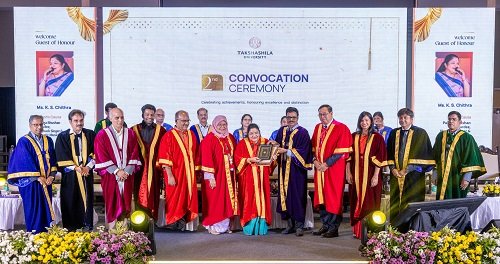
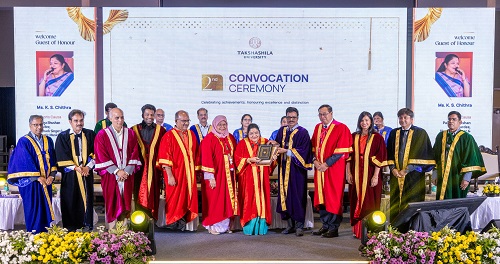
Takshashila University held its 2nd Convocation Ceremony on November 19, marking an important milestone in its academic journey. The highlight of the occasion was the conferment of honorary doctorates (Honoris Causa) on Padma Bhushan awardee and celebrated playback singer K. S. Chithra and Sahitya Akademi Award-winning Tamil writer and screenwriter S. Ramakrishnan, in recognition of their outstanding contributions to music, literature and cinema.


https://www.newsvoir.com/images/article/image1/37472_Takshashila_University.jpeg

Takshashila University’s 2nd Convocation


The ceremony was presided over by Shri M. Dhanasekaran, Chancellor of Takshashila University. Dato’ Seri Maimunah Mohd Sharif, former Executive Director of UN-Habitat and former Mayor of Kuala Lumpur, Malaysia, was the Chief Guest, while His Excellency U Aye Min Htwe, Ambassador of Myanmar to India, attended as the Special Guest.


The proceedings began with the academic procession, Tamil Thai Vazhthu and ceremonial lighting of the lamp. Dr. S. Senthil, Registrar, delivered the welcome address, followed by the presentation of the University’s Annual Report by Dr. Vivek Inder Kochhar, Vice-Chancellor, highlighting its academic progress, research initiatives and infrastructure development.


Addressing the gathering, Shri M. Dhanasekaran, Chancellor of Takshashila University, said, “A university’s true achievement lies not only in the degrees it awards but also in the values, knowledge and sense of responsibility it instils in its students. As we celebrate our second convocation, we are proud of our graduates and their accomplishments. Honouring distinguished personalities such as K. S. Chithra and S. Ramakrishnan also reflects our belief in recognising excellence and inspiring future generations to pursue their aspirations with dedication and purpose.”


A total of 312 graduates, comprising 310 undergraduate and postgraduate students and two Ph.D. scholars, received their degrees across various disciplines. Recognising academic excellence, the University also awarded 19 gold medals and four silver medals, presented by the Chief Guest, Special Guest and Chancellor.


The awardees to Honorary Doctorate Recipients:
K. S. Chithra
With a career spanning nearly five decades, K. S. Chithra has contributed extensively to Indian music through playback singing across multiple languages and Carnatic music. She has also inspired and mentored emerging singing talent through television programmes such as Vijay TV’s Super Singer.


S. Ramakrishnan
S. Ramakrishnan has made significant contributions to contemporary Tamil literature and cinema through novels, short stories, plays and screenplays. His writing explores diverse dimensions of culture, society and human relationships, bringing literary depth to contemporary narratives.


The ceremony was attended by the University’s Pro-Chancellors, Dr. D. Nila Priyadharshini and Shri D. Rajarajan, along with the deans, senior officials, faculty members, graduates, parents and other guests. Dr. S. Gopalakannan, Controller of Examinations, delivered the vote of thanks, followed by the National Anthem.


The second convocation reaffirmed Takshashila University’s commitment to academic excellence and its vision of nurturing skilled, responsible and socially conscious individuals.

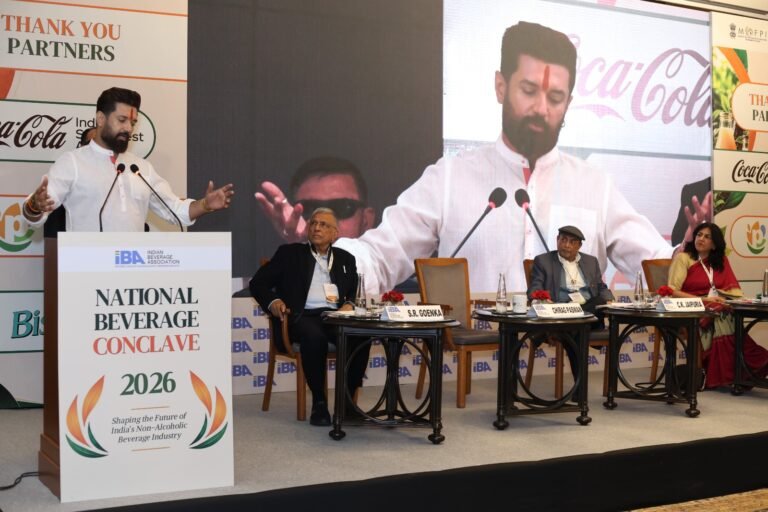
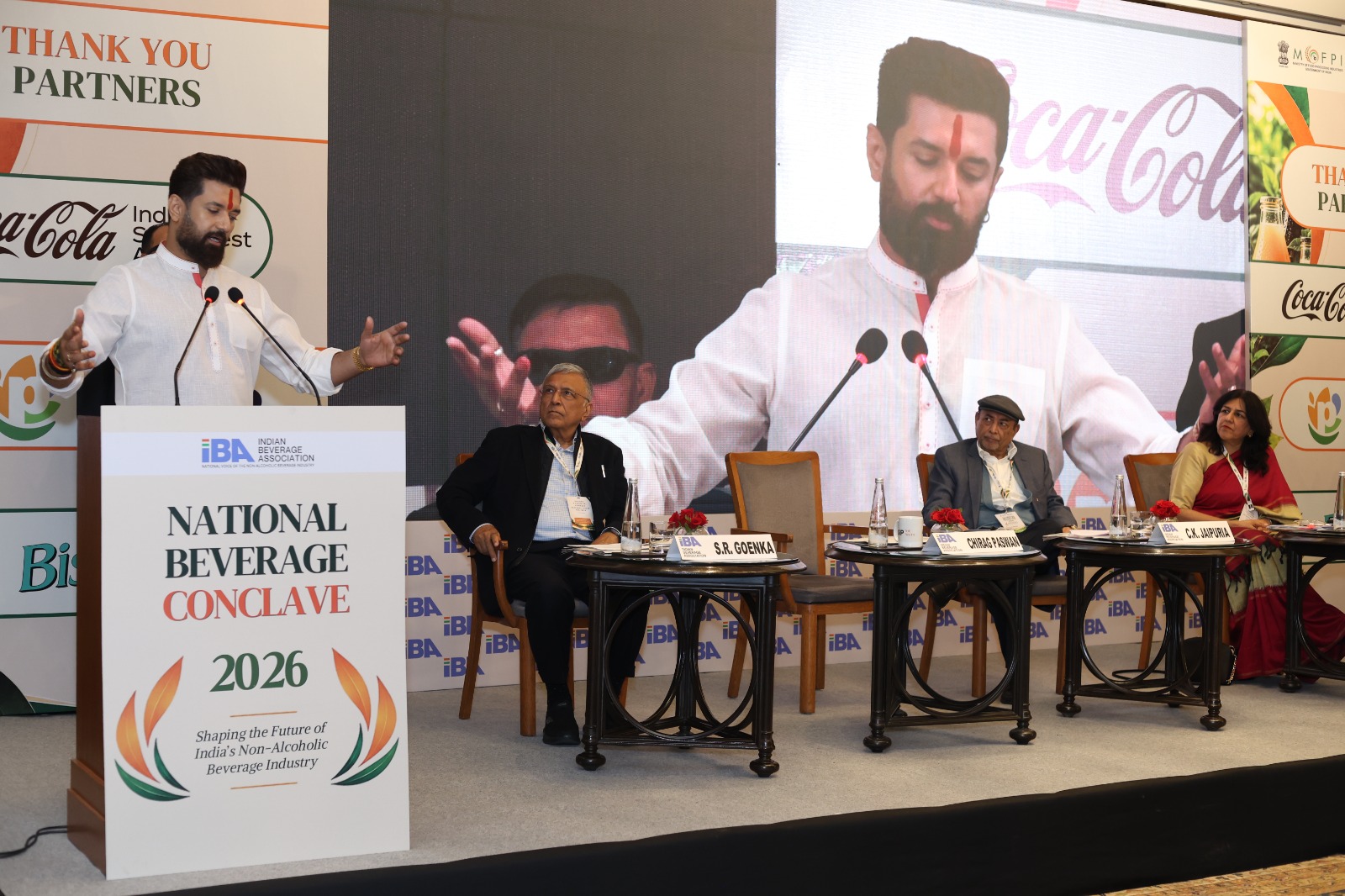
Union Minister Chirag Paswan Calls on Beverage Industry to Make India a Global Centre for Manufacturing, Innovation and Exports

Union Minister of Food Processing Industries Shri Chirag Paswan called upon the beverage industry to strengthen India’s position as a global centre for manufacturing, innovation and exports, while creating greater value from Indian agricultural produce.
 

Union Minister for Food Processing Industries, Shri Chirag Paswan, addressing IBA’s National Beverage Conclave 2026 in New Delhi
 

Delivering the keynote address at the National Beverage Conclave 2026, organised by the Indian Beverage Association, Shri Paswan linked the sector’s future to Prime Minister Shri Narendra Modi’s Sapt Dhara vision, particularly its emphasis on manufacturing, agriculture and food processing, and technology and innovation.
 

The Minister encouraged beverage manufacturers to strengthen procurement linkages with Indian farmers and explore the commercial potential of traditional beverages such as sattu, jaljeera and aam panna. He urged established manufacturers, emerging entrepreneurs and research institutions to collaborate on developing Indian-origin products capable of competing in international markets.
 

Welcoming both domestic enterprise and international investment, Shri Paswan emphasised that global companies manufacturing and innovating in India, as well as Indian entrepreneurs developing new products, contribute to the country’s industrial growth.
 

He also stressed the importance of product quality, consumer confidence and responsible manufacturing in building a globally competitive beverage industry.
 

In the opening address Shri C.K. Jaipuria, President, IBA emphasized the beverage sector’s potential to reduce wastage and support farmers. The Conclave comes at a pivotal moment for the beverage sector, as rising incomes, health-conscious consumer choices, and digital commerce expansion continue to reshape the market. There is a need for stronger industry-government collaboration to unlock growth across the value chain, from agriculture and processing to exports and sustainability.
 

In his vote of thanks Shri S.R. Goenka, Vice-President, IBA underlined the challenges posed by counterfeit products and negative perceptions of the industry. He urged participants to treat the Conclave as a learning platform and emphasized the need for coordinated fiscal efforts, infrastructure, and digitalisation to strengthen the long-term competitiveness of India’s beverage sector.
 

Earlier in her welcome remarks Dr. Gunveena Chadha, Secretary General, IBA highlighted the sector requires a well-defined structural roadmap to navigate evolving market dynamics. Government support and policy guidance will play a key role in helping the industry overcome challenges and unlock its full potential.
 

About IBA
The Indian Beverage Association represents leading non-alcoholic beverage manufacturers operating in India, working collaboratively on sustainability, public health, and industry standards.

Sector 150: The Making of Noida's Next Luxury Residential Destination

Today, luxury housing in the NCR is gradually moving beyond the traditional boundaries of established residential addresses. Homebuyers are becoming more selective about the environments they choose to live in, while the definition of luxury living continues to evolve with the greater emphasis given to thoughtful urban planning, open spaces, wellness, connectivity and a greater sense of community. Within this changing market, Sector 150 steadily gained attention as one of the promising luxury markets. 


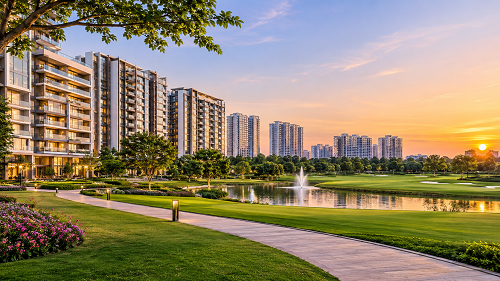
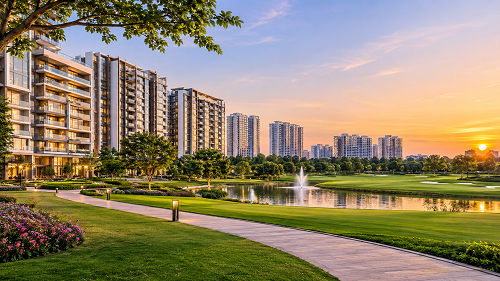
Sector 150 is emerging as Noida’s next luxury residential destination, offering a blend of green spaces, modern developments, connectivity and premium lifestyle amenities


A large part of Sector 150’s appeal lies in the way the neighbourhood has been envisioned. Unlike densely populated residential clusters, the sector offers a more spacious urban environment, characterised by extensive green landscapes with planned residential developments and an emphasis on sports and recreational infrastructure. Increasingly, its relatively low-density character creates room for greater openness, privacy and outdoor engagement, qualities that are increasingly influencing the residential preferences of affluent homebuyers.


In turn, these planning advantages are shaping the kind of residential development taking place in the sector. As demand for homes that offer a more considered living environment continues to grow, Sector 150 has attracted participation from established developers such as ATS, Godrej and Prateek Group amongst others, whose developments bring varied architectural approaches and modern residential formats to the market. 


Alongside this growing residential portfolio, Prateek Canary, for instance, indicates an approach to luxury where the surrounding scenery forms an important part of the residential experience. Its golf-facing residences, expansive private decks and integration of landscaped greens bring the outdoors into the rhythm of everyday living; also, the double-decker clubhouse overlooking the golf course speaks to the growing importance of spaces that encourage community interaction and recreation. 


Indeed, the growing interest in this residential proposition is also finding reflection in market indicators. According to ANAROCK’s Q3 2026 NCR Residential Market Viewpoints, Sector 150’s average quoted capital value stood at ₹14,980 per sq. ft. While pricing trajectories will continue to depend on project quality, infrastructure delivery and market conditions, these figures offer perspective on the growing attention being directed towards the region.


However, the long-term strength of a residential market also rests on the neighbourhood that develops around its homes. For Sector 150, the gradual strengthening of social infrastructure will be important in translating its planned character into a more established residential ecosystem which will shape the experience of residents and contribute to the sector’s appeal among families and long-term homebuyers.
Similarly, connectivity will continue to influence how the sector integrates with the wider urban market. Its location along the Noida-Greater Noida Expressway offers access to established commercial and employment centres across Noida, Greater Noida and adjoining parts of Delhi NCR. Further improving local accessibility, the Noida Authority has submitted a detailed project report for a proposed flyover connecting Sectors 148 and 150 across the Expressway with the intention of improving cross-expressway movement and providing more direct access to adjoining residential sectors, subject to implementation.


With residential and infrastructure projects progressing, Sector 150 is shaping up as a growing new luxury residential destination. Adding to this growth momentum, Prateek Group’s upcoming development will extend its presence in the micro-market at a time when luxury is increasingly associated with thoughtful design, the experience of space and the relationship between homes and their surroundings, and its addition to the sector’s expanding residential portfolio will form part of the wider transformation for premium living.


Ultimately, Sector 150’s proposition lies in the combination of elements that increasingly define modern luxury such as space, greenery, accessibility, recreation and thoughtfully planned residential communities. Its journey is still unfolding, but the foundations of a compelling residential destination are becoming more visible. As new developments take shape and infrastructure continues to change, the sector has an opportunity to establish a unique identity within Noida’s luxury housing market one where the quality of the neighbourhood becomes as meaningful as the homes within it.


Svayam and Indian Navy's INS Hamla Join Hands to Advance Universal Accessibility and Inclusive Infrastructure

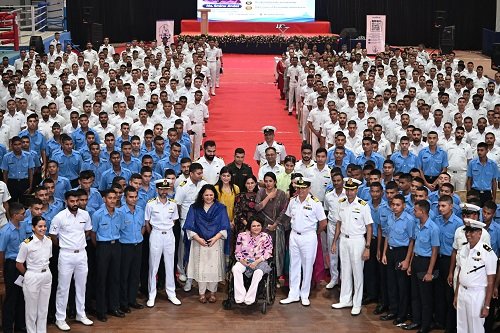
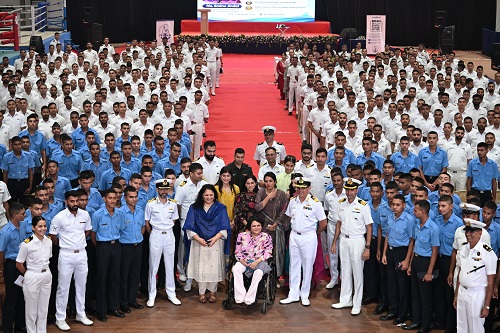
Accessibility organisation Svayam has signed a Memorandum of Understanding (MoU) with INS Hamla, a premier logistics training establishment of the Indian Navy in Mumbai, marking a significant step towards integrating accessibility and inclusivity into institutional infrastructure, training and service delivery. Rooted in a shared commitment to nation-building and the vision of an Accessible Bharat, this partnership brings together the Indian Navy’s institutional leadership and Svayam’s expertise in creating barrier-free environments. The collaboration aims to strengthen accessibility, promote dignity and independence, and build greater awareness and sensitivity towards the needs of persons with reduced mobility, including persons with disabilities, senior citizens and others facing mobility challenges.


https://www.newsvoir.com/images/article/image1/37467_Svayam_image.jpeg

Svayam and Indian Navy’s INS Hamla Join Hands to Advance Universal Accessibility and Inclusive Infrastructure


Under the agreement, Svayam will audit mutually identified facilities, including educational institutions, training rooms, sports and recreational complexes, dining and hospitality spaces, accommodation, sanitation facilities and common-use amenities. Assessments will cover entrances, ramps, stairways, handrails, corridors, pedestrian routes, parking and drop-off points, signage, drinking water provisions and accessible toilets. Emergency evacuation arrangements and assistance provisions will also be reviewed to identify barriers to safe and independent movement.


Svayam will subsequently submit a report detailing existing provisions, accessibility gaps and recommendations categorised into short-, medium- and long-term interventions. Its technical team will work with designated engineering, maintenance and other relevant personnel to clarify findings, review proposed solutions and advise on selected measures. Follow-up assessments of completed improvements may also be undertaken where mutually agreed, helping INS Hamla prioritise changes according to operational requirements, technical feasibility and available resources.


Speaking on the significance of the partnership, Sminu Jindal, Founder-Chairperson, Svayam, said, “I have always believed that the actual measure of progress lies in how we treat people whose needs are often overlooked. For me, accessibility is fundamentally about dignity, independence and the freedom to participate in everyday life without having to depend on others. Our association with the Indian Navy holds special meaning because institutions that lead by example have the power to influence attitudes far beyond their immediate surroundings. I hope this partnership encourages more organisations to examine how their decisions affect people, question long-held assumptions and recognise that creating equal opportunities is a responsibility we all share.”


The MoU also provides for sensitisation and capacity-building programmes for personnel and trainees from all three services the Indian Navy, Indian Army and Indian Air Force as well as other identified stakeholders. As INS Hamla serves as a training establishment for officers from the three services, these programmes will help promote awareness and inclusive practices across the armed forces. Through interactive discussions, demonstrations, simulations and practical exercises, participants will learn about disability etiquette, respectful communication, assistance to wheelchair users and people using mobility aids, and emergency support. The sessions will address the requirements of persons with disabilities, senior citizens, pregnant women, children and those with temporary injuries, with an emphasis on providing appropriate assistance while respecting individual dignity and independence.


Accessibility considerations will also be incorporated into hospitality, catering and service-related training wherever relevant. As INS Hamla prepares personnel for specialised roles in logistics and associated services, the programmes will address inclusive communication, seating arrangements, service counters and assistance in everyday interactions. This will help trainees apply these principles in their subsequent assignments across naval establishments.


Cmde Paramjit Singh, The Commanding Officer, INS Hamla, “The true spirit of nation-building exists in creating a country where everyone has the opportunity to live with dignity, independence and a sense of belongingness. Our association with Svayam is a step in that direction. By bringing greater focus to accessibility and inclusion within our infrastructure and training, we hope to create a more inclusive environment and encourage a deeper understanding of the need of persons with reduced mobility. We believe that sensitising personnel across the Armed Forcee will help carry these values beyond INS Hamla and contribute to our shared vision of a more inclusive Bharat.”


For Svayam, this collaboration represents a meaningful contribution towards nation-building by bringing the principles of universal accessibility, dignity and inclusion into one of the country’s most respected institutions. Guided by its commitment to creating an Accessible Bharat, Svayam is extending its expertise and technical support to INS Hamla as a gesture of service to the nation and deep respect for the Indian Armed Forces. Through this association, Svayam seeks to contribute to an environment where accessibility becomes an integral part of institutional infrastructure, training and service delivery. The initiative will be undertaken on a pro bono basis, reflecting Svayam’s belief that building a more inclusive India is a shared national responsibility.


The partnership will also document effective measures identified through the assessments and training programmes for possible continued adoption at INS Hamla, subject to mutual agreement and confidentiality requirements.


About Svayam
Svayam is a leading accessibility organization that aims to reform infrastructure and transportation to make it accessible for people with reduced mobility. Accessibility aids individuals and gives them the freedom to independently explore the built environment around them, irrespective of their physical capabilities. This was on philanthropist-business visionary Sminu Jindal’s mind when she founded Svayam in October 2000. An initiative of the Sminu Jindal Charitable Trust, Svayam is a not-for-profit accessibility pioneer that focuses on creating a barrier-free world for all.

India's Retail Infrastructure Readiness for the 43.7 Million Sq. Ft. of New Retail Supply Expected by 2030

India’s organised retail market is preparing for a sizeable addition of space. JLL estimates that nearly 43.7 million sq. ft. of new retail space will be delivered across the country’s top seven cities by 2030. The pipeline comes as retailers leased 9.36 million sq. ft. between January and September 2026, a 5.6% rise over the same period last year and the strongest nine-month performance in four years.
 

India’s retail sector is gearing up for significant expansion, with 43.7 million sq. ft. of new retail supply projected across the country’s top seven cities by 2030
 

Delhi-NCR accounted for 26% of leasing, ahead of Mumbai and Bengaluru. Fashion and apparel led demand, followed by food and beverage and entertainment. Yet the expansion is not simply a question of adding malls. High streets accounted for 46.3% of leasing, marginally ahead of shopping malls at 45.9%. Retailers are using different formats, and the performance of new developments will depend on whether their location, catchment, access and tenant mix match the needs of the market.
 

The changing demand profile is also influencing how retail spaces are designed and planned, with developers increasingly looking beyond conventional shopping formats to create destinations that encourage longer visits and repeat footfall.
 

Harinder Singh Hora, Founder Chairman, Reach Group, said, “With fashion and apparel accounting for 31% of retail leasing between January and September 2026, followed by food and beverage at 18% and entertainment at 15%, the demand profile clearly indicates that consumers are looking beyond conventional shopping formats. This is also influencing how retail developments are being conceptualised, with greater emphasis on creating spaces that encourage discovery, interaction and longer visits. Architectural planning plays a critical role here. Double-height atriums, open-to-sky spaces, wider circulation corridors, well-positioned anchor stores and clearly defined dining and entertainment zones can significantly influence how visitors navigate a development and engage with its offerings. Equally important is ensuring that the tenant mix is planned around the consumption patterns of the catchment, rather than simply filling available space. Developers must look at how retail, food, entertainment and leisure complement one another to create a cohesive destination. The real measure of a successful retail development will be its ability to generate consistent footfall, encourage repeat visits and remain relevant as consumer preferences evolve.”
 

For retailers, the decision to enter a market is increasingly shaped by the overall proposition of a destination, including the mix of brands, accessibility and the experiences it offers consumers. The emphasis is shifting towards retail environments that offer more than transactional shopping, with dining, entertainment and leisure becoming important components of the visitor journey.
 

Deepak Kapoor, Director, Gulshan Group, said, “Retailers today are quite conscious of where they set up shop, the catchment they cater to and what else a retail destination has to offer. Beyond shopping, food, entertainment and leisure have become important in shaping the overall visitor experience. A well-curated mix of offerings, supported by thoughtful planning, can make a destination more appealing and give people reasons to visit beyond a single purchase. For us, the focus is on creating spaces that people enjoy coming back to, while also ensuring that the environment works well for the brands and businesses operating within it.”
 

As retail destinations evolve, mixed-use developments are increasingly emerging as a way to integrate retail with residential, commercial and lifestyle ecosystems. This approach can help create a more consistent consumer base while making retail an integral part of the urban environment rather than a standalone destination.
 

Abhishek Trehan, Executive Director, Trehan IRIS, said, “India’s new retail supply will be judged less by its scale and more by its relevance. Space is being added faster than well-planned destinations, so the real test is whether developments are designed around their catchment. That means seamless access, the right mix of shopping, dining, entertainment and leisure and the flexibility to adapt as consumer habits change. This is the approach we follow across our mixed-use developments where the aim is to create destinations that become part of everyday urban life.”
 

However, the expansion of retail infrastructure also raises questions around whether the supporting urban infrastructure can accommodate the scale of growth being envisaged. Connectivity, parking, accessibility and the availability of supporting services will play a significant role in determining how effectively new retail developments function, particularly as the sector expands beyond established metropolitan markets.
 

Umang Jindal, CEO, Homeland Group, said, “India’s retail infrastructure is entering a phase of significant expansion, but the real question is whether the country’s urban infrastructure can keep pace with it. Adding retail space alone will not be enough. The next phase of growth will require better connectivity, planned urban development, adequate parking, reliable utilities and supporting infrastructure that can sustain increasing consumer footfall. As retail expands beyond established metros into emerging cities, the focus must be on creating developments that are supported by genuine consumption demand and can integrate with the city’s long-term growth. The opportunity is clearly there, but the sector’s readiness will depend on how well infrastructure, urban planning and retail development progress together. This will be critical in determining the long-term sustainability of India’s retail growth.”
 

The opportunity extends beyond established metropolitan centres. As purchasing power and organised consumption spread into emerging urban markets, developers are looking at locations where quality retail infrastructure remains limited. The challenge is to understand the size and spending capacity of the catchment before committing to large developments.
 

Dr. Amish Bhutani, Managing Director, Group 108, said, “The addition of 43.7 million sq. ft. of retail supply by 2030 points to the scale of opportunity emerging in India’s retail sector. The focus now needs to be on how well our infrastructure can support this growth. Beyond the availability of retail space, factors such as connectivity, efficient layouts, thoughtful spatial design and well-planned amenities will play an important role in shaping the next generation of retail destinations. As consumer preferences evolve, the integration of shopping, dining, leisure and social experiences will become increasingly relevant. The opportunity lies in creating developments that respond to these changing needs while contributing to the growth of India’s urban market.”
 

India’s retail expansion over the next few years will ultimately hinge on how effectively developers, retailers and urban planners respond to evolving consumer expectations and the realities of infrastructure development. While the projected supply signals confidence in the sector’s long-term growth, the focus will increasingly be on building retail destinations that are commercially viable, accessible and experience-led. The ability to balance scale with thoughtful planning and market relevance will determine which developments sustain footfall and establish themselves as enduring retail destinations.

TrueRE Oriana Power to Set up Five CBG Projects Across Three States with 110 TPD Capacity; to Invest Rs. 750 Crores

TrueRE Oriana Power Limited, listed on NSE Emerge, and one of India’s leading integrated renewable energy companies, today announced that it is setting up five Compressed Biogas (CBG) projects with an aggregate proposed production capacity of 110 tonnes per day (TPD) at an investment of Rs. 750 cores. The company has already registered and got approvals under the GOBARdhan scheme of Ministry of Petroleum and Natural Gas. These five plants that will be set up in Uttar Pradesh, Madhya Pradesh and Gujarat, and are expected to be operational within the next two years.
 

These plants will strengthen the company’s presence in the green fuels segment as part of its strategy to build a diversified clean energy portfolio spanning generation, storage and consumption.
 

Commenting on the company’s growth priorities, Rupal Gupta, Founder, MD and CEO, TrueRE Oriana Power, said, “We view alternative fuels like green hydrogen, ammonia, and CBG as high potential emerging opportunities. In line with our SCALE strategy, we are progressing steadily into these segments. Setting up these five plants is part of our plan to establish a dominant foothold into green fuels. In the next few years, we will continue to invest strategically to further increase our total production capacity.”
 

TrueRE Oriana Power’s participation in the segment extends beyond developing its own production portfolio. The company has already delivered two projects of 21 TPD each in Uttar Pradesh and Maharashtra in the past.
 

Beyond CBG, TrueRE Oriana Power is also advancing its presence in green hydrogen and its derivatives. The company has secured a 10,000 tonnes per annum green hydrogen production award under the Strategic Interventions for Green Hydrogen Transition (SIGHT) programme and a separate award for the production and supply of 60,000 metric tonnes per annum of green ammonia. The green ammonia project has progressed through land identification and preliminary front-end engineering and design activities.
 

The company recently won the largest allocation in Maharashtra State Electricity Distribution Company Limited’s 2,000 MW / 4,000 MWh battery storage tender. TrueRE Oriana Power secured 900 MW / 1,800 MWh, which is equivalent to 45% of the capacity tendered. Its allocation was three times the next-largest bidder’s 300 MW award. With this win the company’s total BESS portfolio stands at 2.5 GWh with an additional pipeline of 4 GWh. For a company that began in solar, these developments mark a significant change in its role in India’s energy sector. Today TrueRE Oriana Power is not just a solar EPC player but an integrated energy platform, with capabilities spanning multiple segments.
 

Building an integrated clean energy platform for 2030

Looking ahead, TrueRE Oriana Power is pursuing an ambitious growth roadmap to strengthen its position across the clean energy value chain. By 2030, the company is targeting approximately 6 GW of solar EPC capacity, 2.5 GW of solar IPP capacity, 20 GWh of BESS capacity, and 1 MMTPA of e-fuels.
 

Through its expanding portfolio of projects and strategic partnerships, TrueRE Oriana Power is positioning itself to capture opportunities across the clean energy value chain while contributing to India’s objectives of energy security, decarbonisation and reduced dependence on imported fossil fuels.
 

SCALE: TrueRE Oriana Power’s Framework for the Next Phase of Growth

Scale the integrated energy platform

Capital recycling through selective monetisation

Asset ownership for the long term

Leverage technology, AI and partnerships

Expand into emerging opportunities


About TrueRE Oriana Power

TrueRE Oriana Power (NSE: INE0OUT01027) is a fully integrated renewable energy platform delivering clean energy solutions across the value chain — from generation and storage to consumption enablement. Founded in 2013 and headquartered in Noida, India, the company has ~1.5 GW of solar portfolio, over 2.5 GWh of secured battery energy storage projects, a signed agreement for 60,000 MTPA of Green Ammonia and an allocation for 10,000 MTPA of Green Hydrogen. The company is also pioneering AI-driven EPC, integrating intelligent automation and robotics to enable faster, safer and more efficient project execution. TrueRE Oriana Power has a strong operational presence across 24 Indian states and an expanding global footprint, with projects in Africa and Latin America and a strategic MoU with Alberta, Canada. Driven by a commitment to innovation, scalability, and sustainability, the company continues to redefine how integrated renewable energy platforms can power a smarter, cleaner, and more resilient future — for India and beyond.